Programme planners handling dense documents
If your work centres on running orders, performer information, schedules, contracts and PDFs, prioritise readable text, usable screen space and a position that fits your desk.


Choose according to the work that fills your screen: an adjustable FHD or QHD monitor can suit schedules and document-led planning, while a 27-inch 4K monitor offers more detail for notation and layouts. If you approve artwork, assess the exact model’s colour specifications as well as your wider design and print workflow; for any monitor, check computer compatibility, connections and positioning before buying.
If your work centres on running orders, performer information, schedules, contracts and PDFs, prioritise readable text, usable screen space and a position that fits your desk.
When scores and cue sheets need to sit beside notes or programme drafts, consider how much detail you can see at a comfortable text size and whether the screen can be positioned for close review.
If you review covers, artist photographs, logos or digital promotions, look at the exact monitor’s stated colour coverage and calibration information alongside the needs of your design workflow.
Start with the documents you need visible together, then check how the monitor will connect and sit on your desk. Treat colour specifications as a separate priority if you make decisions about artwork.
| Concern | What to check | Who this matters to |
|---|---|---|
| Notation and layout space | Compare native resolution, screen size and comfortable text scaling; confirm your computer supports the intended display resolution. | When I review notation beside a draft, I want to see enough detail without constantly changing windows. Around 40% of consumers put this viewing need first. |
| Laptop connection and positioning | Check USB-C video compatibility and charging requirements, plus stand adjustment or VESA mounting. | If I move between a laptop and a desk setup, straightforward connections and a comfortable screen position matter most. That is the leading need for around 30% of consumers. |
| Artwork and colour | Check the exact model’s stated colour space and calibration information against your digital or print workflow. | When I approve a cover or promotional image, I need to understand what the display can show and how the finished work will be produced. Around 30% of consumers prioritise this artwork need. |
USB-C describes the connector, not the functions available on a particular computer, monitor or cable. The BenQ PD2705U, Dell P2425HE and ASUS PA279CRV have different stated power-delivery ratings, according to their manufacturers.
Check your laptop’s USB-C video support and charging requirement, the monitor’s specification and the cable needed for the intended setup.
A separate charger, dock or suitable cable may be needed if the planned single-cable connection cannot provide both functions.
More pixels can help with detailed layouts, but the computer must support the intended output and you may prefer display scaling for comfortable reading.
Decide how many documents you need on screen together, confirm computer compatibility and, where possible, check text at the scaling you intend to use.
The colour and calibration specifications published for models such as the BenQ PD2705U and ASUS PA279CRV describe display characteristics; they do not establish that a printed programme will match the screen.
If print colour matters, check the design software, colour profiles, printer and paper workflow as well as the monitor.
The Health and Safety Executive’s display-screen guidance considers screen position, desk arrangement, lighting and glare rather than the panel alone.
Measure the desk, check stand movement or VESA mounting, and plan where the screen and lighting will sit.
Your intended position may require desk rearrangement or a suitable monitor arm.
The Dell Pro 24 Plus P2425HE is a document-oriented USB-C hub option.
The PD2705U is a PD-series option for programme work that also involves visual assets.
The 27UP650K-W is a 27-inch 4K option for reviewing detailed programme materials.
The PA279CRV is aimed at work requiring stated wide-gamut coverage and factory pre-calibration.
The 27-inch ViewFinity S8 S80UD is a UHD USB-C option for a document and visual workspace.
These QHD and 4K monitors are relevant to viewing programme documents, notation and artwork. Compare each model’s screen format with the connections and colour workflow you actually need.
 No image available
Consider this OLED model if detailed layouts and artwork review are part of your programme work.
Check its colour-workflow requirements and the video and charging functions you need from a computer connection; the monitor alone cannot establish how a programme will print.
 No image available
A 27-inch 4K choice to consider when notation and programme materials need detailed viewing.
Check comfortable text scaling and computer compatibility. If you want a single USB-C connection for a laptop, confirm its video and charging functions before relying on that setup.
 No image available
This QHD IPS option is relevant if you work across documents and occasionally review visual assets.
Confirm the ports on the exact unit and your computer’s video and charging compatibility before planning a USB-C setup; colour claims alone cannot confirm print matching.
 No image available
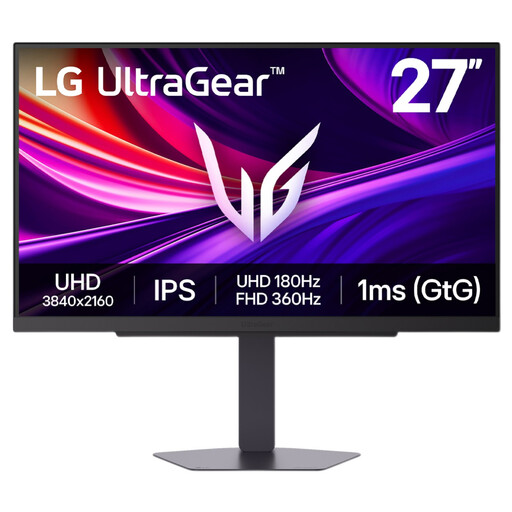
Although presented as a gaming monitor, its 27-inch 4K format may also suit detailed notation and layout viewing.
Confirm that your computer supports the resolution you intend to use and that text scaling is comfortable. Assess laptop connection needs separately from the gaming features.
 No image available
Consider this QHD IPS model when document work needs to fit a smaller desk.
Confirm the included cable and exact port configuration, then check computer video compatibility and any laptop charging requirement before planning a single-cable setup.
No: an FHD or QHD monitor can suit schedules, emails and other document-led work. Consider 27-inch 4K when you regularly inspect detailed notation or layouts, and check that the resulting text size and computer output work for you.
Yes, if the particular laptop, monitor and cable support the required video and charging functions. Check your laptop’s video-capable port and charging requirement against the exact monitor specification rather than relying on the presence of a USB-C connector.
Not by itself. Stated colour coverage and factory-calibration claims can be relevant to artwork review, but matching printed output also depends on the design software, colour profiles, printer and paper workflow.
A workplace should consider the whole workstation, not just the monitor. The Health and Safety Executive says employers must assess workstations for workers who use display-screen equipment continuously for an hour or more; its guidance also covers arranging screens and lighting to avoid reflections and glare.