Record readers with compact desks
If you usually open a census scan, index or set of notes one at a time, focus on a screen that fits your workspace and can be positioned for reading.


For reading one census record at a time, start with a roughly 24-inch Full HD monitor that connects to your laptop and fits your desk. Consider QHD if you regularly place scans, transcriptions and notes side by side; consider a USB-C hub monitor if your laptop supports its display and charging functions. Check screen positioning and compatibility before treating a higher refresh rate as a priority.
If you usually open a census scan, index or set of notes one at a time, focus on a screen that fits your workspace and can be positioned for reading.
If you frequently compare a scan with a transcription, family tree or notes, the extra pixels of a QHD display may be useful. Dell UK specifies a 2560 × 1440 panel on its 23.8-inch P2425D.
If you study at a fixed desk with a compatible laptop, a USB-C hub monitor may combine display, charging and peripheral connections. Check what your laptop’s USB-C port supports before choosing one.
Decide how many documents you need visible at once, then check your laptop connection and how the screen will sit on the desk.
| Concern | What to check | Who this matters to |
|---|---|---|
| Reading on a compact desk | Check the screen and stand dimensions, Full HD resolution and an input your laptop can use. | If I mainly read one record at a time, I want an external screen without crowding my desk. Around 42% of consumers put that compact reading setup first. |
| Comparing documents | Check the exact model’s QHD resolution, your laptop’s external-display output and comfortable text scaling. | When I compare a scan, transcription and notes, I need room to keep them visible together. For around 33% of consumers, that document workspace is the primary concern. |
| Connecting a USB-C laptop | Confirm that the laptop supports USB-C video output and charging input, and check the monitor’s power delivery and cable requirements. | If my laptop stays at one study desk, I would rather connect the display and peripherals with fewer cables. That simpler setup comes first for around 25% of consumers. |
A higher refresh rate does not give a census scan more room on screen. For document work, resolution, positioning and laptop connectivity are more directly relevant to the choice.
Choose the workspace you need first; treat refresh rate as a separate consideration if you will also use the monitor for motion-heavy content.
A USB-C connector does not, by itself, establish that a laptop can send video to a hub monitor or accept power from it.
Compare the laptop manufacturer’s stated USB-C functions with the monitor’s display connection and power delivery before relying on a single cable.
Depending on the laptop and the intended setup, you may need a suitable adapter, cable or separate charger.
A monitor feature cannot compensate for a screen that sits awkwardly or catches reflections. The Health and Safety Executive’s display-screen guidance covers screen position, desk arrangement and lighting.
Measure the desk, check the supplied stand’s adjustments and plan where the screen will sit relative to the light.
If the stand cannot position the screen as needed, a compatible arm or riser may be another practical consideration.
Reader, low-blue-light and flicker-reduction modes are model-specific manufacturer features, not a substitute for arranging a workable study space.
Check screen position and reflections, set text and brightness to usable levels, and change activity regularly, in line with the Health and Safety Executive’s display-screen guidance.
Dell’s cited 23.8-inch business-monitor models illustrate separate Full HD, QHD and USB-C hub options.
The 23.8-inch 24MR400-B illustrates a compact Full HD option for reading records.
The GW2490 is a 23.8-inch Full HD option to consider for a fixed reading desk.
Samsung’s S30GD illustrates a 24-inch Full HD IPS option.
These monitors offer options to assess for reading records at a desk, comparing documents or arranging a more flexible study space. Check each model’s connections and positioning against your laptop and room.
 Image unavailable
Consider this QHD IPS model if you regularly compare a census scan with a transcription or notes. Check your laptop’s supported external-display resolution and the cable needed for your intended connection.
 Image unavailable
The WUXGA IPS display is an option to assess when you want census documents and notes visible together. Confirm the laptop connection and which display cable is supplied.
 Image unavailable
This Full HD IPS model is worth assessing if you usually read one main record at a time. Its stated 75Hz refresh rate need not drive a document-focused choice; confirm your laptop connection and the supplied cable.
 Image unavailable
Consider this IPS USB-C model if your study space calls for a different screen arrangement. Check the mounting accessories, actual weight and laptop USB-C video compatibility before planning to move or connect it in a particular way.
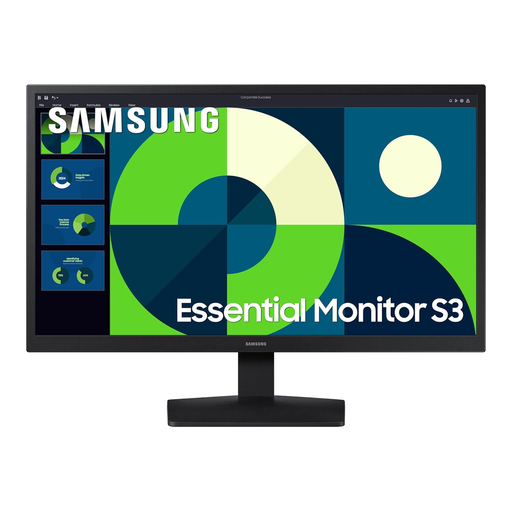 Image unavailable
If you mainly view one record or browser window, compare this model’s panel, connections and stand adjustment with what your desk and laptop require. Check the exact model specifications if IPS or height adjustment matters to you.
Choose Full HD if you normally concentrate on one record or browser window; consider QHD if you regularly keep scans, transcriptions and notes side by side. Before choosing a QHD model, check that your laptop supports its native resolution and that text remains comfortable at your preferred scaling.
Check whether your laptop supports USB-C display output and charging input, then compare its requirements with the monitor’s ports and power delivery. Dell UK specifies up to 90W power delivery for the P2425HE, but that specification alone does not establish compatibility with your laptop.
No. Reader and flicker-reduction modes are model-specific features; the Health and Safety Executive’s display-screen guidance also addresses screen position, reflections, lighting and changes of activity.
No particular student monitor purchase follows from the workplace rules described by the Health and Safety Executive. Its display-screen-equipment regulations concern employers whose workers regularly use screens as a significant part of their normal work; its advice on arranging screens and lighting can still help when setting up a study desk.