Start with a monitor that you can position comfortably at both desk heights, then decide how much screen detail your citation work needs: a 27-inch 4K display offers finer detail than a 27-inch QHD display, while QHD may be sufficient for ordinary document work. The Health and Safety Executive advises placing the top of the screen at eye level and about an arm’s length away, so check the combined range of your desk, stand and any monitor arm. Prioritise USB-C or Thunderbolt docking only if your laptop supports the required video connection and the monitor meets its charging needs.
Who this setup suits
Citation-heavy PDF readers
If you regularly compare quotations, page numbers, bibliographies and notes across windows, a 27-inch 4K display is worth considering for finer on-screen detail. Set the text to a comfortable size and make sure the screen can be positioned for standing work.
Sit-stand desk users
If you alternate between sitting and standing, prioritise a height-adjustable stand or a suitable monitor mount. Check the complete desk-and-screen setup at both heights; stand adjustment alone does not establish where the screen will end up.
One-cable laptop researchers
USB-C or Thunderbolt may simplify connections for a laptop, display and peripherals. Check the laptop’s video-output capability and charging requirements before relying on one cable.
What to check when choosing
For a citation-focused sit-stand desk, check screen position and readable document detail before deciding whether laptop docking features would simplify your setup.
| Concern | What to check | Who this matters to |
|---|
| Document detail |
Compare native resolution at the same screen size, then check whether scaling makes PDF text comfortable to read. |
When I compare small references and several document windows, I want to read the details without making the text uncomfortably small; around 36% of consumers put document detail first. |
| Seated and standing position |
Compare the stand’s adjustment range or a compatible mount with the positions your desk needs to accommodate. |
If I change desk height during the day, I need the screen to reach a usable position in both settings; around 29% of consumers prioritise screen positioning. |
| Laptop connection |
Confirm USB-C video or Thunderbolt support and compare stated monitor power delivery with the laptop’s requirements. |
I want to connect my research laptop without managing separate display and charging leads; around 21% of consumers place one-cable connectivity first. |
| Simple setup |
Check the required ports, stand adjustment and mounting options rather than assuming they come with a particular screen size. |
For straightforward document work, I would rather meet my essential display and positioning needs than add docking features I will not use; around 14% of consumers prioritise simplicity. |
Common buying mistakes
-
Assuming an adjustable stand will fit any sit-stand desk
The final screen position depends on your seated and standing heights, the desk and the monitor stand together. The Health and Safety Executive advises keeping the top of the screen at eye level and roughly an arm’s length away.
Check both desk heights against the stand’s adjustment range. If you plan to use an arm, confirm its mounting pattern, weight capacity and fit with the desk.
An arm, riser or desk change may be needed if the supplied stand cannot reach a suitable position.
-
Expecting every USB-C connection to carry video and charge a laptop
USB-C capabilities depend on both devices. BenQ lists 65W power delivery for the GW2790QT, while LG lists up to 90W for the 27UP85ZK-W; neither figure establishes compatibility with a particular laptop.
Check the laptop’s USB-C video specification or Thunderbolt support, then compare its charging requirement with the monitor’s stated power delivery.
Depending on compatibility, you may still need a separate laptop charger, dock or suitable cable.
-
Choosing by diagonal size alone
At 27 inches, QHD and 4K models differ in pixel detail, while connections and stand adjustment also vary by model.
Compare resolution, the connections you will use and the screen positions you need before treating two similarly sized monitors as interchangeable.
Relevant brands to consider
Dell
Dell offers different routes among the 27-inch models considered here: a 4K USB-C display and a QHD Thunderbolt hub display.
- Dell lists 4K resolution and height and pivot adjustment for the S2725QC; the U2724DE instead lists QHD resolution, Thunderbolt 4 and up to 150 mm of height adjustment.
- Choose between these particular models by display detail or docking needs; their specifications should not be assumed to apply across Dell’s range.
BenQ
The GW2790QT is a QHD USB-C option for document work where adjustable positioning matters.
- BenQ lists a 2560 × 1440 IPS panel, 110 mm height adjustment, pivot, 100 × 100 mm VESA mounting, a USB hub and 65W USB-C power delivery for the GW2790QT.
- Check whether QHD detail and 65W charging suit your documents and laptop before choosing this model.
LG
The 27UP85ZK-W is a 27-inch 4K USB-C option for a laptop-led research desk.
- LG lists an IPS panel, USB-C charging up to 90W and height, pivot and tilt adjustment for this model.
- Check your laptop’s video and charging requirements and whether the stand reaches the positions you need.
Joybuy monitor choices
These monitors offer different ways to approach citation work at a sit-stand desk, from 4K document viewing to a simpler QHD setup. Compare each model’s stated connections with your laptop and check how its stand will position the screen at both desk heights.
 No image available
MSI MD272UPSW 27-inch 4K USB-C Smart Monitor
Consider this model if fine document detail and laptop connectivity are priorities. Its name specifies a 27-inch 4K IPS display and 65W USB-C; check laptop video and charging compatibility and whether the adjustable stand reaches both working positions.
View on Joybuy
 No image available
ASUS ProArt PA278CV IPS WQHD Monitor
Consider this QHD model if your citation work does not call for 4K detail. Check that its screen adjustment suits both desk heights, and confirm USB-C video support and the charging power your laptop requires.
View on Joybuy
 No image available
BenQ MA270UP 27-inch 4K Nano Glossy USB-C Monitor
Consider this model for detailed documents if its glossy screen suits your desk lighting. Its name specifies an IPS display and a height-adjustable stand; check the stand’s usable range and compatibility with your particular laptop.
View on Joybuy
 No image available
Dahua Curved 4K USB-C Gaming Monitor
Consider the larger curved format only if it suits your desk space and viewing distance. The product name lists 4K resolution, a USB hub and 65W USB-C; confirm the exact screen size and panel specification before buying, as the product information gives conflicting descriptions.
View on Joybuy
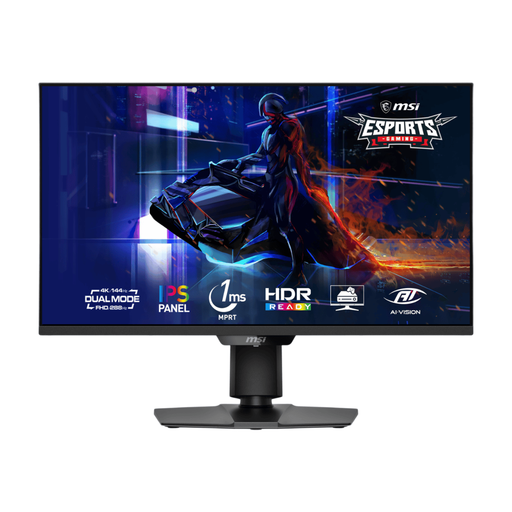 No image available
MSI MAG 275UPD E14 27-inch 4K Gaming Monitor
Consider this 4K display for document work if its gaming-oriented features are not a deciding factor. Check whether its adjustment reaches your seated and standing positions, and plan the laptop connection and charging arrangement separately.
View on Joybuy
Frequently asked questions
Where should the monitor sit when I use a standing desk?
Aim to position the top of the screen level with your eyes and the screen about an arm’s length away, as advised by the Health and Safety Executive. Check whether the stand or arm can achieve a usable position when you are both seated and standing.
Do I need 4K to organise research citations?
No: QHD can suit ordinary documents and citation-manager work. At the same 27-inch size, 4K provides finer pixel detail for dense PDFs and reference lists, but text size and display scaling still need to feel comfortable.
Will a USB-C monitor show video and charge my laptop?
Only if the laptop’s port supports the required video output and the monitor’s power delivery suits the laptop. Check the laptop’s DisplayPort Alt Mode or Thunderbolt specification and compare its charging requirement with the monitor’s stated output.
When does an employer need to assess a display-screen workstation?
In the UK, the Health and Safety Executive says employers must conduct a workstation assessment for workers who use display screen equipment daily as part of their normal work, continuously for an hour or more. The assessment concerns the workstation and work requirements, not just the choice of monitor.


