What to check when buying
Work out where the screen needs to sit at both desk heights, then decide how much document detail and laptop connectivity your planning routine requires.
| Concern |
Buying checks |
Who this matters to |
| Screen position |
Check stand height travel at seated and standing desk heights. If using an arm, check its mounting pattern and weight limits against the monitor. |
When I raise the desk, I still need the screen at a workable height without leaning towards it. Around 40% of consumers put repositioning first. |
| Document workspace |
Compare QHD and 4K resolution at the screen size you want, and check that the panel fits your desk while allowing a comfortable viewing distance. |
Dense venue plans and schedules make small details harder to follow alongside other documents. For around 30% of consumers, document detail is the primary concern. |
| Laptop and device connections |
Check laptop USB-C video support and charging requirements against the monitor and cable. For two computers, check how input switching and shared peripherals work. |
If I reconnect a laptop often or share a planning station, I want the connections to suit that routine. Easier connection or device switching comes first for around 30% of consumers. |
Joybuy monitors for this setup
These monitors offer different ways to handle planning documents at a standing desk, from QHD to larger 4K screens. Compare each model's physical adjustment and connections against your own desk and laptop before choosing.
 No image available
BenQ MA270UP Nano Glossy 27-inch 4K USB-C Mac monitor
Consider this model if detailed schedules and quick laptop reconnection matter at your desk.
Its product name specifies a 27-inch 4K IPS display, USB-C and a height-adjustable stand. Check the stand's reach at both desk heights and confirm the USB-C video and charging functions your laptop requires.
View on Joybuy
 No image available
BenQ MA320UP Nano Glossy 32-inch 4K USB-C Mac monitor
This larger-screen option is worth considering if you keep several planning documents in view, provided it fits your desk and viewing position.
Its product name specifies a 32-inch 4K IPS display, USB-C and a height-adjustable stand. Check desk depth, stand reach and the laptop functions you expect from USB-C.
View on Joybuy
 No image available
ASUS ProArt PA278CFRV QHD IPS monitor
Consider it for schedules and spreadsheets if a QHD screen suits the documents you usually work with.
The product name specifies an IPS display, QHD resolution and a 100 Hz refresh rate. Check the stand's adjustment range and this variant's USB-C functions before relying on it for standing-desk positioning or laptop docking.
View on Joybuy
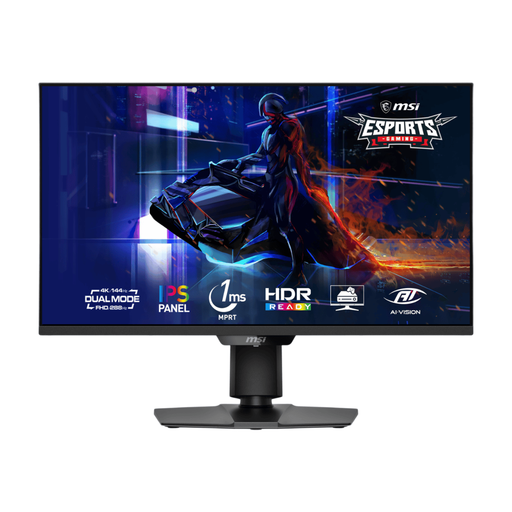 No image available
MSI MAG 275UPD E14 27-inch 4K gaming monitor
Its 4K resolution is relevant if your planning involves detailed maps or documents; gaming refresh-rate features need not drive that decision.
The product name specifies a 27-inch 4K UHD display and dual display modes. Check the stand's available height adjustment and how you will connect and charge your laptop.
View on Joybuy
 No image available
LG 27UP650K 27-inch 4K IPS monitor, white
Consider this model when document detail matters and you plan to use its listed display connections.
The product name specifies a 27-inch 4K IPS display, HDMI, DisplayPort and built-in speakers. Check the stand's height range and your laptop connection needs; this is a different model from LG's 27UP850K-W USB-C example.
View on Joybuy
Common questions
Does a standing desk require a height-adjustable monitor?
Not necessarily: a compatible monitor arm can provide the adjustment instead. At the desk heights you use, check that the screen can sit with its top around eye level and at roughly an arm's length, in line with Health and Safety Executive guidance.
Can one USB-C cable connect the monitor and charge my laptop?
Yes, if the exact monitor, cable and laptop support the required video and charging functions. LG states that its 27UP850K-W supports display, data and up to 90 W charging over USB-C; that specification should not be assumed for a different LG model or for every laptop.
When would a KVM switch help with event planning?
A KVM switch is useful when you need one keyboard and mouse to control two connected computers at the planning station. Check the monitor's inputs and peripheral connections for your devices; a single-laptop setup does not need device switching.
When does an employer need to assess a display-screen workstation?
The Health and Safety Executive says employers must assess workstations used by workers who use display screen equipment daily as part of normal work for continuous periods of an hour or more. The assessment concerns the workstation as a whole, not just the monitor.


