Start with your computer: check its video outputs, supported external displays and resolution before choosing a monitor and cable. For a regular document or study desk, consider screen size and resolution alongside the space available and the stand's adjustment. If you want a USB-C monitor to charge your laptop, compare its stated power delivery with the laptop's requirement; colour-focused features matter most when your work calls for them.
Who this setup suits
Laptop users working at a regular desk
If you want an external screen without changing computers, check your laptop's display outputs and charging requirement before deciding between a direct connection, an adapter or a dock. Apple Support and Microsoft Support both make clear that connection details depend on the computer and its ports.
Document-heavy workers and students
Extra room for documents, research, spreadsheets or calls is useful only if the screen also fits the desk and can be positioned comfortably. Which? covers home-office and study uses; the Health and Safety Executive gives guidance on screen position.
People doing colour-sensitive visual work
If image, video or design tasks require particular colour handling, compare the exact monitor's stated coverage and colour-management features with your workflow. BenQ, for example, lists such features for its PD2706QN rather than for every monitor in its range.
What to check before buying
Confirm the computer-to-monitor connection first, then decide how much screen space and adjustment your desk can accommodate. Treat charging and colour features as requirements to check for your own setup, not automatic reasons to choose a particular model.
| Concern | What to check | Who this matters to |
|---|
| Connection and charging |
Check your computer's supported display outputs and the required cable or adapter. If charging through USB-C matters, compare the monitor's power delivery with the laptop's requirement. |
I need the screen to work with my laptop and do not want to assume its USB-C port also handles video and charging; around 36% of consumers put connection compatibility first. |
| Document workspace |
Compare screen size and resolution with your desk space and the computer's supported output. |
When I keep documents, study material or calls open together, usable screen room is my main concern; roughly 29% of consumers prioritise document workspace. |
| Desk fit and position |
Measure the space available for the screen and stand. For an arm, check the monitor mount and the desk attachment. |
On a constrained desk, I need to place the screen at a workable distance and height; about 21% of consumers put desk fit and positioning first. |
| Colour-sensitive work |
Identify the colour space your work requires, then check the exact model's stated coverage and colour-management features. |
For image, video or design tasks, my primary concern is whether the display fits my colour workflow; around 14% of consumers prioritise colour-sensitive work. |
Common buying mistakes
-
Assuming every USB-C port does the same job
A USB-C connection alone does not establish that your computer, cable and monitor will support the display setup you want. Microsoft Support notes that hardware and software combinations can limit functionality.
Look up your exact computer model's display support, then check the monitor input and the cable or adapter needed.
An adapter or dock may still be needed for the intended connection.
-
Assuming USB-C power delivery replaces your laptop charger
Charging output varies by model: BenQ states 65W for the GW2790QT, while LG states up to 15W for the 27U631A-B. Neither figure establishes what an unspecified laptop needs.
Compare the exact monitor rating with your laptop manufacturer's charging requirement before planning a one-cable setup.
Keep access to the laptop charger if monitor-based charging has not been confirmed for your setup.
-
Choosing by diagonal size without checking the desk
A monitor can fit across a desk yet leave too little depth for a workable viewing position. The Health and Safety Executive describes a standard position with the screen about an arm's length away and its top around eye level.
Measure the available depth with the keyboard and laptop in place, then check the monitor's dimensions and adjustment range.
-
Choosing creative colour features for document work
BenQ lists P3 coverage and colour-management features for its PD2706QN designer monitor; those specifications address particular visual workflows, not a general need for more document space.
Establish your colour-space or colour-matching requirement before making those features a priority.
Relevant monitor brands
Dell
A reference point for fixed-desk buyers comparing QHD USB-C models and adjustable stands.
- Dell UK lists a 27-inch IPS QHD panel, 2560 × 1440 resolution at 144Hz, and height, pivot, swivel and tilt adjustment for the S2725DC.
- Check your computer's supported output and charging requirement against the exact monitor connection before choosing it.
BenQ
Relevant when comparing a USB-C hub setup with features intended for colour-sensitive work.
- BenQ UK states that the GW2790QT has an integrated USB hub, 65W laptop power delivery and height, tilt, pivot and swivel adjustment.
- BenQ lists P3 coverage and colour-management features for the separate PD2706QN; check which features and charging rating apply to the model you are considering.
LG
A reference for comparing USB-C power-delivery ratings and alternative desk-mounting arrangements.
- LG UK lists a 27-inch QHD IPS panel and USB-C power delivery of up to 15W for the 27U631A-B. It lists 65W power delivery and a clamp or grommet stand for the separate 27QP88DP-BS.
- Check laptop charging needs and, for a clamp or grommet stand, the desk's mounting space and suitability.
Joybuy monitors to consider
These external monitors offer different stated screen formats for a regular desk. Choose a connection and screen setting only after checking what your computer supports, and measure the available space before settling on a size.
 No image available
ASUS ProArt PA328QV IPS WQHD monitor
Consider this WQHD monitor if that screen format suits your desk work. Confirm the exact model identity and connection details before choosing cables or relying on monitor-based laptop charging.
Purchase link unavailable
 No image available
ASUS ProArt PA24ACRV IPS QHD monitor
Consider this QHD model if you want an external display for a fixed desk. Check its full dimensions against your workspace and confirm your computer's display output and laptop-charging needs before choosing a connection.
View on Joybuy
 No image available
iiyama ProLite XUB2792UHSU-B6 27-inch 4K UHD monitor
The stated 27-inch, 4K UHD, 16:9 format is worth considering if it fits your desk and visual tasks. Check whether your computer supports the resolution at your intended refresh rate; confirm USB-C video and charging functions separately if you need them.
View on Joybuy
 No image available
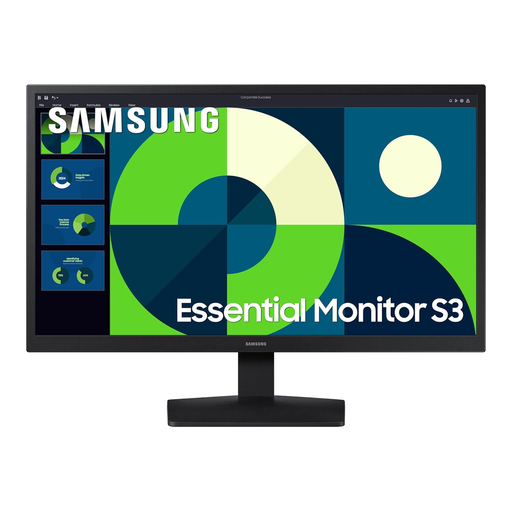
Samsung Essential S3 S31D (LS24D310EAUXXU) monitor
Consider this as an external screen for everyday desk tasks. Check the exact model's size, resolution and inputs against the space and computer you plan to use.
View on Joybuy
Frequently asked questions
Will any USB-C monitor display my laptop screen and charge it?
No: those functions depend on the laptop, monitor and cable or dock. Check the laptop's video-output support and charging requirement against the exact monitor's USB-C functions and power-delivery rating; Microsoft Support notes that some hardware and software combinations have limited USB-C functionality.
Can a dock add a higher resolution or more displays than my computer supports?
A dock or adapter does not override your computer's own display-support limits. Check the exact computer model's supported display count and output settings before choosing the dock, monitor and cables; Apple Support advises checking Mac ports and display support when connecting external screens.
How much space should I leave for a monitor on my desk?
Leave enough room to position the screen at a workable distance alongside your keyboard and any laptop. The Health and Safety Executive describes a standard workstation position with the screen about an arm's length away and its top around eye level; measure your desk and check the monitor and stand dimensions before ordering.
Does home working require a particular monitor or monitor arm?
The Health and Safety Executive's display screen equipment guidance does not prescribe a particular consumer monitor or arm. It says employers must assess workstations for employees who use display screen equipment daily as part of normal work, continuously for an hour or more; that assessment considers the workstation and the work, not just one accessory.


