For API documentation work at a shared desk, start with a monitor that each user can position comfortably, then choose resolution and connectivity around the work. A 27-inch QHD display offers room for writing and references; consider 4K if denser editor, terminal and preview layouts matter more, and rely on USB-C docking only after checking the laptop, cable and monitor functions together.
Who this setup is for
Long-session documentation authors
People who spend much of the day reading API references, drafting endpoints and reviewing technical text need a screen they can position for their workstation. The Health and Safety Executive advises placing the screen top around eye level and the screen about an arm’s length away.
Laptop hot-desk users
People moving between shared desks may want one connection for the display, peripherals and laptop charging. Whether that works depends on the particular monitor, laptop port and cable; BenQ notes that USB-C ports do not all provide video output.
Dense-workspace technical writers
People who keep an editor, browser references, terminal output, diagrams and team messages visible together should compare native resolution and comfortable text scaling, not diagonal size alone.
What to check before buying
For a shared-office API writing desk, check positioning first, then decide how much simultaneous workspace you need and whether the laptop connection must also handle charging and peripherals. A separate dock and charger remain an option when one-cable monitor docking is unnecessary or incompatible.
| Concern |
What to check |
Who this matters to |
| Ergonomic positioning |
Check the stand’s height and pivot adjustments against the desk and each user’s position. The Health and Safety Executive advises a screen top around eye level and a viewing distance of about an arm’s length. |
If I spend long sessions drafting and reviewing references, I need to reposition the screen when the shared desk changes hands. Around 42% of consumers put adjustable positioning first. |
| Laptop docking |
Check laptop video output over USB-C, the monitor’s power-delivery rating and the required cable and peripheral ports. BenQ cautions that a USB-C connector alone does not establish video capability. |
Moving between desks, I want to reconnect my laptop without handling several leads, provided the connection meets its requirements. For around 33% of consumers, compatible one-cable docking is the primary need. |
| Text workspace |
Compare native resolution at the chosen screen size and check text at your preferred operating-system scaling. Dell and BenQ specify 2560 × 1440 for the cited 27-inch QHD models; LG specifies 3840 × 2160 for its cited 27-inch 4K model. |
When references, code and a preview must sit side by side, I need enough usable space without making text uncomfortable to read. Resolution and scaling come first for around 25% of consumers. |
Buying pitfalls
-
Assuming every USB-C connection can run the whole desk
A matching connector does not mean the laptop can send video through it, or that the monitor’s charging output meets the laptop’s requirements. BenQ’s USB-C guidance distinguishes ports that support different functions.
Check the laptop’s stated video-output mode, the monitor’s power delivery and the cable specification before planning a single-cable setup.
If the required functions do not match, the desk may still need a separate display connection, charger or compatible dock.
-
Using an eye-care label in place of a workable setup
Display settings cannot fix a screen that users cannot place appropriately. The Health and Safety Executive advises considering the whole workstation, including equipment, furniture and working conditions.
Check stand adjustment and desk layout first; treat display-comfort settings as additional controls rather than the sole reason to choose a model.
-
Comparing diagonal size without resolution
Two 27-inch screens need not offer the same native workspace. BenQ specifies 82 pixels per inch for the Full HD GW2790 and 109 pixels per inch for the QHD GW2790QT.
Compare resolution at the actual screen size, then check whether your preferred scaling gives enough room for documentation panes while keeping text readable.
-
Choosing for one person at a desk used by several
A fixed screen position that suits one user may not suit another. The Health and Safety Executive advises assessing the workstation as a whole, rather than judging the monitor in isolation.
Check the available adjustment or a suitable mounting arrangement for the desk. Where the employer’s display-screen-equipment assessment duties apply, include the shared setup in that assessment.
Relevant brands for reference
These model examples show different ways to combine workspace, adjustment and laptop connectivity; check the exact variant rather than assuming a feature applies across a brand’s range.
Dell
Dell’s UltraSharp U2724D is a reference point for a 27-inch QHD screen with an adjustable stand at a desk using a separate display connection or dock.
- Dell specifies 2560 × 1440 resolution, up to 150 mm of height adjustment, and tilt, swivel and pivot for the U2724D.
- The cited U2724D configuration does not provide integrated USB-hub or laptop power-delivery functions. Check a different variant’s exact ports if docking is essential.
BenQ
BenQ’s 27-inch QHD GW2790QT illustrates a monitor intended to combine an adjustable text workspace with USB-C laptop connectivity.
- BenQ specifies 2560 × 1440 resolution, 109 pixels per inch, USB downstream ports, 65 W USB-C power delivery and stand adjustment for the GW2790QT.
- Check that the laptop and cable support the required video and data functions, and that 65 W meets the laptop’s charging needs.
LG
LG’s 27UP85ZK-W is a 27-inch 4K example for a laptop desk where native workspace density and USB-C connectivity are priorities.
- LG specifies 3840 × 2160 resolution, USB-C display and data connectivity, charging up to 90 W, and height, pivot and tilt adjustment.
- Check laptop and cable compatibility and set scaling for readable text; the higher native resolution alone does not determine a comfortable layout.
Monitors to consider on Joybuy
These displays offer QHD or 4K options for API writing, with different screen finishes, connections and positioning choices. Decide whether the desk needs conventional display input or compatible USB-C docking before narrowing the list.
 No image available
LG UltraGear G8 27G850A 27-inch 4K UHD Nano IPS monitor
Consider this for a dense documentation workspace if its display mode and your preferred text scaling suit the work.
The product title identifies a 27-inch 4K UHD Nano IPS display with dual 240 Hz and 480 Hz modes. Check the connections you need before relying on it for laptop docking.
View on Joybuy
 No image available
ASUS ProArt PA278CFRV QHD IPS 100Hz monitor
Consider this QHD option when an adjustable screen position matters more to the shared desk than confirmed one-cable docking.
The product title specifies QHD, IPS and 100 Hz. If laptop docking matters, confirm the exact variant’s USB-C video, data and charging functions before buying.
View on Joybuy
 No image available
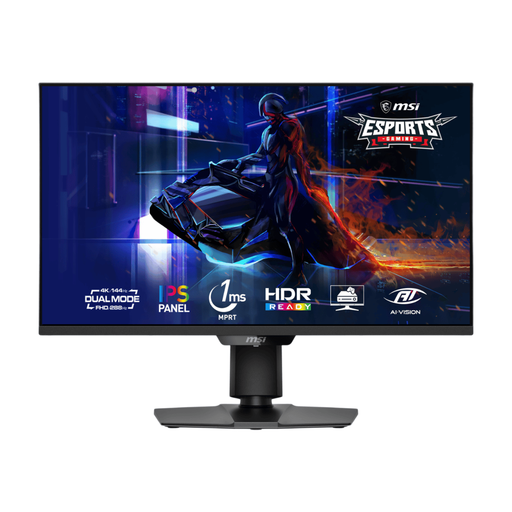
MSI MAG 275UPD E14 27-inch dual-mode 4K UHD monitor
Consider this for a higher-resolution writing layout if you intend to use its UHD mode for documents and multiple panes.
The product title distinguishes UHD at 144 Hz from an alternative Full HD mode at 288 Hz. Check the intended mode and your laptop connections rather than treating the dual-mode feature as extra documentation space.
View on Joybuy
 No image available
BenQ MA270UP 27-inch 4K UHD USB-C monitor
Consider this when a 4K documentation workspace and USB-C laptop connection are both priorities.
The product title specifies a Nano Glossy IPS display and an adjustable stand, and presents the model as Mac-oriented. Check that its screen finish suits the desk lighting and that the required USB-C functions work with your computer and cable.
View on Joybuy
 No image available
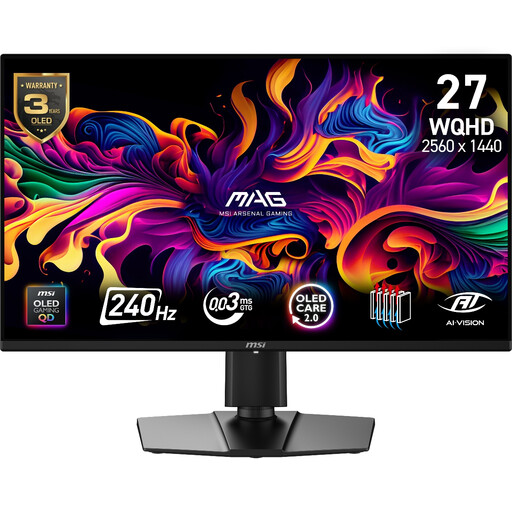
MSI MAG 274QP QD-OLED X24 27-inch-class WQHD monitor
Consider this QHD-class option if its screen characteristics and positioning suit a desk used for long reference pages.
The product title specifies QD-OLED, 2560 × 1440 resolution and 240 Hz. Check the required laptop connections separately if one-cable docking is part of the setup.
View on Joybuy
Frequently asked questions
Does a UK employer need to assess a monitor setup used for API documentation?
Yes, where a worker uses display screen equipment daily as part of normal work for continuous periods of an hour or more, the employer must carry out a workstation assessment. The Health and Safety Executive says the assessment covers the whole workstation, working conditions and the work being done; choosing a monitor does not replace it.
Where should the monitor sit during long writing sessions?
The Health and Safety Executive advises placing the top of the screen level with the eyes and the screen about an arm’s length away, with the screen and keyboard directly in front of the user. Check whether each person can achieve that position with the stand or a suitable mounting arrangement as part of the full desk setup.
Will a USB-C monitor display from and charge any USB-C laptop?
No: USB-C describes the connector, not a guarantee of video output or adequate charging. BenQ’s USB-C guidance notes that port functions differ, so check the laptop’s video specification, the monitor’s power delivery and the cable before planning to use one connection.
Is QHD or 4K more useful for API documentation?
Choose between them according to the layout you can use comfortably: 27-inch QHD can serve an editor-and-reference workspace, while 27-inch 4K offers more native pixels for detailed simultaneous panes. Dell and BenQ specify 2560 × 1440 for the cited QHD models, and LG specifies 3840 × 2160 for its cited 4K model; check your preferred text scaling before deciding.


