What to check when choosing
For piano-score notation at a shared desk, establish the screen space and physical position you need before weighing laptop connections or features for other creative work.
| Concern | What to check | Who this matters to |
|---|
| Score detail and workspace |
Compare native resolution and the display scaling you can read comfortably; check the views available in your notation software. |
If I work on dense piano pages, I want to see the notes and tools without constantly changing zoom. Around 33% of consumers would put score detail and workspace first. |
| Positioning and shared viewing |
Measure the desk and check stand height and tilt; consider swivel or mounting if the screen must move between users. |
When someone else uses the desk, I need to reposition the screen for my own seat rather than work around a fixed angle. Comfortable positioning would come first for around 25% of consumers. |
| Laptop and device sharing |
Match USB-C video and power delivery to the laptop; check KVM functions if two computers must share peripherals. |
I want to connect my laptop or change computers without rebuilding the desk setup each time. Around 25% of consumers would make connections and switching their primary concern. |
| Colour-sensitive creative work |
Check published colour coverage and calibration features only if your work alongside notation requires them. |
If I also prepare colour-sensitive graphics, I need the monitor to serve that work as well as display a score. This would be the first consideration for around 17% of consumers. |
Joybuy monitors for this setup
These monitors offer 4K options to consider for displaying a piano score at a shared desk. Compare their stated connections and stand arrangements with your own computer and available space; the models do not all serve the same device-sharing needs.
 No image available
MSI MD272UPSW 27-inch 4K Smart Monitor
Consider this for score work where a 27-inch 4K IPS screen and a laptop connection are priorities. Its name specifies USB-C 65 W and Multi-Control; check the laptop’s video and charging requirements and how Multi-Control operates before relying on a two-computer workflow. Confirm the exact model against the technical code 9S6-3PB19H-263.
Joybuy
 No image available
BenQ MA270UP 27-inch Nano Glossy 4K Monitor
Consider this if you want a 27-inch 4K IPS screen with an adjustable stand for the shared desk. The name identifies USB-C and a Mac-oriented design; check video and charging compatibility with the computer you will actually connect.
Joybuy
 No image available
LG 27UP650K 27-inch 4K IPS Monitor
This is a 27-inch 4K option for displaying a score when HDMI or DisplayPort suits your computer. The name also specifies built-in speakers; if you need USB-C laptop video, charging or switching between computers, check those functions separately rather than assuming they come with this model.
Joybuy
 No image available
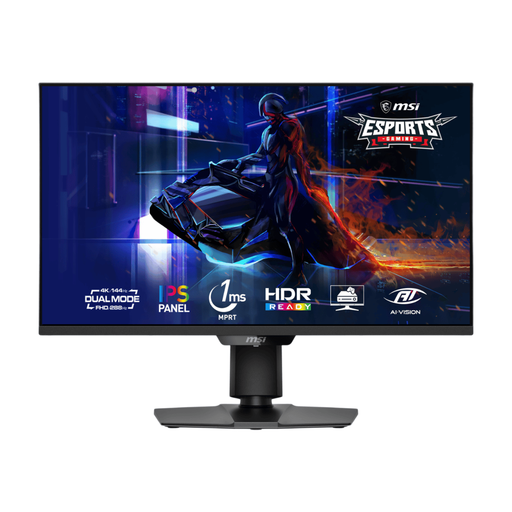
MSI MAG 275UPD E14 27-inch 4K Monitor
Its 27-inch 4K format makes this another screen-size option for score entry. The name specifies a 144 Hz UHD mode and a 288 Hz FHD mode, but those gaming modes are not a reason to assume a better notation workflow. Check USB-C and source-switching requirements separately if they matter at your desk.
Joybuy
 No image available
ASUS ProArt PA27DCE-K OLED 4K UHD Monitor
Consider this 4K model if the screen will serve visual-creative work as well as notation. Its name identifies an OLED panel; check the exact USB-C video and charging functions for your laptop, and assess off-centre viewing if someone else regularly needs to see the score.
Joybuy
Questions about the setup
What size and resolution should I start with for piano notation?
A 27-inch 4K IPS monitor is a practical starting point for a shared desk. BenQ UK and Dell UK list 27-inch 4K examples approximately 61 cm wide; measure your desk and check that score pages remain readable at the display scaling you prefer before choosing a higher-resolution option.
How should I position a monitor for a long notation session?
Position the screen directly in front of you, with its top around eye level and the display about an arm’s length away, as the Health and Safety Executive advises. If two people use the desk, check that the stand or a suitable mount lets each person reposition it.
Will one USB-C cable show the score and charge my laptop?
Only if the laptop supports the required USB-C video connection and the monitor provides sufficient power for it. The published power-delivery ratings for the BenQ PD2705U, LG 27UP850K-W and ASUS PA279CRV differ, so compare the exact monitor specification with your laptop’s requirements.
Do I need a KVM switch at a shared desk?
A KVM switch is useful if two computers regularly need to share one keyboard and mouse as well as the monitor. Samsung Business UK specifies a built-in KVM for the ViewFinity S8 S80UD; if you only reposition one computer’s display between users, check the stand and connections instead.
Can notation software use more than one score view?
Yes, in software that supports it: Steinberg documents multiple project windows for the same project in Dorico Pro 6.2, including for comparing layouts across displays. That can make extra workspace useful, but a second monitor is not a prerequisite for entering piano notation.


