What matters when choosing
Check the screen and keyboard positions at both desk heights first. Then decide how much room your browser-based tests need on screen and whether your laptop setup calls for docking.
| Concern | What to check | Who this matters to |
|---|
| Seated and standing position |
Compare stand height travel or compatible mounting options with your desk heights; check keyboard position too. |
When I change desk height, I need the screen and keyboard to stay comfortably aligned rather than raising my shoulders or twisting. Roughly 36% of consumers put workstation positioning first. |
| Browser and test-tool space |
Compare screen size, resolution and orientation with your window layout; check scaling and browser zoom for the tests you run. |
I need to follow focus through a page while keeping test notes or developer tools in view. For around 29% of consumers, workable screen layout is the primary concern. |
| Laptop and peripherals |
Check laptop video output, monitor USB-C functions and charging requirements; confirm how peripherals connect. |
If my laptop powers the test setup, I want to connect the display and peripherals without an awkward changeover. About 21% of consumers prioritise docking and peripheral connections. |
| Long test sessions |
Check placement and room reflections before weighing model-specific display comfort features. |
During repeated manual checks, I need to see the focus indicator clearly without fighting reflections. Visual comfort comes first for roughly 14% of consumers. |
Joybuy monitor choices
These monitors offer QHD or 4K screen choices for a keyboard-testing workspace. Compare each model’s physical adjustment and connections with your desk and computer before deciding.
 No image available
BenQ MA320UP 32-inch 4K USB-C monitor
Consider this larger screen if your browser and test tools need room side by side. Its listed features include a Nano Glossy IPS panel and a height-adjustable stand; check the stand’s reach at both desk heights and your laptop’s USB-C video and charging compatibility.
 No image available
BenQ MA270UP 27-inch 4K USB-C monitor
This 27-inch option suits a desk setup where you want 4K resolution and a USB-C connection. It has a Nano Glossy IPS panel and a height-adjustable stand; check scaling, stand reach and laptop connection requirements for your workflow.
 No image available
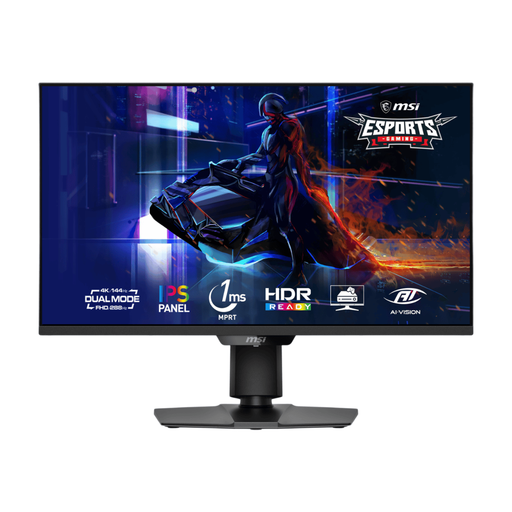
MSI MAG 275UPD E14 27-inch 4K monitor
Consider this 27-inch 4K screen if its size fits your browser-and-tools layout. Its title lists a 144 Hz UHD mode and a 288 Hz FHD mode; neither figure replaces checking positioning and the connections your test computer needs.
 No image available
ASUS ProArt PA278CV IPS WQHD monitor
A WQHD screen is an option for a conventional browser-and-test-tools layout. Check the stand’s height range against both desk positions, and confirm the exact USB-C charging and connection requirements if you use a laptop.
 No image available
ASUS ProArt PA328QV IPS WQHD monitor
Consider this WQHD model if a larger physical screen suits your window layout. Measure the available desk space and viewing distance, and check whether its adjustment range covers your seated and standing positions.
Frequently asked questions
How should I position the monitor when testing at a standing desk?
Set up both desk positions so the top of the screen is near eye level, the display is roughly an arm’s length away and the keyboard is just below elbow height, following Health and Safety Executive guidance. Keep the screen and keyboard in front of you rather than twisting towards either one.
Is a height-adjustable monitor stand enough for sitting and standing?
It is enough only if its adjustment range works with your desk heights and viewing position in both modes. Compare those measurements before buying; if the stand falls short, check whether a compatible monitor arm and suitable desk mounting arrangement would help.
Do I need 4K resolution to test keyboard navigation?
No. Government Digital Service keyboard checks address whether interactive elements are reachable, focus is visible and focus order is logical, rather than prescribing a screen resolution. Choose between QHD and 4K for the window layout you need, then check scaling and browser zoom against your test conditions.
When does a workstation assessment matter for this work?
The Health and Safety Executive says employers must assess a workstation when a worker uses display screen equipment daily as part of normal work for continuous periods of an hour or more. The assessment considers the whole workstation, the work and individual requirements—not just the monitor.
What should I check before connecting a USB-C monitor to my laptop?
Confirm that the laptop supports the monitor’s required USB-C video connection, that the stated power delivery meets its charging needs and that peripherals connect as you expect. Functions vary by model: BenQ UK, for example, lists 90 W USB-C power delivery and KVM for the PD2706U, which does not establish the specifications of other monitors.


