PDF-heavy researchers
If you read long papers and compare tables or methods sections, judge a screen by how your usual documents look at a comfortable text size, not by its diagonal measurement alone.


For a laptop-based literature review, a height-adjustable 27-inch QHD monitor is a sensible single-screen choice if its connections meet your laptop’s needs and it gives you enough room for papers and notes at a readable text size. A 27-inch 4K display offers more pixels for document panes, while two screens suit work that calls for sources and a draft to stay visible together; either setup still needs suitable desk space and screen positioning.
If you read long papers and compare tables or methods sections, judge a screen by how your usual documents look at a comfortable text size, not by its diagonal measurement alone.
If your laptop is your main computer, check whether a monitor can carry the video connection, charging and peripheral connections your desk actually requires.
If you regularly keep a paper, reference manager and draft open together, decide whether one higher-resolution screen gives you enough usable space or whether your desk can accommodate two displays.
Start with the text size and window arrangement you can use comfortably: compare QHD and 4K on a single 27-inch screen, then consider a second display if sources and writing tools need to remain visible at once. A Full HD screen may suit a simpler, one-document workflow, but check its usable space before choosing by size alone.
| Concern | What to check | Who this matters to |
|---|---|---|
| PDF workspace | Compare screen size and native resolution, then view a typical PDF beside your notes at your preferred text size. | If I compare detailed papers with a draft, I need enough readable space without constantly rearranging windows. Around 31% of consumers put document workspace first. |
| Laptop connection | Match the laptop’s video output and charging requirements to the monitor’s stated ports and power delivery; check the included cable. | When my laptop drives the desk setup, I want its display and essential peripherals connected without repeated cable changes. For around 25% of consumers, laptop integration is the primary need. |
| Screen positioning | Check stand adjustment or suitable mounting, viewing distance and possible glare at your desk. | During long reading sessions, I need to place the screen where I can see it without awkward posture or reflections. Positioning is the first concern for around 25% of consumers. |
| Sources beside writing | Measure desk space and check whether your computer supports the intended display arrangement before adding a second screen. | If I refer to a paper while drafting, I want both to stay visible rather than switching between them. Around 19% of consumers prioritise this side-by-side workflow. |
A larger screen does not by itself provide a readable PDF layout or a suitable position on your desk. The Health and Safety Executive advises considering the screen alongside the rest of the workstation.
Compare size with native resolution, and check that the stand or a suitable mount lets you position the screen for your desk and chair.
Video, data and power-delivery functions vary by monitor and must also work with the laptop’s port and charging requirements.
Check both manufacturers’ connection specifications, the monitor’s stated power output and whether the required cable is included.
A separate charger, dock or adapter may be needed if the intended single-cable connection does not meet those requirements.
A manufacturer’s flicker-free or low-blue-light feature does not replace attention to screen position, lighting and breaks. The Health and Safety Executive includes those measures in its display-screen guidance.
Check glare and screen height at your desk before treating display comfort features as a deciding factor.
Two displays take more room and need positioning and connections of their own. They are most relevant when you routinely need source material and writing tools visible together.
Lay out your usual paper, notes and draft windows, then measure the desk and check your computer’s display support.
A second screen may also mean accommodating another stand, mount or cable on the desk.
Dell’s UltraSharp models offer reference points for a laptop-centred desk where display resolution, adjustment and hub connectivity matter.
BenQ’s home-office models provide options to examine if stand adjustment or laptop connections are central to your setup.
LG’s UltraFine 27UP85ZK-W is a model to examine if you want a 27-inch 4K screen for a laptop desk.
These monitors offer QHD or 4K single-screen options for reading papers and working with notes. Compare their stated connections and your preferred text size before deciding whether one screen meets your workflow.
 No image available
Consider this for a single-screen paper-and-notes layout if you prefer a 27-inch 4K display and need a height-adjustable stand.
The title specifies USB-C and a Nano Glossy finish. Check reflections at your desk, plus your laptop’s video and charging requirements and the included cable.
 No image available
This is a single-screen option for reading detailed PDFs while keeping writing tools open.
Its title specifies an IPS panel, USB-C and 65W power delivery. Check whether your laptop supports the intended video connection and can charge adequately at 65W.
 No image available
Consider this QHD model if your usual PDFs and notes fit at a text size you find comfortable without needing a 4K layout.
Check the exact ports and stand adjustments for your desk. If laptop video or charging over USB-C matters, confirm those functions for this variant before buying.
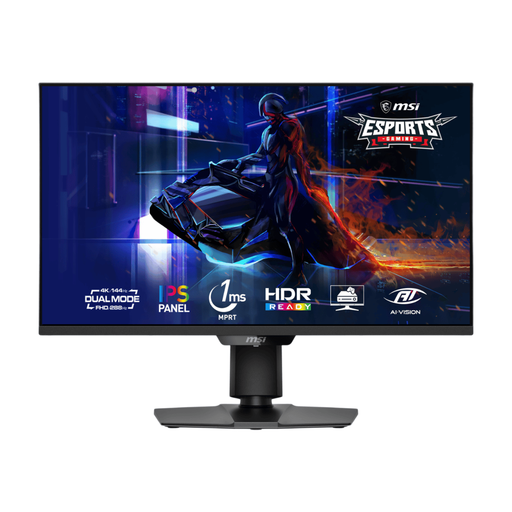 No image available
For document work, assess this model at the 4K text size you would use, rather than choosing it for its gaming modes alone.
The title lists 4K UHD at 144Hz and Full HD at 288Hz. Check the video connection your computer needs and make separate arrangements for laptop charging if required.
 No image available
This is another single-screen option for viewing papers and notes at 4K resolution, subject to your preferred scaling and text size.
The title specifies 60Hz, HDMI, DisplayPort and built-in speakers. Check how your laptop will connect and charge if you need a one-cable desk setup.
For UK workers who use display-screen equipment daily as part of their normal work, continuously for an hour or more, the Health and Safety Executive says the employer must assess the workstation. Its home-working guidance distinguishes this from occasional or short periods of use at home; the assessment concerns the workstation, not a prescribed monitor model.
The Health and Safety Executive advises placing the top of the screen roughly level with your eyes and the display about an arm’s length away. Check that your stand, desk and chair let you achieve a comfortable position without glare.
No. The Health and Safety Executive notes that long spells of display-screen work can cause tired eyes and discomfort; consider lighting, screen position and breaks alongside any manufacturer-listed display features.