Markers short on desk space
If your laptop, keyboard, papers and marking materials share a small surface, compare the monitor’s full dimensions and stand arrangement, not just its screen diagonal.


For a small marking desk, start by checking whether a compact monitor and its stand leave room for your laptop, keyboard and papers. A higher-resolution screen is worth considering if you regularly need a submission, rubric and feedback tool visible together, but its physical fit and your laptop connection still need checking. Screen-position options and the wider workstation matter during long marking sessions.
If your laptop, keyboard, papers and marking materials share a small surface, compare the monitor’s full dimensions and stand arrangement, not just its screen diagonal.
If you spend extended sessions reading submissions and entering feedback, look at how the screen can be positioned within your whole workstation. The Health and Safety Executive advises considering the equipment, furniture and working conditions together.
If you keep a submission, rubric and feedback tool open together, compare usable screen resolution as well as size. For a USB-C setup, check your laptop’s video output and charging requirements separately.
Choose the screen arrangement that fits your marking workflow, then check the complete footprint, connections and viewing position against your own desk and laptop.
Consider it: You usually focus on one assignment at a time and need to preserve desk width.
Trade-off: Keeping a submission, rubric and feedback panel open together may involve more window switching than on a higher-resolution display.
Consider it: Seeing more marking material at once matters enough to accommodate a larger screen.
Trade-off: Check desk depth and the full monitor dimensions; USB-C video and charging also depend on your laptop.
Consider it: You want extensive on-screen workspace and have a desk suitable for the mount.
Trade-off: A clamp can leave desk surface clear, but the larger panel still needs adequate clearance and a workable viewing position.
| Concern | What to check | Who this matters to |
|---|---|---|
| Desk fit and positioning | Measure usable width and depth against the monitor-with-stand dimensions, or check the mounting requirements for an arm. | I need space left for my laptop and marking materials, with the screen in a workable position. Around 42% of consumers put desk fit and positioning first. |
| Readable document workspace | Compare resolution and screen size with the layout you use for submissions, rubrics and feedback. | Keeping several marking documents visible matters more to me than minimising screen size; around 33% of consumers make document workspace their primary concern. |
| Laptop connection and longer sessions | Check USB-C video support and charging needs, alongside the available screen adjustments. | I want my laptop connection and screen position to work through a marking session without an awkward setup. For around 25% of consumers, this is the main priority. |
The diagonal does not tell you how much desk space the stand needs. BenQ lists the GW2490 at 540 mm wide with its stand, while a clamp-mounted arrangement has different installation requirements.
Measure the space available for the complete monitor arrangement, including rear clearance, before ordering.
If the supplied stand crowds the desk, using another suitable stand or arm adds an accessory and a mounting check.
A USB-C connector alone does not establish video support or adequate charging. Dell lists DisplayPort Alt Mode and power delivery up to 65 W for the S2725DC.
Check your laptop’s USB-C video capability and charging requirement, as well as the cable needed for the intended connection.
A monitor feature does not determine whether your screen, seating and working routine suit a long marking session. The Health and Safety Executive advises looking at the whole workstation.
Set the screen in a workable position and consider your seating and breaks. If you mark assignments as an employee using display screen equipment regularly, use your employer’s workstation-assessment process.
A reference point for compact Full HD monitors, including the GW2490.
Examples spanning a compact adjustable display and a larger QHD USB-C option.
A clamp-mounted option to consider when a conventional stand uses too much desk surface.
These monitors offer different ways to approach the same small-desk marking task: compare their full dimensions and connections with your setup, particularly if you keep several documents open or work from a laptop.
 No image available
Consider this for document-based marking if a compact setup and screen positioning are priorities; measure the stand against the space available on your desk.
IPS WUXGA display. Check your laptop’s video output and charging needs before planning a USB-C setup.
 No image available
This Full HD option is worth considering if you usually mark one assignment at a time; frequent side-by-side work may call for more screen space.
IPS FHD display with a stated 75Hz refresh rate. Check the complete stand footprint and your laptop connection before buying.
 No image available
Consider this when you want a WUXGA display for reading and annotating assignments, while keeping the monitor arrangement manageable on a small desk.
IPS WUXGA display. Confirm the monitor-with-stand dimensions and any laptop connection requirements against your setup.
 No image available
This QHD option is relevant if arranging a submission and feedback tools on screen is a priority, provided the full monitor arrangement fits your desk.
IPS QHD display. Check external dimensions and laptop compatibility rather than judging desk fit by screen size alone.
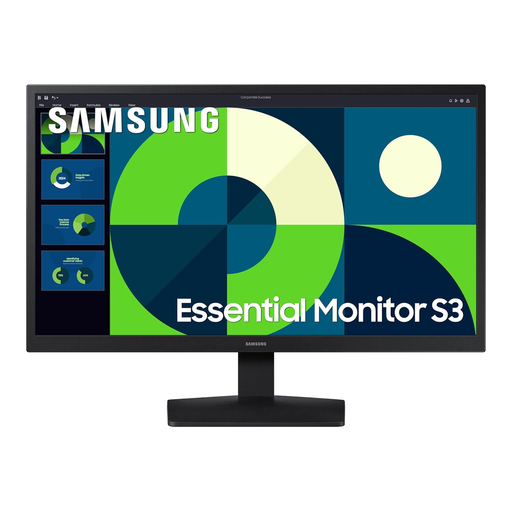 No image available
For a straightforward assignment-marking setup, check whether this monitor’s stand leaves enough room for your laptop and papers.
Compare its inputs with your computer and confirm the screen-position adjustments you need before ordering.
It can be enough if desk space is tight and you normally work on one document at a time. If you often need the submission, rubric and comments visible together, compare the screen layout you can use on a higher-resolution option before deciding.
Choose an adjustable stand when you need to reposition the screen without installing a desk mount. An arm or clamp-mounted stand can leave more surface clear, but only if the desk edge or mounting point is suitable; LG’s 32UN880K-B is one C-clamp example.
No: the laptop must support the required USB-C video mode, and its charging needs must suit the monitor’s power delivery. Dell UK lists DisplayPort Alt Mode and up to 65 W for the S2725DC; check your laptop and intended cable rather than relying on the connector shape.
Consider the complete workstation, not just the monitor. The Health and Safety Executive says display-screen-equipment rules apply to employees who use it daily as part of normal work for continuous periods of an hour or more; if that describes your work, use your employer’s workstation-assessment process, including for a home setup.