Laptop-first responsive developers
You keep code, DevTools and a responsive viewport visible while working from one laptop, and want to assess whether USB-C can simplify the desk connection.


Choose a monitor around the tools you need visible and the computers you connect, rather than expecting the screen to reproduce a phone. A 27-inch 4K display is one option for arranging code, DevTools and a responsive viewport together; prioritise compatible USB-C charging, colour-review features or multi-computer switching according to your workflow. Chrome for Developers and Apple Developer both describe browser device modes as approximations, so check important mobile behaviour on real devices.
You keep code, DevTools and a responsive viewport visible while working from one laptop, and want to assess whether USB-C can simplify the desk connection.
You debug layouts but also review screenshots, design assets or colour-sensitive interface work, so the display’s colour modes matter alongside workspace.
You switch between computers or connect several peripherals and need to consider KVM switching, a USB hub or daisy-chaining as well as the panel.
Start with enough comfortable space for your debugging tools, then check the connection and positioning requirements of your desk. Colour and switching features matter when those tasks are part of your work.
| Concern | What to check | Who this matters to |
|---|---|---|
| Shared workspace | Compare screen size, resolution, comfortable text scaling and stand or mount adjustment. A 27-inch 3840 × 2160 display is an option, not a requirement. | If code, DevTools and a narrow viewport must stay visible together, I need room to inspect layout changes without losing sight of my tools; around 40% of consumers put shared workspace first. |
| Laptop connection | Check your laptop’s USB-C video support, the monitor’s stated charging wattage and the cable and ports needed for data. | When I move a laptop on and off the desk, I want fewer separate connections without relying on inadequate charging; for around 30% of consumers, a simpler laptop connection is the primary concern. |
| Colour review | If you review visual assets, check the exact model’s gamut and calibration claims and its available colour modes. | I also review screenshots and interface assets, so colour settings deserve attention beyond breakpoint inspection; colour review comes first for around 20% of consumers. |
| Multiple computers | Confirm the required KVM or daisy-chain function, supported input combinations and how peripherals are shared. | Switching between computers makes connected peripherals part of my monitor decision; around 10% of consumers place that workflow above their other monitor needs. |
Chrome for Developers calls Device Mode a first-order approximation; Apple Developer likewise says viewport presets do not exactly reproduce device layout, rendering and behaviour.
Use emulation to inspect breakpoints and layout defects, then check important forms, keyboard interactions and browser-specific behaviour on representative real devices.
Charging capacity and connection features differ between models. BenQ lists 65W Thunderbolt power delivery for the PD2725U, LG lists USB-C charging up to 90W for the 27UP850K-W, and ASUS lists up to 96W for the PA279CRV.
Check your laptop’s video-output support and charging requirement against the exact monitor’s ports, stated power delivery and cable requirements.
A screen’s size and resolution do not establish whether its supplied stand can put it where you need it. The Health and Safety Executive also advises attention to workstation setup for regular display-screen users.
Check available desk depth, stand adjustment and VESA mounting compatibility before choosing a model.
If the supplied stand cannot provide the position you need, using a compatible monitor arm may add another item to your setup.
The ASUS ProArt Display PA279CRV is a 27-inch 4K IPS option for developers whose layout work also involves colour-sensitive UI or asset review.
The BenQ PD2725U is a 27-inch 4K IPS option to examine when switching between computers or Thunderbolt daisy-chaining is part of the workstation plan.
The LG 27UP850K-W is a 27-inch 4K IPS option for a laptop-led desk where USB-C display, data and charging are priorities.
These monitors offer different ways to build a home-office debugging desk: 4K workspace, USB-C connections on some models, and options for colour-focused review. Check each model’s connection and positioning details against your own setup.
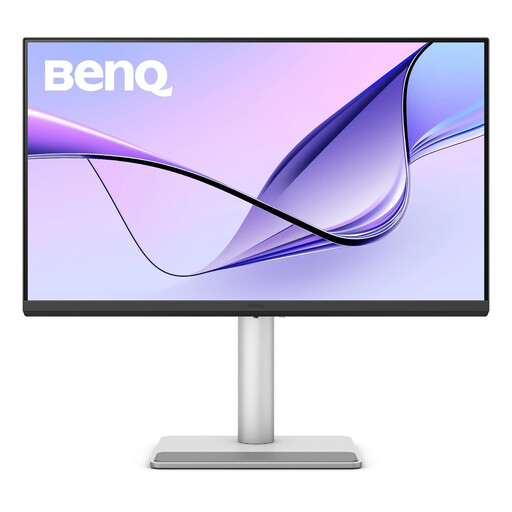 No image available
Consider this model if you want a 27-inch 4K screen for a laptop-based debugging desk and need height adjustment.
The product name specifies USB-C and a height-adjustable stand. Before planning a one-cable setup, confirm USB-C video support and charging compatibility with your laptop.
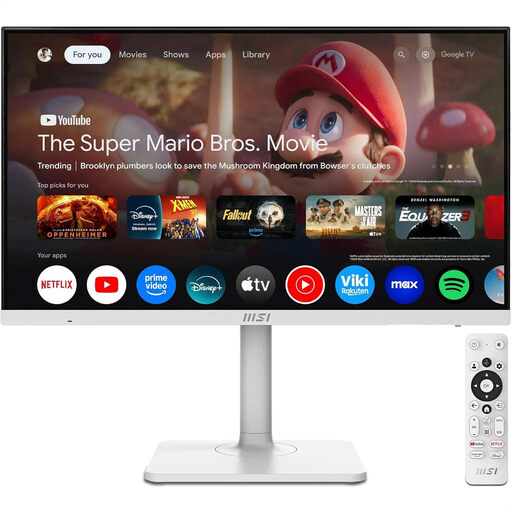 No image available
Consider this model when a 27-inch 4K workspace and a USB-C laptop connection are both on your list.
Its product name specifies Google TV, USB-C 65W and Multi-Control. Check whether your laptop supports video over USB-C and whether 65W meets its charging needs; confirm the connections required for Multi-Control if you intend to use it.
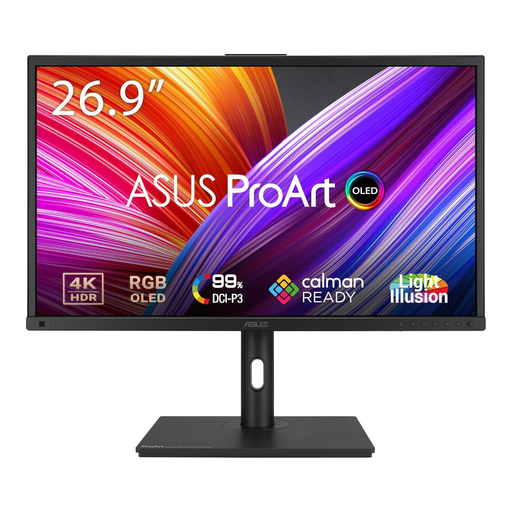 No image available
Consider this model if colour-focused UI review is part of your layout work, alongside the need for a 4K display.
It is a different model from the ASUS PA279CRV discussed above. If you need one-cable laptop use, check the PA27DCE-K’s exact USB-C video and charging capabilities before choosing it.
 No image available
Consider this model if your priority is a 27-inch 4K workspace and you can connect through its stated HDMI or DisplayPort inputs.
The product name lists 60Hz, 5ms and 95% DCI-P3 coverage. It is distinct from the LG 27UP850K-W discussed above; check the 27UP650K’s connections separately if USB-C video or charging is essential.
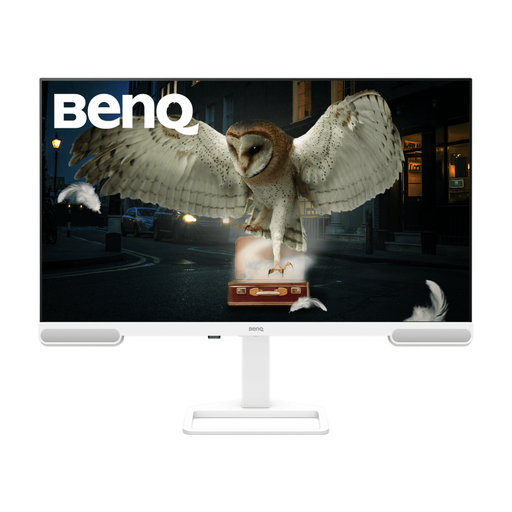 No image available
Consider this model if you want to assess a screen larger than the 27-inch options for your home-office workspace.
The product name lists 3840 × 2160 resolution and a 79.2 cm (31.2-inch) display, while other supplied descriptions give a different size. Confirm the exact dimensions, stand adjustment and laptop connection requirements before buying.
No. Chrome for Developers describes Device Mode as an approximation, and Apple Developer says viewport presets do not exactly reproduce device layout, rendering and behaviour. Use the monitor to inspect responsive states, then check important interactions on representative real devices.
Check that your laptop can send video through the relevant USB-C connection, that the monitor’s stated power delivery meets its charging needs, and that the cable supports the required functions. LG UK lists display, data and up to 90W charging over USB-C for the 27UP850K-W; that specification applies to that model, not to every USB-C monitor.
The Health and Safety Executive’s display-screen guidance does not prescribe a particular monitor size or resolution. It says the UK Display Screen Equipment Regulations apply to workers who use display-screen equipment daily for continuous periods of an hour or more, including home workers; employers must assess the workstation and reduce risks. If this describes your work, ask your employer about its assessment process as well as checking whether the monitor can be positioned appropriately.
Not solely for breakpoint inspection. Colour modes and calibration claims become more relevant when you also review screenshots, assets or colour-sensitive UI. They do not replace checks of viewport behaviour or rendering on the devices you need to support.