Reading-prep users with small desks
You need space for a keyboard and paper exercises alongside the monitor. Stand depth and mounting options can matter as much as the screen diagonal.


Start with the space available for the stand, keyboard and papers, then decide whether text detail or laptop connectivity matters more. For reading-exercise preparation, a compact QHD monitor is worth considering for dense layouts, while a Full HD model may meet simpler needs; either choice still needs to fit the desk, reach a suitable screen position and connect to your computer.
You need space for a keyboard and paper exercises alongside the monitor. Stand depth and mounting options can matter as much as the screen diagonal.
You regularly read, edit or compare exercise materials and want to assess whether a compact QHD display and an adjustable screen position suit that work.
You want a straightforward laptop connection and possibly charging through the monitor, without overlooking the laptop’s video-output support or the space needed for the stand.
Check physical fit and screen position before comparing resolution and connections: the Health and Safety Executive advises placing the top of the screen around eye level and the display about an arm’s length away.
| Concern | What to check | Who this matters to |
|---|---|---|
| Desk fit and screen position | Measure the full stand width and depth against the space left for your keyboard and papers. Check the adjustment range or mounting requirements. | If my papers and keyboard already fill the desk, I need a stand arrangement that leaves room to position the screen sensibly. Around 42% of consumers put desk fit and screen position first. |
| Text detail | Compare native resolution at the intended screen size and check your computer’s output and preferred display scaling. | When I edit dense reading sheets or compare materials side by side, I want enough screen detail for that layout. Roughly 33% of consumers make text detail their primary concern. |
| Laptop connection | Match the monitor’s video inputs to your computer; for USB-C video and charging, check the laptop’s supported video mode and power requirement. | If I connect a laptop each day, I want a setup that works with its actual ports without relying on an assumed USB-C capability. About 25% of consumers prioritise a straightforward connection. |
A compact panel can still leave too little usable desk depth once its stand, keyboard and papers are in place. The Health and Safety Executive’s positioning guidance concerns screen height and viewing distance, not a particular panel size.
Measure the available width and depth, then compare the complete stand dimensions and adjustment options before ordering.
If the supplied stand prevents a suitable position, a compatible arm, riser or different desk arrangement may be needed.
Features labelled for eye care or flicker reduction do not establish that the screen is positioned well or that reflections are controlled. The Health and Safety Executive also advises attention to posture and changes of activity.
Assess the screen’s position, lighting and your wider working arrangement; treat display modes as additional features rather than the deciding factor.
A monitor’s USB-C power-delivery rating does not establish what a particular laptop can output or how much power it needs. Dell UK specifies up to 90 W power delivery for the P2425HE, but laptop compatibility remains a separate check.
Check the laptop manual for the required USB-C video mode and compare its charging requirement with the exact monitor’s rating.
An adapter, suitable cable or separate charger may be needed for a laptop that cannot use the intended single-cable connection.
BenQ UK specifies a 100 × 100 mm VESA pattern for the GW2490. That pattern alone does not establish whether a particular arm supports the monitor’s weight or whether its clamp fits the desk.
Check the arm’s pattern and weight limits, the desk’s clamp clearance and the screen position the arm can achieve.
Dell’s P2425DE and P2425HE illustrate two compact, adjustable monitor routes: QHD for the P2425DE and Full HD with USB-C power delivery for the P2425HE.
The GW2490 is a 23.8-inch Full HD option whose published stand dimensions can help with a small-desk fit check.
LG’s 24MR400-B represents a 23.8-inch Full HD IPS route with reading-oriented display settings.
These monitors offer compact screen options for preparing reading exercises, including Full HD and QHD models. Compare each exact model’s stand and connections with your desk and computer before choosing.
 No image available
Consider this 24-inch model if screen positioning is important for your reading-prep workspace. Check its exact stand dimensions against the usable desk depth, and confirm its connections before relying on USB-C.
 No image available
This Full HD model is an option when you want a compact screen and need to assess stand adjustment. Allow for its stand as well as your papers and keyboard, and match its connections to your computer.
 No image available
Consider this model if a Full HD screen and laptop connection suit your workspace. Before planning a USB-C setup, confirm your laptop’s video support and charging requirement, and check that the stand fits the desk.
 No image available
This QHD model is worth assessing if dense exercise text or side-by-side materials drive your choice. Confirm the stand footprint before ordering and check your computer’s video-output support if you intend to connect through USB-C.
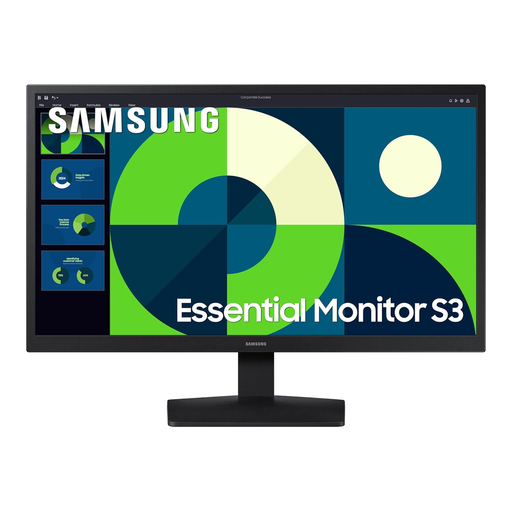 No image available
Consider this model if a straightforward screen arrangement meets your needs. Check the stand footprint against your desk and whether its positioning options can place the screen at a suitable height and distance.
Set up the whole workstation so the screen is at a workable height and distance. The Health and Safety Executive advises placing its top around eye level and the display about an arm’s length away; on a shallow desk, check that this still leaves room for your keyboard and exercise materials.
QHD provides more native pixels at the same stated screen size, which is relevant if your exercise layouts contain dense text or multiple windows. Dell UK specifies 2560 × 1440 for the 23.8-inch P2425DE; the Full HD P2425HE and BenQ GW2490 use 1920 × 1080. Check your computer’s output capability and the display scaling you find comfortable before choosing.
It can do both only when the exact monitor and laptop support the required video connection and the monitor’s power delivery suits the laptop’s charging needs. Check the laptop manual for its USB-C video mode, then compare its charging requirement with the monitor specification rather than relying on the connector shape.