Long-session card makers
If you spend extended periods reading, typing and editing cards, you may need a screen you can position to suit your chair and desk rather than one fixed at a single height.


For preparing revision cards, start with a monitor that fits your desk and connects to your computer, then choose its stand and resolution around the way you study. An adjustable Full HD screen suits focused reading and card editing; consider QHD if you regularly keep several documents and a card app visible together. Screen placement, glare and changes of activity still matter whichever monitor you choose.
If you spend extended periods reading, typing and editing cards, you may need a screen you can position to suit your chair and desk rather than one fixed at a single height.
If you keep notes, slides, source material and a flashcard tool open together, the additional pixels of a QHD screen may matter more to you than they would for a single-window workflow.
If you mainly want an external screen for creating and reviewing cards, check your laptop’s video connection before choosing a monitor for its additional hub features.
Decide how the screen needs to sit at your desk, whether you regularly view several materials together and how your computer will connect.
| Concern | What to check | Who this matters to |
|---|---|---|
| Screen positioning | Check height and tilt adjustment, plus pivot if you use portrait documents. The Health and Safety Executive advises placing the screen directly in front of you, with its top at eye level and about an arm’s length away. | If I spend long sessions reading and making cards, I want to position the display without working around a fixed-height stand. Around 42% of consumers put comfortable positioning first. |
| Visible workspace | Compare screen size and resolution: Dell UK lists 2560 × 1440 for the 23.8-inch P2425DE, against 1920 × 1080 for its similarly sized P2425H. | When I compare slides and notes while editing cards, I want enough room to see the material I am using. Roughly 33% of consumers prioritise workspace for several study materials. |
| Connection and simplicity | Match the monitor’s video input to your computer’s output. If you want a USB-C connection, check video and charging compatibility on the exact laptop and monitor. | If I mainly use one card app or document, I want an external display that connects to my computer without relying on hub functions I will not use. About 25% of consumers place that straightforward setup first. |
Screen size does not tell you how the stand moves. If its height cannot be changed, placing the display as the Health and Safety Executive advises may be harder at your desk.
Check the exact model for height, tilt, swivel and pivot adjustment rather than judging its stand from the product photograph.
A separate riser or monitor arm may be needed if the supplied stand cannot place the screen appropriately.
A monitor’s USB-C power-delivery rating does not establish that your laptop can send video to it or use the intended charging arrangement.
Check your laptop’s USB-C video output and charging requirements against the exact monitor’s connection specifications.
BenQ describes reading-oriented modes on its GW2490 family, but those settings do not settle questions about screen position, reflections or breaks. The Health and Safety Executive advises arranging screens and lighting to avoid glare and taking breaks or changing activity.
Choose a display mode to suit your preference while also checking where the screen sits and whether room lighting causes reflections.
QHD offers more pixels than Full HD at a similar screen size, but a single card app does not call for the same visible workspace as several documents open together.
Consider QHD for regular multi-window study; if you mostly work in one window, give screen positioning and connection compatibility equal attention.
Dell UK lists two Pro 24 Plus examples suited to different revision setups: the 23.8-inch Full HD P2425H and the 23.8-inch QHD USB-C hub P2425DE.
BenQ describes reading-oriented display modes for its GW2490 family, while the GW2490T is the variant whose manufacturer specifications list a fully adjustable stand.
LG UK lists the 24BA550-B as a 23.8-inch Full HD IPS monitor with an adjustable stand and several connection types.
These monitors offer different screen formats for preparing revision cards. Compare the space available on your desk and the connections your computer supports before choosing.
 No image available
Consider this QHD IPS model if you regularly keep several study materials visible while making cards.
If you plan to connect a laptop by USB-C, check that the laptop supports the required video output and charging arrangement.
 No image available
This WUXGA IPS model is worth considering if your revision work involves reading documents alongside the cards you are editing.
Check the stand’s positioning options and your computer’s video output; confirm laptop compatibility before relying on a USB-C connection for display and charging.
 No image available
A Full HD IPS option for a focused card, document and browser workflow; its product name specifies a 75Hz refresh rate.
Check the connection your computer needs and which cable is supplied, as the listed cable can vary by region. Confirm laptop compatibility if you intend to use USB-C.
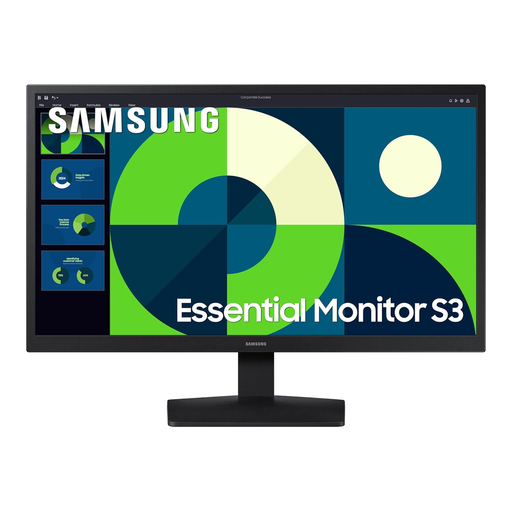 No image available
Consider this model if you want an external screen for cards and notes without choosing around hub features.
Its described tilt adjustment may not give you the screen height you need, so check how it would sit at your desk and whether its connections match your computer.
 No image available
This 31.5-inch option may suit you if you want a larger display for viewing study materials alongside revision cards.
Measure your available desk space and check how the stand can position the screen before choosing a display of this size.
No: Full HD is a reasonable choice for card editing and reading when you do not need several windows visible together. If you regularly compare notes, slides and a card app, QHD provides more pixels at a similar screen size: Dell UK lists 2560 × 1440 for the 23.8-inch P2425DE and 1920 × 1080 for the P2425H.
Prioritise a stand that lets you set the screen height and tilt for your desk; swivel and pivot can help if you change position or use portrait documents. The Health and Safety Executive advises placing the display directly in front of you, with its top at eye level and about an arm’s length away, so check the adjustments on the exact model.
No. BenQ describes reading modes as features of its GW2490 family, while the Health and Safety Executive also advises arranging the screen and lighting to avoid glare and taking breaks or changing activity. Treat the mode as a setting you can choose, not a substitute for arranging your workspace.
Confirm that the laptop’s USB-C port supports video output, then compare its charging requirements with the monitor’s stated power delivery if you want a one-cable arrangement. Dell UK lists power delivery up to 90W for the P2425DE, but that rating alone does not establish compatibility with every laptop.