PC RPG players seeking a wider view
A curved 21:9 or 32:9 screen may appeal if you have room for it and your games support the format. Check the native resolution against your graphics card before choosing screen width over other priorities.


Choose a 32-inch 4K 16:9 monitor if you want a large conventional screen and a format aligned with the 4K output modes described by PlayStation and Xbox; still check the exact HDMI modes before buying. A 21:9 ultrawide suits PC-first RPG play when your games, graphics card and desk can accommodate it, while a 49-inch 32:9 screen makes sense if horizontal space is the priority and you have room for its width. With OLED, also consider how long static game interfaces or desktop windows will remain on screen.
A curved 21:9 or 32:9 screen may appeal if you have room for it and your games support the format. Check the native resolution against your graphics card before choosing screen width over other priorities.
A 32-inch 16:9 4K monitor keeps the screen format aligned with console 4K output. Confirm the resolution, refresh rate and variable refresh rate supported by the monitor’s actual HDMI input.
If RPG HUDs, maps or desktop windows stay visible for long periods, weigh OLED’s panel-care requirements alongside screen size and room reflections.
Start with the device you will connect and the space on your desk. Then choose how much screen width you want and whether OLED suits your usage habits.
| Concern | What to check | Who this matters to |
|---|---|---|
| Wider game view | Check 21:9 or 32:9 support in the games you play, plus the monitor’s width, curve and native resolution. | If I mainly play RPGs on PC, I want room for an expansive view without crowding my desk. Around 33% of consumers would put that wider view first. |
| 4K detail and desk fit | Compare 32-inch 3840 × 2160 models by stand dimensions, adjustment and the input mode you plan to use. | For detailed maps and text, I would rather have a large 16:9 screen that fits my usual setup than an ultrawide. Around 27% of consumers would prioritise that balance. |
| Console connection | Confirm the exact HDMI resolution, refresh-rate and variable refresh rate combinations supported by the monitor. | If I switch between a console and PC, I need to know what signal the screen will accept before choosing its shape. Console compatibility would come first for around 20% of consumers. |
| OLED use and room light | Review the model’s panel-care guidance and surface finish against static HUD use and nearby light sources. | When I leave maps or desktop windows open, I need a screen that suits those habits as well as gaming. Around 20% of consumers would make OLED care and room lighting their primary concern. |
PlayStation and Xbox describe 16:9 output modes such as 4K and 1440p, while the ultrawide models discussed here have different native resolutions. What appears on screen depends on the monitor’s scaling and the signal negotiated through its HDMI input.
Before buying for PS5 or Xbox, check the monitor manual’s supported HDMI modes. Once connected, inspect the resolution, refresh rate and variable refresh rate shown in the console settings.
A 49-inch 32:9 display, a 45-inch 21:9 display and a 32-inch 16:9 display place different demands on desk width and viewing position.
Measure usable desk width and depth, including space for the stand, keyboard and speakers. Compare the exact monitor dimensions and curvature before ordering.
Depending on your furniture and the chosen monitor, you may need a different desk or a suitable mount.
RPG HUDs, maps and desktop applications can remain in the same position for long periods. LG warns that leaving the same image on an OLED monitor for a long time may cause faint marks.
Read the chosen model’s care instructions, use its available screen-care functions as directed and consider where lamps or windows may reflect in the screen.
LG UK lists the 45GX950A as a 45-inch curved 21:9 OLED option for a PC-first setup.
Samsung UK lists the 49-inch G95SD as a 32:9 OLED screen with a 5120 × 1440 Dual QHD resolution.
Dell UK specifies the AW3225QF as a 32-inch 3840 × 2160 QD-OLED monitor with a 16:9 format.
ASUS ROG lists distinct 32-inch 4K approaches: the dual-mode OLED XG32UCWG and the Fast IPS XG32UCG.
These choices include 49-inch ultrawides, a smaller 21:9 OLED and conventional-size 4K OLED screens. Choose by the format your games and devices can use, then check desk fit and the exact input modes for your setup.
 No image available
Consider its 32:9 format if wide-screen PC play is your priority and you have room for a 49-inch display.
The product name specifies a 1800R curve, Dual QHD resolution and 240Hz refresh rate. Check your games and graphics card for the desired mode, and confirm console HDMI behaviour and OLED care guidance if relevant.
 No image available
This is a 32:9 option for PC players who want substantial horizontal screen space and prefer a non-OLED panel.
The product name specifies 5120 × 1440 resolution, a 1500R curve, a VA panel and 165Hz refresh rate. Measure the desk space and confirm the HDMI modes you need for any console.
 No image available
Consider this model if you want an ultrawide OLED format without choosing a 45-inch or 49-inch screen.
The product name specifies WQHD resolution and 240Hz refresh rate. Check the exact aspect ratio and input modes for your devices, along with the model’s OLED care guidance.
 No image available
Its conventional 4K format is worth considering if you want a large screen without an ultrawide layout.
The product name specifies 3840 × 2160 resolution, 165Hz refresh rate and USB-C 65W. Confirm the exact console modes on its HDMI input and review its OLED care instructions for prolonged static use.
 No image available
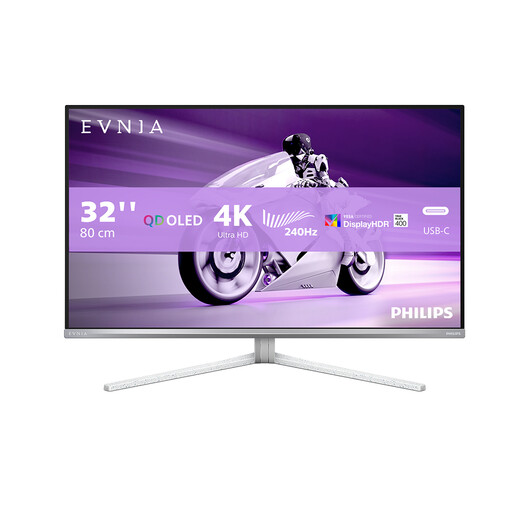
This 32-inch UHD OLED model is another conventional-format choice for detailed RPG interfaces and game art.
Confirm the refresh rate for this exact variant before ordering, along with the console input modes and OLED care guidance relevant to your use.
Check the monitor’s supported HDMI modes, not just its highest advertised refresh rate. PlayStation Support says PS5 supports 4K 120Hz output with a compatible display; its settings can also test supported 1440p modes, so inspect the detected signal after connecting the monitor.
Yes, when the console and display support the chosen mode. Xbox Support describes 4K 120Hz support for Xbox Series X|S with compatible equipment; check the console’s TV and display options after connecting it, particularly if the monitor has an ultrawide native resolution.
Yes, prolonged static images are worth considering if HUDs, maps or desktop windows remain visible. LG says leaving the same image on an OLED monitor for a long time may cause faint marks and describes an Image Cleaning function; follow the care instructions for the model you choose.
Use an appropriate electrical-waste collection route rather than household rubbish. GOV.UK advises against putting unwanted electrical products in household rubbish; check your local authority’s collection or recycling options for a monitor.