What matters when choosing?
Settle the desk and laptop connection requirements before choosing between QHD and 4K. Then check whether each person can position the screen without troublesome reflections.
| Concern |
What to check |
Who this matters to |
| Shared-desk connection |
Check USB-C video support and the monitor’s charging wattage against each laptop. Decide whether a USB hub or wired Ethernet is needed. |
If I change laptops at a shared desk, I want fewer connection and charging changes without losing the ports I use. Around 36% of consumers put that handover need first. |
| Slide detail |
Compare native resolution: the Dell P2725DE is 2560 × 1440, while the LG 27UP850K-W is 3840 × 2160, according to their manufacturers. Consider your preferred display scaling. |
When I review dense charts, screenshots or image assets, I want enough on-screen detail to inspect them comfortably. That is the primary concern for around 28% of consumers. |
| Position and reflections |
Check the stand’s adjustment, available desk space and where lights or windows will reflect in the screen. |
If several people work at the same station, I need to reposition the display and manage glare for sustained screen work. Roughly 36% of consumers prioritise that setup need. |
Brands to consider
These examples describe particular monitor models, not every display made by each brand.
Dell
Dell’s Pro 27 Plus QHD USB-C Hub Monitor P2725DE is a 27-inch option for a desk where connectivity and physical adjustment are priorities.
- Dell lists 2560 × 1440 resolution, up to 90W USB-C power delivery, RJ45 Ethernet, 150 mm height adjustment, pivot, swivel, tilt and an anti-glare finish for this model.
- Its native resolution is lower than the 3840 × 2160 LG 27UP850K-W; choose between them according to the connection features and slide detail you need.
LG
LG’s UltraFine 27UP850K-W is a 27-inch 4K USB-C option for reviewing detailed slide layouts and visual assets.
- LG lists a 3840 × 2160 IPS display, USB-C display and data connection with up to 90W charging, plus height, pivot and tilt adjustment for this model.
- Check whether its stated adjustments and connections suit every user and laptop at the shared desk; the model’s 4K resolution does not settle those requirements.
BenQ
BenQ’s GW2790QT is a QHD USB-C option for a shared desk that also handles online meetings.
- For the GW2790QT, BenQ lists height, tilt, pivot and swivel adjustment, USB-C data transfer and 65W charging. It also advertises Noise Filter Speakers and a noise-cancellation microphone.
- The stated 65W charging level is below the up-to-90W figures listed for the Dell P2725DE and LG 27UP850K-W. Check it against the laptops that will use the desk.
Joybuy monitor options
These monitors offer 4K or QHD choices for slide work at a shared desk. Decide whether screen detail, desk fit, adjustment or laptop connectivity takes priority; check the exact connection and screen finish before relying on a particular setup.
 No image available
BenQ MA270UP Nano Glossy 27-inch 4K USB-C Mac monitor
Consider this model when 4K slide detail and a height-adjustable screen matter at the shared desk.
Its title specifies an IPS display and Nano Glossy finish. Check reflections in the intended position, and confirm USB-C video, charging suitability and Mac-specific functions for each laptop.
View on Joybuy
 No image available
BenQ MA320UP Nano Glossy 32-inch 4K USB-C Mac monitor
This larger 4K option is worth considering if the shared desk has room for the screen and a suitable viewing position.
The title specifies an IPS display and height-adjustable stand. Check reflections from its Nano Glossy finish, along with USB-C video, charging suitability and Mac-specific functions for the laptops in use.
View on Joybuy
 No image available
MSI MD272UPSW 27-inch 4K Smart Monitor with Google TV
This 27-inch 4K model is an option for detailed slide work where its additional smart-monitor features are also wanted.
The title specifies an IPS display, USB-C 65W, Dolby Audio and Multi-Control. Confirm USB-C video support and whether 65W suits each laptop; also check the screen surface against the desk’s lighting.
View on Joybuy
 No image available
ASUS ProArt PA278CFRV IPS QHD 100Hz monitor
Consider this QHD model if its display format suits your slide work and a single-cable laptop handover is not assumed.
The title specifies an IPS panel and 100Hz refresh rate. Verify the exact unit’s USB-C video and charging capabilities before planning a USB-C desk connection.
View on Joybuy
 No image available
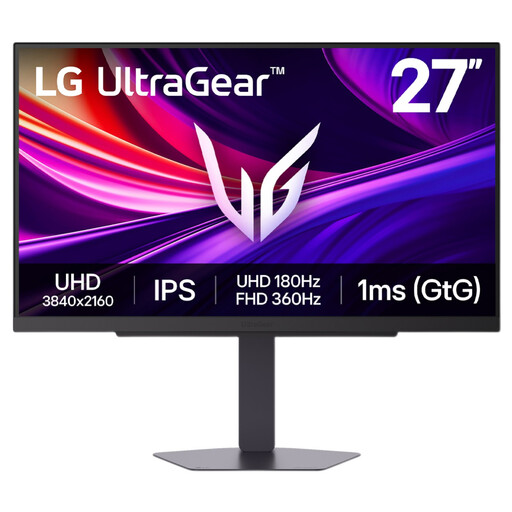
LG UltraGear 27G810A-B 27-inch IPS 4K UHD Dual Mode gaming monitor
This 27-inch 4K model may suit slide work where detailed visual assets are a priority, provided its gaming-oriented features also make sense for the desk.
The title identifies an IPS display and Dual Mode with a stated maximum of 360Hz. Check the screen finish and required laptop connections rather than assuming USB-C display or charging.
View on Joybuy
Frequently asked questions
When should a shared office assess a screen workstation?
The Health and Safety Executive says employers must assess the workstation when workers use display screen equipment daily as part of normal work, continuously for an hour or more. The assessment considers equipment, furniture, working conditions, the job and individual needs, so choosing a monitor is only one step.
Will an adjustable monitor alone settle shared-office DSE concerns?
No. Health and Safety Executive guidance addresses the whole workstation and work routine, including screen position, lighting and the needs of its users. Check the installed desk arrangement rather than treating stand adjustments as a complete solution.
How should I position the monitor after installation?
Position it to limit glare and bright reflections, then adjust it for the person using the desk. The Health and Safety Executive advises placing the user’s eyes at about the same height as the top of the screen; the desk arrangement must allow that position to work in practice.
What about breaks during long slide-deck sessions?
Build breaks or changes of activity into sustained screen work. The Health and Safety Executive favours short, frequent breaks over longer, less frequent ones; changing the monitor does not remove the need to plan the work routine.


