Who each format suits

Single-screen cockpit learners

If you want the main spacecraft view alongside instruments, maps or control references without adding a second monitor, start by assessing a 34-inch 21:9 ultrawide. Dell UK and BenQ UK list 3440 × 1440 models in this format; check how your simulator arranges its interface before choosing one.

Wide-field simulation enthusiasts

If continuous screen width is your priority and you can accommodate a large curved display, a 49-inch Dual QHD monitor is worth assessing. Samsung UK lists a 5120 × 1440 model, but desk space, viewing position, PC capability and simulator interface behaviour all affect whether this route works for you.

Compact high-refresh players

If desk space is limited or you prefer conventional 16:9 over extra room for cockpit panels, compare 27-inch QHD monitors. Dell UK lists a high-refresh QHD example; the smaller format still leaves less horizontal space for simultaneous controls and references than an ultrawide.

What matters when choosing

27-inch QHD

Choose it when: A conventional 16:9 screen fits your desk and extra cockpit width is not the priority.

Trade-off: Maps or control references may need more in-game toggling than on a wider layout.

34-inch ultrawide

Choose it when: You want more continuous horizontal room for a one-screen cockpit without moving to a 49-inch panel.

Trade-off: The simulator must present its controls usefully at 21:9, and the PC must handle 3440 × 1440 at your intended settings.

49-inch super-ultrawide

Choose it when: A broad, uninterrupted cockpit layout is your main goal and your setup can accommodate it.

Trade-off: The 5120 × 1440 format increases pixel-rendering demand and makes desk depth and viewing position more consequential.

Concern What to check Who this matters to
Cockpit workspace Check your simulator’s 21:9 or 32:9 support, HUD scaling and window behaviour; compare native resolutions rather than diagonal sizes alone. If I need to see the flight view alongside instruments and learning references, I want space for both without repeatedly switching views. Around 42% of consumers would put cockpit workspace first.
Motion and control feedback Check the refresh rate at your intended resolution and connection, then whether the PC can supply the frame rate you want. When fast camera movement matters to me, I would prioritise a usable high-refresh mode over extra room for panels. For roughly 33% of consumers, motion would be the primary concern.
Desk and system fit Measure desk width and depth, assess screen height and viewing distance, and check whether the PC can drive the native resolution. If a wider display would crowd my desk or demand more from my PC than I can accommodate, I would favour a manageable setup. About 25% of consumers would place that fit first.

Buying pitfalls

  • Choosing width before checking the simulator

    A 49-inch 32:9 screen offers substantial horizontal resolution, but screen width alone does not tell you where a particular simulator will place its HUD, menus or instructional material.

    Check the simulator’s documentation or supported settings for 21:9 and 32:9, including HUD scaling and windowed mode, before choosing a format.

  • Judging control readability by diagonal size

    LG UK lists a 45-inch 3440 × 1440 monitor, a resolution also used by 34-inch ultrawides. The larger physical image needs to be assessed from your intended seating position, particularly for text and instruments.

    Consider resolution, desk depth and viewing distance together. Set the screen directly in front of you and assess its height before deciding whether the larger curved format suits your workstation.

  • Assuming maximum refresh works through any connection

    A monitor’s quoted maximum refresh rate does not establish what your particular PC, port, cable and selected resolution can deliver together.

    Compare the monitor’s resolution-and-refresh specifications with your graphics output and intended cable before choosing a high-refresh model.

  • Leaving old-monitor disposal until delivery

    Replacing a large display also means deciding how you will move or dispose of the old one. GOV.UK describes take-back arrangements for waste electrical equipment of the same type as a new purchase.

    Check the seller’s take-back options and collection terms before ordering if you need the old monitor removed.

    Home collection may carry a transport charge even where an in-store take-back service is free, according to GOV.UK.

Brands to consider

Alienware

Relevant to both 27-inch QHD and 34-inch ultrawide QD-OLED comparisons, based on the AW2725DF and AW3425DW specifications published by Dell UK.

  • The AW2725DF is a 26.7-inch QHD, 360Hz model; the AW3425DW is a 34.2-inch 3440 × 1440, 240Hz ultrawide with DisplayPort and HDMI inputs.
  • Neither specification establishes how your simulator will arrange its interface or what refresh mode your PC can deliver.

BenQ MOBIUZ

The EX3410R is a 34-inch 21:9 VA/LCD alternative to an OLED-only ultrawide shortlist, according to BenQ UK.

  • BenQ UK lists 3440 × 1440 resolution, up to 144Hz through DisplayPort, a 1000R curve, 100mm of height adjustment and VESA 100 × 100 mounting.
  • Its stated 144Hz DisplayPort maximum is below the stated 240Hz maximum of the Alienware AW3425DW; compare the modes available through your intended connection.

Samsung Odyssey

The Odyssey OLED G95SD represents the 49-inch 32:9 route for buyers considering a continuous, wide cockpit layout.

  • Samsung UK lists 5120 × 1440 Dual QHD resolution and a 240Hz refresh rate for this model.
  • Its physical width and native resolution call for desk, viewing-position and PC checks before purchase.

LG UltraGear

The 45GS95QE-B offers a physically larger 21:9 curved OLED format rather than the 32:9 width of a 49-inch screen.

  • LG UK lists a 45-inch 3440 × 1440 panel, an 800R curve and a 240Hz refresh rate.
  • LG notes that viewing assumptions vary with distance and posture; assess instrument and text readability from your own seating position.

Joybuy monitor choices

These choices cover 34-inch ultrawide, compact 27-inch QHD and 49-inch super-ultrawide approaches to learning spacecraft controls on one screen. Compare the format with your simulator, desk and PC before deciding on a model.

Lenovo R34w-30 34-inch UWQHD gaming monitor

Lenovo R34w-30 34-inch UWQHD gaming monitor

Consider this 34-inch format if you want more room for a single-screen cockpit without moving to a 49-inch display. Check how your simulator places its HUD on an ultrawide screen and which resolution and refresh mode your PC connection can deliver.

View on Joybuy

LG UltraGear 34GX900A-B 34-inch OLED WQHD gaming monitor

LG UltraGear 34GX900A-B 34-inch OLED WQHD monitor

This is another 34-inch option for a wider cockpit layout, with a stated 240Hz refresh rate. Its OLED screen is susceptible to burn-in, so consider how long static simulator interface elements will remain visible; also check the simulator layout and your PC’s intended display mode.

View on Joybuy
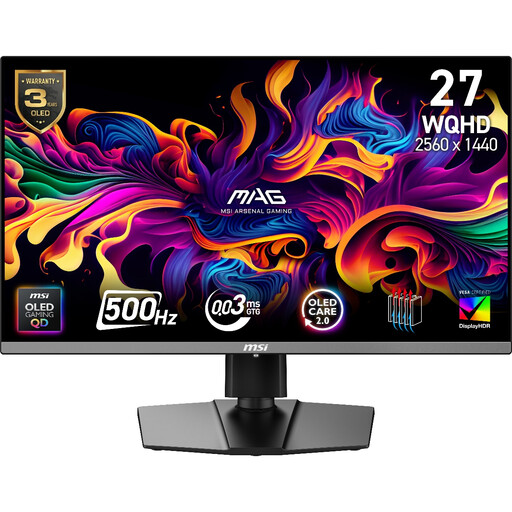
MAG 272QP QD-OLED X50 27-inch gaming monitor

MAG 272QP QD-OLED X50 27-inch QHD monitor

Consider the conventional 27-inch format if a compact setup and high stated refresh matter more than extra horizontal room for cockpit panels. The product name specifies 2560 × 1440 resolution and 500Hz; confirm the mode available through your PC and connection before relying on that refresh rate.

View on Joybuy

Acer X Predator X49X 49-inch curved gaming monitor

Acer X Predator X49X 49-inch QD-OLED monitor

Consider this 32:9 option if a continuous, wide cockpit view is your priority and your workstation can accommodate a 49-inch display. Its product name specifies an 1800R curve, Double Quad HD and 240Hz; measure desk depth, check support for the screen or mount, and confirm simulator and PC compatibility.

View on Joybuy

Common questions

Which monitor format should I consider first for learning spacecraft controls?

Start by comparing 34-inch 3440 × 1440 ultrawides if you need more horizontal workspace than a conventional 16:9 screen but are unsure a 49-inch panel will fit. Dell UK and BenQ UK list monitors in this format; check your particular simulator’s aspect-ratio and interface options before buying.

Do I need DisplayPort for a high-refresh ultrawide?

Not necessarily: check the exact monitor, resolution and connection mode. Dell UK lists up to 3440 × 1440 at 240Hz through DisplayPort for the AW3425DW and also lists that mode through its HDMI ports under specified HDMI 2.1, FRL, DSC, HDR and VRR conditions. Match those requirements against your graphics output and cable.

How should I position a large curved monitor?

Start with whether the screen fits your workstation at a comfortable viewing position, not its diagonal size alone. The UK Health and Safety Executive advises placing a display directly in front of you, with its top around eye level and the screen approximately an arm’s length away. Measure desk depth and assess the stand or mounting arrangement before choosing a 45-inch or 49-inch model.

What should I arrange for my old monitor when buying a new one?

Check the seller’s waste-electrical-equipment take-back arrangements before ordering. GOV.UK says retailers subject to the relevant obligations must offer take-back of waste equipment of the same type as the item purchased, including for online purchases. Check whether your seller offers in-store drop-off or home collection; a transport charge may apply to collection.