Single-screen market watchers
If charts, watchlists, company news and spreadsheets run on one computer, prioritise enough screen detail and a stand you can position comfortably before paying for multi-computer controls.


For a single-computer desk showing charts, watchlists and news, a 27-inch QHD monitor with an adjustable stand is a sensible starting point. Consider 4K for denser on-screen detail, subject to scaling and computer compatibility; choose KVM or split-screen features when two computers are genuinely part of the setup. Monitor specifications do not change the accuracy or timeliness of market data.
If charts, watchlists, company news and spreadsheets run on one computer, prioritise enough screen detail and a stand you can position comfortably before paying for multi-computer controls.
If you want several research windows visible alongside a chart, 4K may be worth considering. A USB-C connection can simplify a laptop desk only if the laptop, cable and monitor support the required video output and charging.
If you switch between two computers, check whether you need shared keyboard and mouse control, simultaneous viewing of both sources, or separate full-size screens. Those are different requirements.
Start with the number of computers and windows you need to see, then check resolution, connections and how the screen will sit on your desk.
| Concern | What to check | Who this matters to |
|---|---|---|
| Screen detail | Compare native resolution at the same screen size and confirm your computer can output it. Dell UK lists 109 PPI for its 27-inch QHD S2725DS; BenQ lists 82 PPI for its 27-inch Full HD GW2790. | If I keep a chart, watchlist and news open together, I want enough detail without constantly rearranging windows. Around 27% of consumers would put information density first. |
| Two-computer control | Decide whether you need a KVM switch for shared controls or Picture-by-Picture for simultaneous viewing; check both computers’ connections. Samsung Business UK lists these features for the S60UD. | When I move between two computers, switching inputs alone may not give me the control or simultaneous view I need. For around 37% of consumers, managing multiple sources would be the primary concern. |
| Desk positioning | Check stand adjustment and reflections at your desk. The Health and Safety Executive advises placing the top of the screen around eye level, roughly an arm’s length away. | If I check movements throughout the day, I need a screen position that works with my desk and lighting. Comfortable positioning would come first for around 36% of consumers. |
Two 27-inch screens can show substantially different levels of detail: Dell UK lists 109 PPI for its QHD S2725DS, while BenQ lists 82 PPI for its Full HD GW2790.
Compare native resolution and pixel density, then consider whether you would enlarge text through display scaling.
LG UK describes display, data and up to 90W charging through USB-C on the 27UP850K-W, with its included USB-C cable required for that connection.
Check your laptop’s video-output capability, charging requirement and the cable needed for the intended connection.
A KVM switch addresses control of two connected sources; it does not improve a chart displayed from one computer.
Map out which devices must be controlled and viewed at the same time before choosing KVM, Picture-by-Picture or Daisy Chain features.
Screen positioning and lighting still matter during long sessions. The Health and Safety Executive recommends keeping the top of the screen around eye level and the screen roughly an arm’s length away.
Check stand adjustment or mount compatibility, and position the screen to reduce reflections.
Dell UK’s 27-inch S2725DS illustrates the QHD single-screen option, with an IPS panel, anti-glare coating and an adjustable stand.
Samsung Business UK’s 27-inch ViewFinity S60UD is a QHD example for a desk using more than one source.
LG UK’s 27UP850K-W illustrates a 27-inch 3840 × 2160 IPS option with USB-C connectivity.
BenQ’s 27-inch GW2790 illustrates a Full HD alternative with an IPS panel and listed low-blue-light and flicker-free features.
These monitors cover QHD screens for a single-computer desk and 4K options for consumers who want denser on-screen detail. Check each model’s connections against your computer before choosing it for a laptop setup.
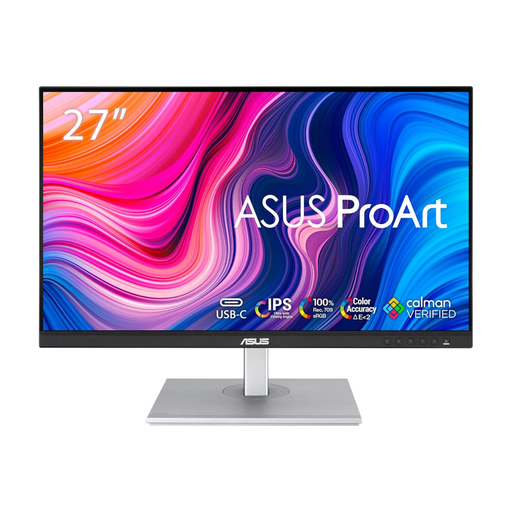 No image available
Consider this QHD option for charts and watchlists on one computer. If a one-cable laptop connection matters, confirm this variant’s USB-C ports, charging capability and compatibility with your laptop.
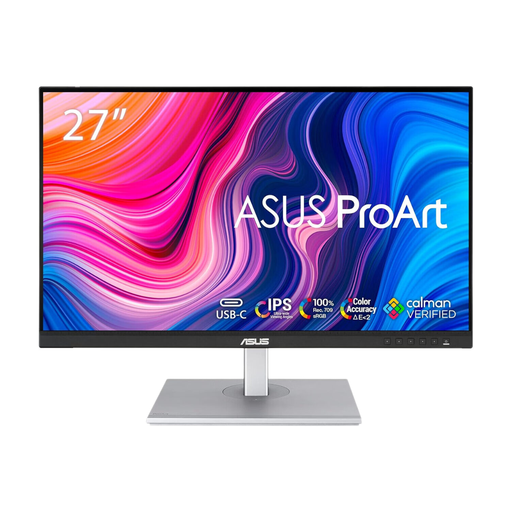 No image available
This QHD model is another option for a single-screen chart and spreadsheet desk. Its title specifies 100Hz; confirm the exact variant’s connections and your computer’s output before planning a USB-C setup.
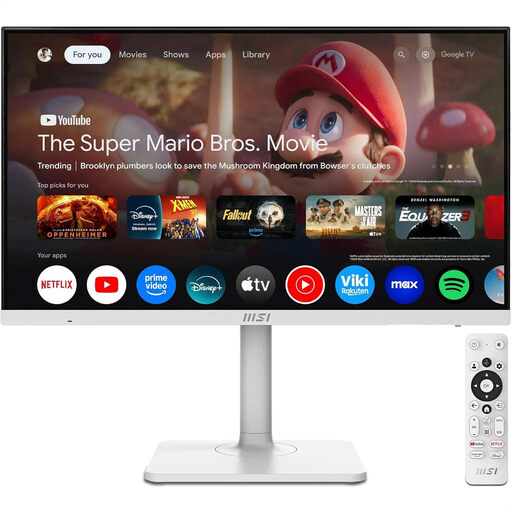 No image available
Consider this 4K option when denser chart labels and text are the priority. Its title lists USB-C 65W; check that your computer supports video over the intended connection and that 65W meets its charging needs.
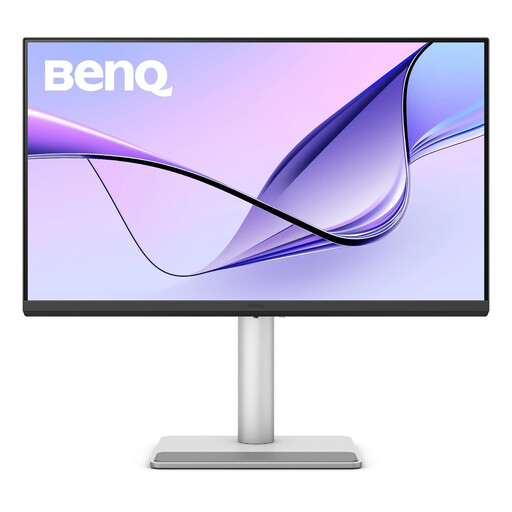 No image available
This 4K model is worth considering for detailed windows at a compatible laptop desk. Its title lists USB-C and an adjustable stand; assess whether the Nano Glossy finish suits your lighting, and confirm video output and charging compatibility.
 No image available
Consider this model if you want a 4K screen and plan to connect through its listed HDMI or DisplayPort inputs. Confirm that your computer and cable can deliver the intended resolution; do not assume it has the USB-C functions of the different LG 27UP850K-W.
No: a 27-inch QHD monitor is a reasonable starting point for charts, watchlists and news on one computer. Consider 4K if denser text and detail matter more to you, and check display scaling and whether your computer supports the intended resolution.
A KVM monitor is useful when you regularly control two connected computers with one keyboard and mouse. If you also need both sources visible at once, check for Picture-by-Picture or another suitable viewing arrangement, as well as compatible connections.
The Health and Safety Executive advises placing the top of the screen around eye level and the screen roughly an arm’s length away. An adjustable stand can help you achieve that position, while desk layout and lighting still need attention.