
24/7 Customer Support

Free returns

Same-day & Next-day Delivery

Quality Guaranteed

Unlock Your Welcome Offers: FREE Delivery | Up to 80% OFF | Free 30-day JoyPlus trial
Download the APP
Creating a space for your child that is both tidy and enriching can feel like a constant challenge. You want to foster their independence and love for reading, but the reality is often a floor scattered with books and toys. The Montessori approach offers a practical solution: an environment where children can easily access their own belongings, encouraging them to explore, learn and tidy up on their own terms.
A key element of this philosophy is the right kind of storage. A well-chosen Montessori bookshelf isn't just a piece of furniture; it's a tool that empowers your child. This guide will walk you through what to look for in a kids bookcase and share some of our top recommendations to help you create an organised and inspiring playroom or bedroom.
Before diving into specific products, here are a few practical points to consider when selecting playroom storage that aligns with Montessori principles.
The core of the Montessori method is accessibility. Look for a toddler bookshelf that is low to the ground, allowing your child to see and reach their books without assistance. Many designs feature a front-facing bookshelf style, which displays the colourful covers of books instead of the spines. This visual appeal makes it far more likely that a child will pick up a book and start exploring.
Safety is paramount in any child's space. Opt for furniture made from sturdy materials like MDF or solid wood, which can withstand daily use. Check for features like rounded corners to prevent bumps and scrapes. For taller units, an anti-tip kit that secures the kids storage unit to the wall is an essential safety feature to look for, providing stability and peace of mind.
Children's needs change quickly. A good children's toy organiser should be versatile enough to store more than just books. Look for units with a mix of shelving, cubbies and drawers. This allows you to create a designated home for everything from picture books and puzzles to art supplies and building blocks, making tidy-up time a simple matching game for your child.
Here are a few thoughtfully selected items that embrace the principles of organisation and child-led learning.
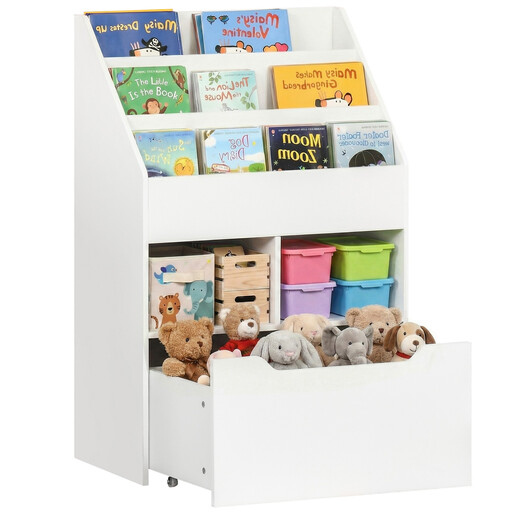
Why It Stands Out: This unit is a fantastic example of Montessori-inspired design in action. It combines three tiers of front-facing book storage with two cubbies and a large, separate drawer on wheels. This multi-functional approach provides a clear, organised system for both books and toys.
The standout feature is the moveable bottom drawer. Your child can easily roll it to their play area, gather their toys and roll it back when they're finished. This simple function transforms tidying from a chore into an interactive part of playtime. At 90 cm high, the entire unit is scaled for little ones to use independently.
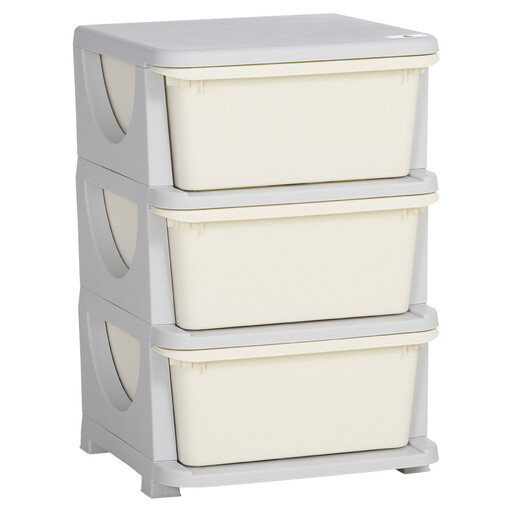
Why It Stands Out: While not a traditional bookshelf, this compact storage tower is an excellent companion piece for organising a child's room. It features three deep, removable drawers perfect for stowing away items that don't sit neatly on a shelf, such as building blocks, dress-up clothes or art supplies.
Its robust plastic construction is durable and easy to wipe clean and the rounded corners are a thoughtful safety touch. The unit is elevated on small feet, keeping the contents of the bottom drawer off the floor. This simple, effective children's toy organiser helps teach kids that everything has its place.
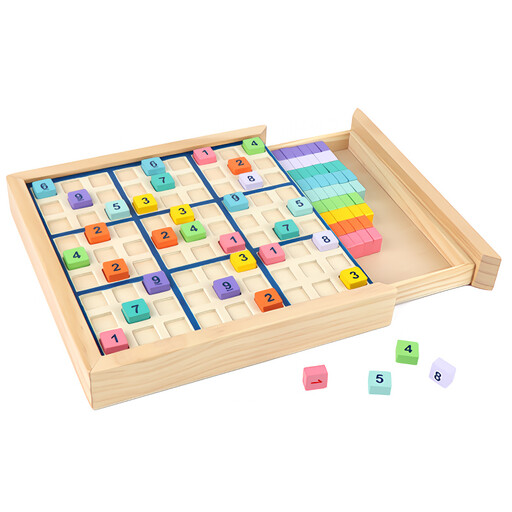
Why It Stands Out: An organised space is only half the story; filling it with engaging, educational activities is just as important. This wooden Sudoku board is a perfect fit for a Montessori-aligned playroom. It encourages concentration, problem-solving and mathematical thinking—all without a screen.
Made from wood, it has a classic, durable feel. The clever design includes a built-in drawer to store all the number tiles, reinforcing the habit of putting things away after use. It’s an activity that can sit neatly on a shelf of a kids bookcase, ready for focused play.
The journey to an organised, child-friendly home is unique for every family. If you're searching for more clever activities and storage solutions that help keep things tidy, explore our full collection of Drawer Toys for further inspiration.
A bookshelf is considered 'Montessori' when it is designed for a child's independence. The key features are a low height that allows children to reach every shelf themselves and a front-facing bookshelf design. Displaying the covers makes books more inviting and empowers a child to choose what they want to read without help.
These bookshelves are beneficial as soon as a child begins to interact with books, often between 1 and 2 years old. The accessible design supports their development through the toddler years and into early primary school, typically up to age 8, by fostering a lasting love for reading.
Start by using low, open shelving and simple containers. A dedicated children's toy organiser with different compartments helps a child understand where each item belongs. It's also helpful to rotate toys—storing some away and bringing them out later—to keep their play space feeling fresh and engaging without being overwhelming.