
24/7 Customer Support

Free returns

Same-day & Next-day Delivery

Quality Guaranteed

Unlock Your Welcome Offers: FREE Delivery | Up to 80% OFF | Free 30-day JoyPlus trial
Download the APP
A mop and bucket set can make hard-floor cleaning more manageable, but the wrong design may create extra work. A bucket that is awkward to carry, a wringer that leaves the mop excessively wet or a head that cannot reach beneath furniture can quickly turn a simple chore into a frustrating one.
Before buying, look beyond claims such as “deep cleaning” or “professional results”. The useful questions are more practical: how is the mop wrung, where does dirty water go, can the head be washed and is the system suitable for your flooring?
A mop that stays too wet can leave puddles, streaks and longer drying times. This matters particularly on laminate and some wood floors, where excess moisture may cause damage if it enters seams or remains on the surface.
A spin mop and bucket or self-wringing mop can help remove water more consistently, but the mechanism still needs to be stable and simple to operate. Foot-pedal, twist-action and push-pull systems each work differently, so consider whether you prefer hands-free operation or one-handed wringing.
A microfibre mop can lift dust, hair and everyday spills, but cleaning performance depends on the head design, fibre density and how well it is rinsed. Some mop heads are made for broad open areas, while triangular or slim flat heads may be more useful around skirting boards, corners and furniture.
Also check the care instructions. A washable mop head can reduce the need for frequent replacement, but it should be washed as directed and allowed to dry fully between uses.
A large bucket may hold more water, but it can become heavy and difficult to store in a typical UK utility cupboard or bathroom. Look for an easy-pour spout, a secure handle and a design that can stand steadily during wringing.
A mop bucket with separate dirty water compartment can also help prevent used water from mixing with fresh water. However, these systems may have a larger footprint, so measure your storage area before ordering.
For everyday tiles, vinyl and sealed hard floors, controlled moisture is generally more useful than simply having a large water capacity. Compare:
The best choice depends on your floor type and physical preferences. If bending is uncomfortable, a foot-pedal or hands-free system may be more convenient. If you want a compact storage solution, a conventional pail and wringer may be easier to accommodate.
Check the mop head width and shape against your rooms. A wider head can cover open kitchen or hallway floors more quickly, while a slim flat mop can reach under sofas and beds. A triangular head may be useful for corners.
An adjustable handle is worth considering if more than one person uses the mop. For example, the Vileda Turbo Mop & Bucket has a telescopic handle extending from 55cm to 130cm, according to its product information.
Always confirm that the product is suitable for your surface. Tiles and vinyl usually tolerate regular damp cleaning, while laminate and wood may require a lightly damp mop rather than a saturated one. The Vileda product information specifically advises against using its system on unfinished, oiled or waxed wooden floors.
Follow the flooring manufacturer’s cleaning instructions, use only suitable solutions and avoid storing harsh chemicals or bleach in a plastic bucket. Empty and rinse the bucket after use to reduce odours and residue.
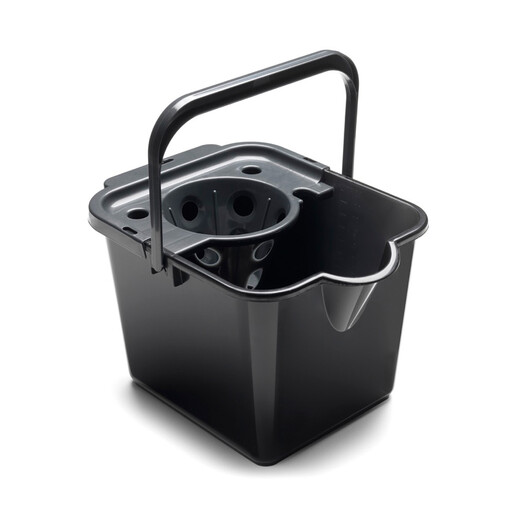
Why This Fits Their Persona: A straightforward option for tenants, smaller homes and shoppers seeking a practical floor cleaning set without a more complex dual-compartment design.
The integrated wringer gives users a way to control moisture instead of relying on hand squeezing. Its measuring scale also helps prevent overfilling.
12-litre capacity, easy-pour spout, mop holder and polypropylene construction. The product information also lists an ADDIS Lifetime Guarantee.
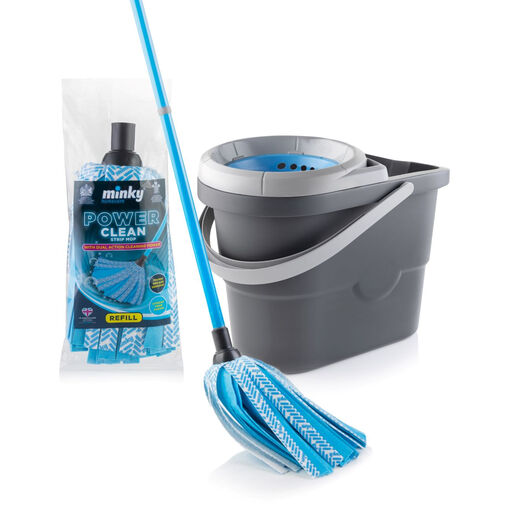
Why This Fits Their Persona: Suitable for households wanting a more structured mop head and wringing system for kitchens, hallways and other frequently used hard-floor areas.
The Vortex wringer uses corkscrew thread action to remove water, while the three-part microfibre head separates absorbency, dirt collection and grease-focused strands.
Includes a refill head, 100% microfibre strands and an extra-wide bucket opening. Listed dimensions are 35.5cm high, 29.5cm wide and 38cm long.
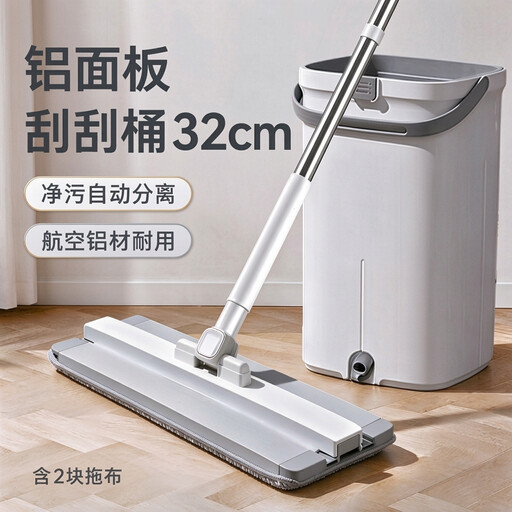
Why This Fits Their Persona: A practical match for busy families and larger homes where frequent rinsing, low-clearance cleaning and reduced hand contact are priorities.
Its two-compartment bucket separates fresh and dirty water, while the built-in scrapers clean the pad during the washing action.
32cm flat microfibre head, wet-and-dry use, one-hand push-pull operation and access beneath low furniture.
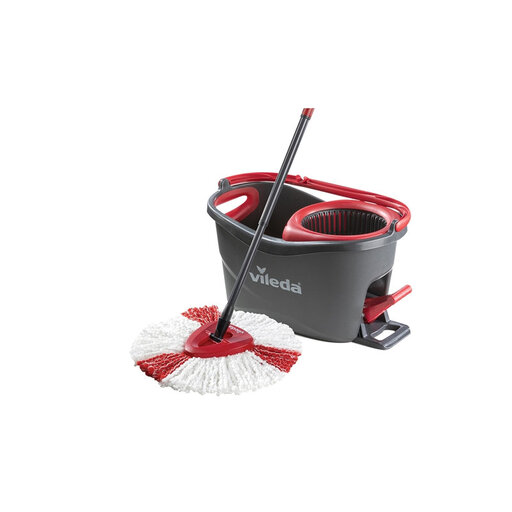
Why This Fits Their Persona: A useful fit for users who want foot-operated wringing, an adjustable handle and a mop head shaped for corner cleaning.
The foot-pedal spin wringer avoids pushing down by hand. The triangular head is designed for corners and the mop head is machine washable as directed.
The product information cites third-party lab testing for removal of over 99% of bacteria with water; this is a product-specific claim, not a general guarantee for all floors.
We have compiled a complete, real-time list of products that fully satisfy these strict selection criteria and UK safety regulations.
It can be, provided the mop is wrung sufficiently and the laminate manufacturer permits damp cleaning. Use minimal water, avoid leaving standing moisture and dry any visible puddles promptly. Always check the flooring care guidance before use.
There is no universal replacement interval. Replace it when fibres become worn, it retains odours after washing, no longer absorbs properly or begins leaving visible residue. Washing after each substantial cleaning session and drying it fully can help maintain hygiene and performance.
It may reduce unnecessary water changes during a cleaning session, but actual savings depend on the bucket capacity, floor area and how often the water is replaced. The main practical benefit is keeping used water separate from the fresh-water section, rather than guaranteeing a specific reduction in household costs.