
24/7 Customer Support

Free returns

Same-day & Next-day Delivery

Quality Guaranteed

Unlock Your Welcome Offers: FREE Delivery | Up to 80% OFF | Free 30-day JoyPlus trial
Download the APP
Navigating a dark hallway at night, fumbling for a switch in a packed wardrobe or wishing for a little extra light under your kitchen cabinets—these are common household frustrations. While a major rewiring project is often impractical, there is a simple and effective solution: motion sensor indoor lights.
These clever devices provide illumination exactly when and where you need it, enhancing safety and convenience without wasting energy. As a Joybuy Product Recommendation Officer, my role is to help you find practical solutions that fit your home. This guide cuts through the clutter, focusing on key features to consider and offering a selection of reliable options to brighten up those tricky, dark corners of your home.
Before diving into specific products, let's cover a few key considerations. Thinking about these points will help you select the right type of light for your specific needs.
How your light is powered is one of the most important decisions, as it dictates where you can place it.
Most modern units use a PIR sensor light system. PIR stands for Passive Infrared, which means the sensor detects the heat given off by a person (or pet) moving into its detection zone. Key features to look for include:
One of the biggest appeals of these lights is their simple installation. Most are designed for a DIY-friendly setup, often using strong adhesive tape that allows you to mount them in seconds without drilling holes. This makes them an excellent choice for renters or for anyone who prefers a non-permanent solution. Always ensure the surface is clean and dry before application for the best hold.
Here are a few standout options that address different needs, from versatile under-cabinet lighting to simple plug-in safety lights.

Why It Stands Out: This product's main advantage is its versatility. At 40cm long and incredibly slim, it fits neatly as an under cabinet sensor light or inside a long wardrobe. The ability to switch between three different colour temperatures (cool white, daylight and warm light) means you can tailor the illumination to the room and task.
Pros:
Who is it for? This is a great choice for anyone needing bright, customisable lighting in kitchens, workshops or large wardrobes where a single point of light isn't enough.
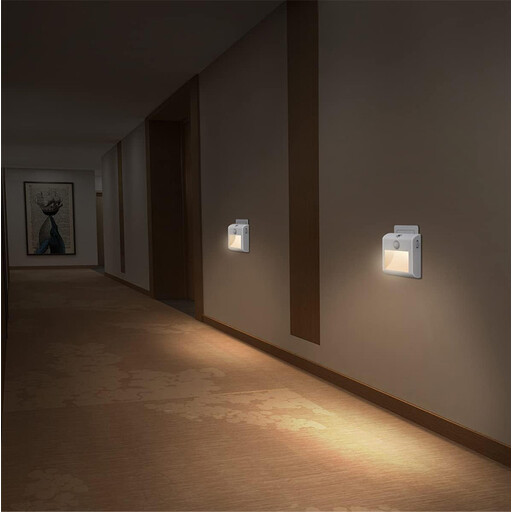
Why It Stands Out: This is the definition of a low-maintenance lighting solution. Simply plug it into a standard socket to get an automatic hallway light or bedroom guide light. Its standout feature is the stepless touch dimming, which allows you to set the perfect brightness level. It even has a memory function to recall your last setting.
Pros:
Who is it for? Perfect for those who need a reliable, hands-free night light for hallways, landings or children's bedrooms. The dimming feature is particularly useful for creating a gentle glow that won't disturb sleep.
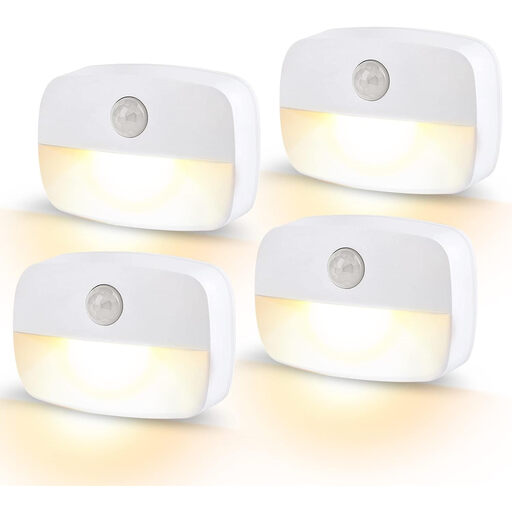
Why It Stands Out: This 4-pack offers fantastic value and flexibility. Being powered by AAA batteries, these compact pucks can be placed literally anywhere you need a splash of light—from the top of a dark staircase to the back of a deep pantry. The warm white glow is soft and inviting, providing enough light to see by without being harsh.
Pros:
Who is it for? Ideal for homeowners and renters who need a quick, easy and affordable way to add safety lighting to multiple spots, such as stairways, wardrobes and cupboards.
If these recommendations aren't quite what you're looking for or if you need a specific style for a particular room, there are many other models available.
? Explore our full range of Hallway Sensor Light options to find the perfect fit for your home.
1. How do motion sensor indoor lights work? Most use a Passive Infrared (PIR) sensor. This sensor detects the infrared energy (body heat) that people and animals radiate. When you walk into the sensor's detection zone, the change in infrared energy triggers the light to switch on. It then turns off after a set period of inactivity.
2. Do motion sensor lights use a lot of electricity? No, they are highly energy-efficient. Because they only activate when motion is detected, they spend most of their time switched off. Furthermore, they use LED motion activated light technology, which consumes significantly less power than traditional incandescent bulbs. Plug-in models often use as little as 0.5W to 1W of power.
3. Where are the best places to install motion sensor lights? They are most effective in areas you pass through or only use for short periods. Popular locations include stairways, hallways, landings, wardrobes, walk-in pantries, under kitchen cabinets and inside deep cupboards. They are particularly useful for improving safety in homes with elderly residents or young children.