
24/7 Customer Support

Free returns

Same-day & Next-day Delivery

Quality Guaranteed

Unlock Your Welcome Offers: FREE Delivery | Up to 80% OFF | Free 30-day JoyPlus trial
Download the APP
Navigating your home in the dark can be a nightly obstacle course. Whether it's a trip to the kitchen for a glass of water, checking on a sleeping child or simply finding your way to the bathroom, fumbling for a light switch can be disruptive and unsafe. A motion sensor light offers a simple, effective solution, providing illumination exactly when and where you need it, without a single touch.
As the Joybuy Product Recommendation Officer, my role is to help you find practical products that genuinely improve daily life. This guide will walk you through the key features to consider when choosing an automatic night light and present a few carefully selected options to help you make an informed decision for your home.
With so many options available, focusing on a few key factors can simplify your choice. Here’s what to look for to find a light that fits your space and lifestyle.
The first decision is how your light will be powered. Each type has distinct advantages.
The quality of the light is just as important as its activation.
Most indoor motion lights use a PIR sensor light (Passive Infrared) to detect movement and body heat. Check the detection range (typically 3-5 metres) and angle to ensure it will cover the area you need. Some models also have a light sensor, so they only activate in the dark, which helps to conserve energy.
Based on these practical features, here are our recommendations for versatile and reliable motion sensor lights available now.
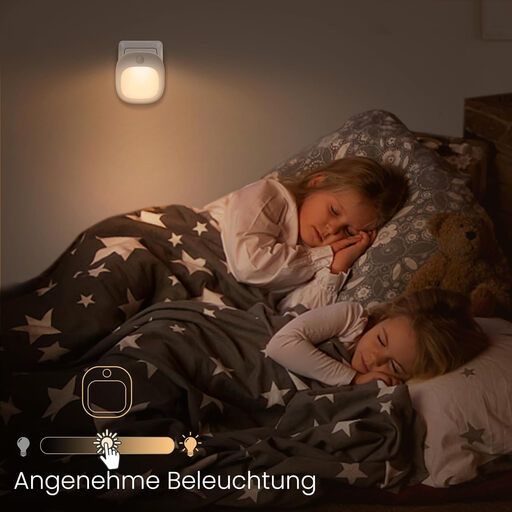
Why It Stands Out: This light’s main strength is its adaptability. The combination of three colour temperatures and five dimmable brightness levels in a compact, rechargeable body makes it a true multi-purpose tool for home lighting.
Pros:
Who is it for? This is an excellent choice for parents needing a gentle, adjustable light for a nursery or child's room. It's also perfect for anyone wanting a portable automatic night light that can be moved between the bedroom, bathroom and hallway as needed.

Why It Stands Out: The ultra-thin, 40cm-long design allows this light to blend seamlessly into its surroundings, providing broad, even illumination. Its large-capacity battery makes it a durable solution for high-traffic areas.
Pros:
Who is it for? This is ideal for homeowners and renters looking to add functional task lighting to their kitchen or brighten up a dark wardrobe. The two-pack provides great value for illuminating multiple areas at once.
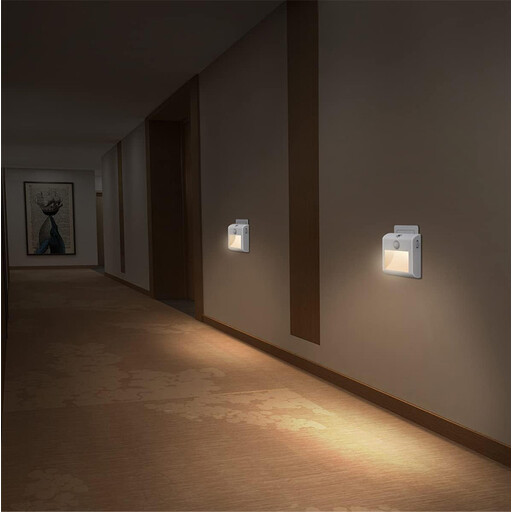
Why It Stands Out: This model combines the reliability of a plug in night light with the sophistication of smart controls. The touch-sensitive dimming and memory function offer a level of convenience not often found in plug-in models.
Pros:
Who is it for? This is the perfect 'set-and-forget' solution for anyone wanting reliable, automatic lighting in hallways, on landings or in bathrooms. The memory function makes it particularly useful for those who are sensitive to light at night.
While these recommendations cover a range of common household needs, your space might require a different solution. For a wider selection of automated lighting, including outdoor options and different styles, explore our full range of security lamps.
1. How does a motion sensor light work? Most indoor models use a Passive Infrared (PIR) sensor. This sensor detects the infrared energy (body heat) emitted by people and pets. When you walk into its detection range in low-light conditions, it triggers the light to turn on automatically.
2. Are LED motion sensor lights energy-efficient? Yes, they are highly efficient for two main reasons. First, they only activate when motion is detected, so they aren't drawing power when not needed. Second, they use LED technology, which consumes significantly less electricity than traditional incandescent bulbs, helping to reduce your energy bills.