
24/7 Customer Support

Free returns

Same-day & Next-day Delivery

Quality Guaranteed

Unlock Your Welcome Offers: FREE Delivery | Up to 80% OFF | Free 30-day JoyPlus trial
Download the APP
Navigating a dark hallway, fumbling for a light switch in the bathroom or worrying about trips and falls on unlit stairs are common household concerns. A motion sensor light offers a simple and effective solution, providing illumination exactly when and where you need it. Beyond convenience, these automated lights can enhance home safety and contribute to energy savings by ensuring lights are never left on by mistake.
As the Joybuy Product Recommendation Officer, my role is to help you find practical solutions for your home. This guide will walk you through the key considerations for choosing a motion sensor light and present a selection of recommended products to suit different needs and spaces.
Before you buy, it's helpful to consider a few factors to ensure you get the right product for the job.
How your light is powered determines its installation and placement flexibility.
The intended location will influence the type of light you need. For damp environments like bathrooms or kitchens, look for products with a suitable IP (Ingress Protection) rating that indicates moisture resistance. A dedicated hallway sensor light might need a wider detection angle to cover the length of the space, while a compact cupboard light needs to be small and efficient.
The colour of the light, measured in Kelvin (K), affects the atmosphere of a room.
Here are a few motion-activated lighting options that address common household needs, from permanent fixtures to flexible, easy-to-install solutions.
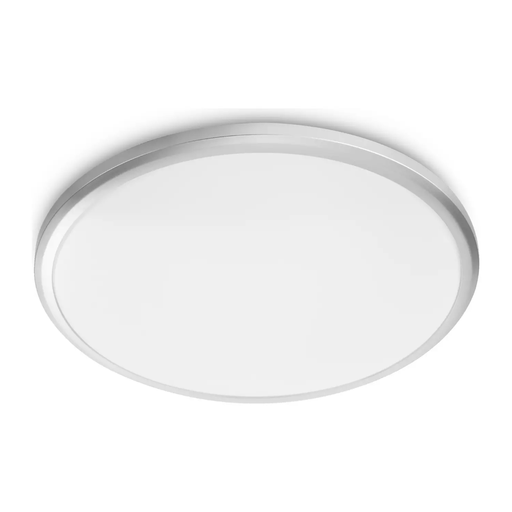
Why It Stands Out: This is a robust, mains-powered ceiling light designed as a permanent lighting fixture. Its moisture-resistant construction makes it suitable for bathrooms and kitchens, while the integrated motion sensor provides hands-free convenience.
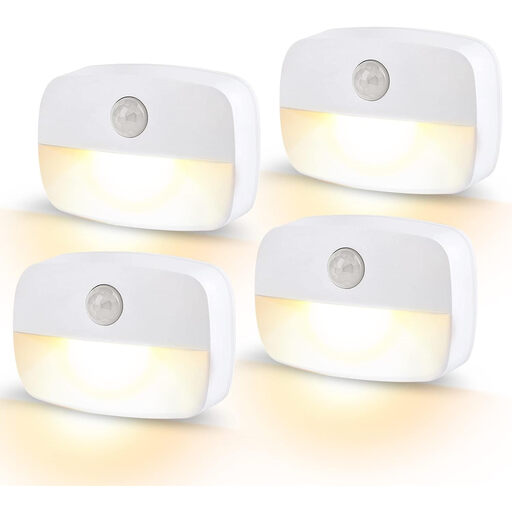
Why It Stands Out: This 4-pack offers exceptional versatility and value. Being battery-powered and installed with adhesive tape, these lights can be placed in minutes without any tools, making them perfect for stairs, cupboards, wardrobes and hallways.
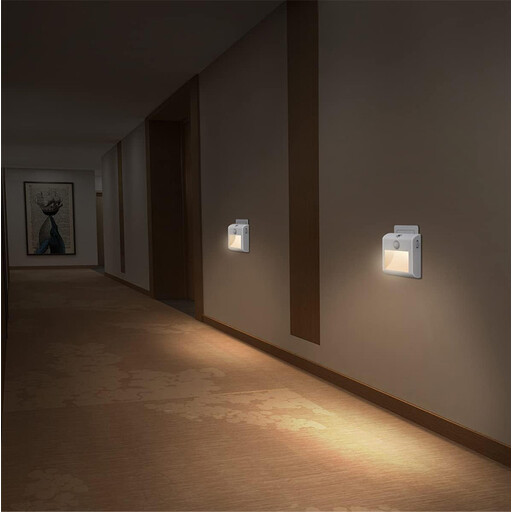
Why It Stands Out: This plug-in model combines smart features with user control. It offers both a constant-on mode and a motion sensor mode, plus stepless touch dimming that remembers your last brightness setting—a useful feature for bedrooms and nurseries.
The right lighting can transform a space, making it safer and more comfortable. If the options above aren't quite what you're looking for, or if you're interested in exploring a wider variety of automated lighting, you can browse our full collection.
Discover more styles and solutions in our range of warm white lighting fixtures.
How do motion sensor lights work? Most indoor motion sensor lights use a Passive Infrared (PIR) sensor. This sensor detects the infrared energy (body heat) emitted by people and animals. When someone moves into the sensor's detection zone, the change in infrared energy triggers the light to switch on. It then turns off after a pre-set period of inactivity.
Can you make a motion sensor light stay on all the time? It depends on the model. Many basic sensor lights are designed only to activate with motion. However, some advanced models, like the plug-in night light with touch dimming featured above, include a dual-mode function that allows you to switch it to a 'constant on' setting. Always check the product specifications for this feature if it's important to you.
Where are the most effective places to install motion sensor lights? The best locations are areas you frequently pass through in the dark. Common placements include hallways, staircases, landings, bathrooms, walk-in wardrobes and under kitchen cabinets. For safety, placing them at the top and bottom of stairs is particularly effective for preventing falls. In a child's bedroom or nursery, a dimmable motion sensor light can provide a gentle glow for nighttime check-ins without disturbing sleep.