
24/7 Customer Support

Free returns

Same-day & Next-day Delivery

Quality Guaranteed

Unlock Your Welcome Offers: FREE Delivery | Up to 80% OFF | Free 30-day JoyPlus trial
Download the APP
Navigating your home after dark can be a challenge. Whether it's a late-night trip to the kitchen, checking on a child or simply getting to the bathroom without fumbling for a switch, the sudden glare of a main light can be jarring. It disrupts your sleep and potentially that of others in your household.
A motion sensor night light offers a simple, effective solution. It provides just enough illumination to guide your way safely, activating only when it detects movement and switching off automatically. As the Joybuy Product Recommendation Officer, my role is to help you sift through the options. This guide will walk you through the key features to consider and present a few carefully selected models to help you find the right fit for your home.
Choosing the right light involves more than just picking one off the shelf. Here are a few practical points to consider to ensure you get the performance and comfort you need.
The colour and intensity of light can significantly impact your sleep quality. Many sleep specialists suggest that a warm white night light (typically between 2700K and 4500K) is less disruptive to our natural sleep cycles than harsh, blue-toned light. For ultimate control, look for a dimmable LED night light. This feature allows you to adjust the brightness to a comfortable level, providing enough light to see without being overly bright.
For sheer convenience, a plug in night light is hard to beat. It requires no batteries and provides a constant, reliable power source. Consider where you need illumination most. A hallway night light is essential for navigating between rooms, while units placed on landings, in bathrooms or near your bedside can prevent trips and falls. For larger homes, an automatic night light 2 pack offers a cost-effective way to illuminate multiple key areas at once.
A good motion sensor should have a detection range suitable for a standard room or hallway, typically around 3-5 metres. Many modern units also include a dusk-to-dawn sensor, ensuring they only activate in low-light conditions to conserve energy. Some models offer additional modes, such as a 'constant on' function or timers, which can be useful in children's rooms or for specific tasks.
Based on features that offer convenience, comfort and practicality, here are our recommendations.
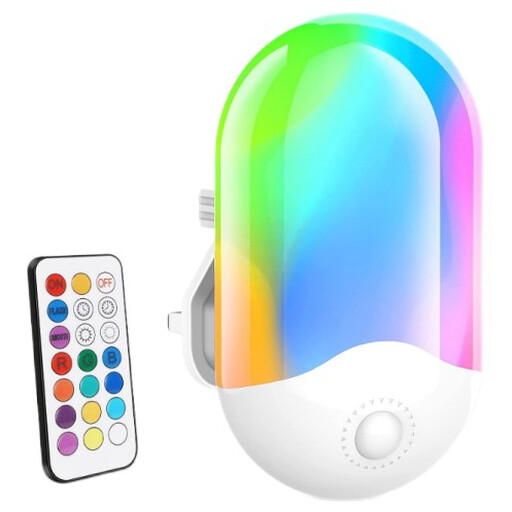
Why It Stands Out: This model is all about customisation. With a remote control that lets you choose from 13 different colours and set a timer, it moves beyond simple utility. You can select a calming warm tone for nighttime navigation or a fun colour for a child's bedroom.
Pros:
Who is it for? This is a great choice for parents looking for a versatile night light for a child's room or for anyone who enjoys adding a touch of customisable ambient light to their space.
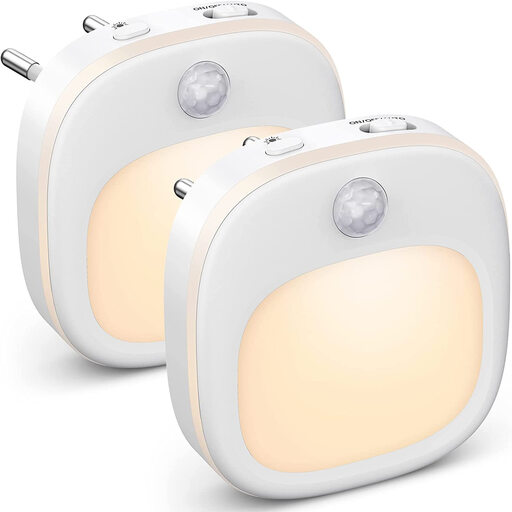
Why It Stands Out: This two-pack offers exceptional versatility. It's not just a motion sensor light; it allows you to select from three different colour temperatures (from warm to cool white) and five brightness levels. This adaptability makes it suitable for any room and any preference.
Pros:
Who is it for? Ideal for the discerning user who wants complete control over their lighting environment. It's a practical option for a night light for adults who are sensitive to light colour and brightness.
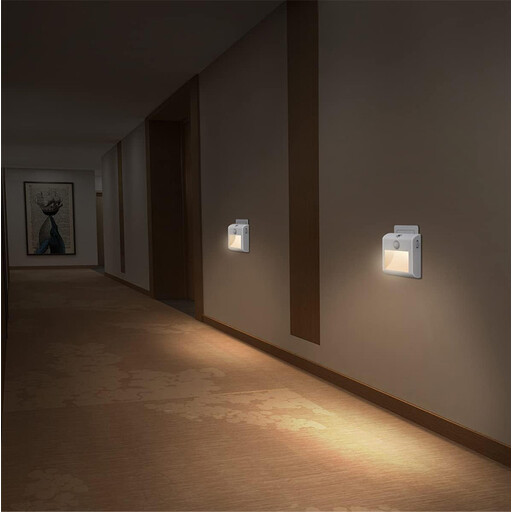
Why It Stands Out: This model combines intelligent design with user-friendly features. The stepless touch dimming is intuitive and its memory function is a standout feature—it remembers your last brightness setting, so you don't have to readjust it every time. The 4000-4500K warm white light is calming and easy on the eyes.
Pros:
Who is it for? Perfect for those who value a 'set it and forget it' solution. The memory function makes it an excellent choice for bedrooms and bathrooms, providing consistent, personalised lighting every night.
While a plug-in motion sensor night light is a practical choice for safety and convenience, we understand that home lighting is also about aesthetics. If you're looking to create a more cohesive and decorative look in your bedroom, you might be interested in fixtures that make a statement.
For a touch of elegance, consider exploring our curated selection of gold bedroom lights. Explore the collection to find stylish lamps and fixtures that complement your decor.
Do motion sensor night lights use a lot of electricity? No, they are highly energy-efficient. Most models use LED technology and consume very little power, often just 1W or less. Because they only activate when motion is detected in the dark, they use significantly less electricity than a light that is left on all night.
Where is the best place to put a motion sensor night light? For optimal safety and effectiveness, place them in low-traffic areas that you navigate at night. Good locations include hallways, landings, staircases, bathrooms and kitchens. Positioning the light in a low socket helps illuminate the floor path without shining directly into your eyes.
Can you adjust the sensitivity of a motion sensor night light? Most plug-in models come with a pre-set sensitivity and detection range (e.g., 3-5 metres), which is designed to work well in typical household rooms. While some specialised units may offer adjustments, the standard configuration on these lights is generally sufficient for reliable hands-free activation.