
24/7 Customer Support

Free returns

Same-day & Next-day Delivery

Quality Guaranteed

Unlock Your Welcome Offers: FREE Delivery | Up to 80% OFF | Free 30-day JoyPlus trial
Download the APP
Navigating your home after dark can be a challenge. Whether it's a late-night trip to the kitchen, checking on a child without waking them or simply avoiding that stray toy on the landing, fumbling for a light switch is rarely ideal. Leaving lights on all night is a waste of energy and can disrupt sleep.
A motion sensor night light offers a simple and effective solution. It provides illumination exactly when and where you need it, improving safety and convenience without the high running costs. This guide is designed to help you understand the key features to look for and to highlight a few practical options available for UK homes, so you can make an informed choice for your specific needs.
With so many models on the market, focusing on a few key factors will help you find the perfect fit for your home.
Your first decision is how the light will be powered. A plug in night light is a great set-and-forget option. Simply plug it into a mains socket in a hallway, on a landing or in a bathroom for consistent, automated lighting. They require no maintenance and are always ready.
Alternatively, a rechargeable night light offers unmatched flexibility. Powered by a built-in battery, usually charged via a standard USB cable, these lights can be placed anywhere. This makes them ideal for areas without a nearby socket, such as inside a wardrobe, under a kitchen cabinet or along a dark staircase.
Not all nighttime light is created equal. A bright, cool light might be perfect for illuminating stairs, but it's far too harsh for a nursery. Look for a dimmable night light that allows you to adjust the brightness level.
Consider the colour temperature as well. Warm, amber-toned light is less disruptive to your natural sleep cycle, making it a better choice for bedrooms. Many modern LED lights offer adjustable colour temperatures, so you can switch between a soft, warm glow and a clearer, cool white light as needed. This is a particularly useful feature for a kids night light.
Most motion sensor lights are designed for effortless installation. Plug-in models are the simplest, while rechargeable units often use strong adhesive pads or magnetic strips. This means you can easily mount an LED wardrobe light or add some under cabinet lighting in minutes, with no need for drills or wiring. When placing a night light for stairs, position it low to the ground to illuminate the steps without causing glare.
We've selected a few standout options that cater to different household needs, from gentle nursery lighting to practical task illumination.
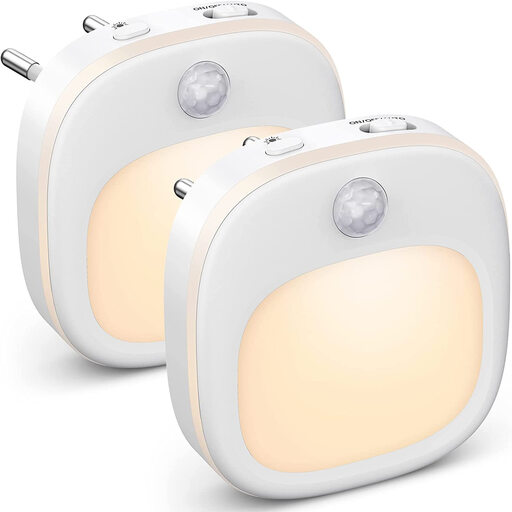
View Product: 2-Pack LED Motion Sensor Night Lights
Why It Stands Out: This two-pack offers exceptional control and value. With 3 colour temperature settings (from warm to cool white) and 5 levels of dimming, you can customise the light for any room or situation. The simple plug-in design makes it a reliable choice for busy areas of the home.
Pros:
plug in night light operation.Who is it for?: Homeowners and parents who need a flexible, easy-to-use lighting solution that can be adapted for everything from a hallway night light for stairs to a gentle, non-disruptive light for a baby's room.
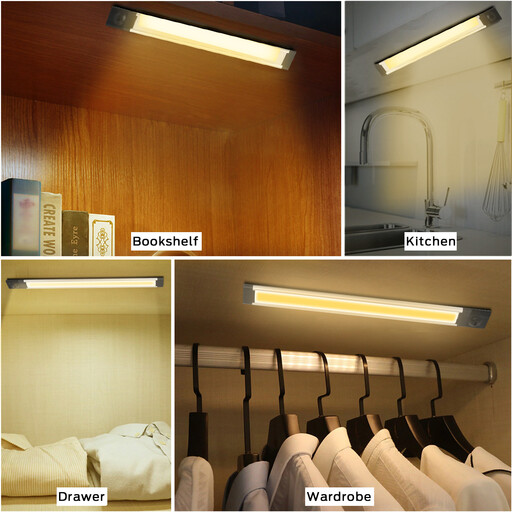
View Product: Motion Sensor Night Light with Gesture Control
Why It Stands Out: This sleek light bar is all about power and convenience. Its 36 Epistar SMD LEDs produce a bright 400 lumens, making it perfect for task-oriented spaces. The standout feature is its gesture control, allowing you to turn it on, off and dim the brightness with a simple wave of your hand. As a rechargeable night light, its magnetic mounting system allows for instant, drill-free installation.
Pros:
Who is it for?: Anyone needing a powerful LED wardrobe light, under cabinet lighting for a kitchen or bright, temporary light in a garage or shed where sockets aren't available.
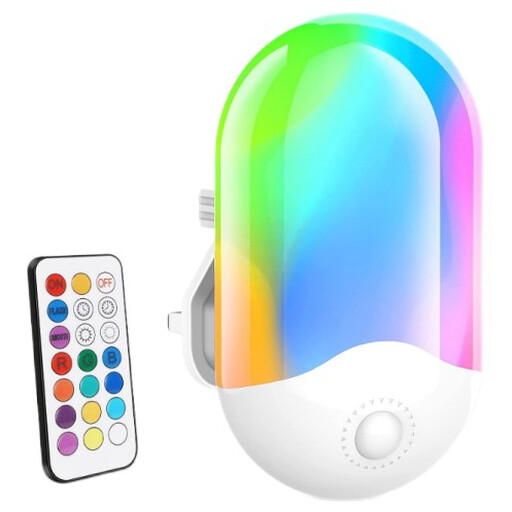
View Product: Remote Control RGB Night Light
Why It Stands Out: This light brings a touch of fun to functionality. It's an ideal kids night light, offering 13 different colour options to create a calming or playful atmosphere. The included remote control makes it easy to change settings from across the room, and the built-in timer function can automatically switch the light off after your child has fallen asleep.
Pros:
Who is it for?: Parents looking for a versatile kids night light that provides comfort, helps with the bedtime routine and can be adjusted to suit their child's preference.
While these motion sensor lights solve many common household problems, your needs might be different. If you're exploring other styles or require specific lighting for your main living areas, browse our full collection of bedroom lights for more inspiration.
1. How do motion sensor night lights work? Most motion sensor lights use a Passive Infrared (PIR) sensor. This sensor detects the infrared energy (body heat) emitted by people and pets. When you walk into its detection range, it triggers the light to switch on. After a set period with no motion, it automatically switches off, saving energy.
2. Are LED night lights expensive to run? Not at all. LED technology is incredibly energy-efficient. A typical LED night light, like the 1W or 0.5W models featured here, consumes a tiny amount of electricity. When combined with a motion sensor that ensures the light is only on when needed, the annual running cost is usually just a few pounds.
3. Where is the best place to put a motion sensor night light? For hallways and stairs, place the light low on the wall to illuminate the floor path without shining directly in your eyes. In bathrooms, a low placement helps guide the way without the shock of a bright overhead light. For under cabinet lighting or in wardrobes, position the light bar at the front to cast light inwards. Avoid placing sensors near heat sources like radiators or in direct sunlight, as this can sometimes cause false activations.