
24/7 Customer Support

Free returns

Same-day & Next-day Delivery

Quality Guaranteed

Unlock Your Welcome Offers: FREE Delivery | Up to 80% OFF | Free 30-day JoyPlus trial
Download the APP
Navigating your home after dark can be a challenge. Whether it's a late-night trip to the bathroom, checking on a child or simply grabbing a glass of water, fumbling for a light switch can be disruptive and even unsafe. A well-placed motion sensor night light offers a simple, effective solution, providing gentle illumination exactly when and where you need it without wasting energy.
This guide is designed to help you understand the key features to look for in an automatic night light. We will explore different types and functionalities to help you find a suitable option for your hallways, bedrooms and even inside cupboards.
With so many options available, focusing on a few key criteria can simplify your decision. Here are some practical points to consider for your home.
How your light is powered affects its convenience and long-term running costs.
The right light quality can make a significant difference, especially in a bedroom or nursery.
The effectiveness of a motion sensor light depends heavily on its sensor's range and where you place it. Most have a detection range of 3-5 metres and a wide-angle view. Consider the layout of your space. For a long hallway, you might need more than one light or one with a longer detection range. For a wardrobe light, a highly sensitive, short-range sensor is ideal to ensure it switches on the moment you open the door.
Here are a few options that stand out for their practical features and versatile designs, selected to suit common household needs.
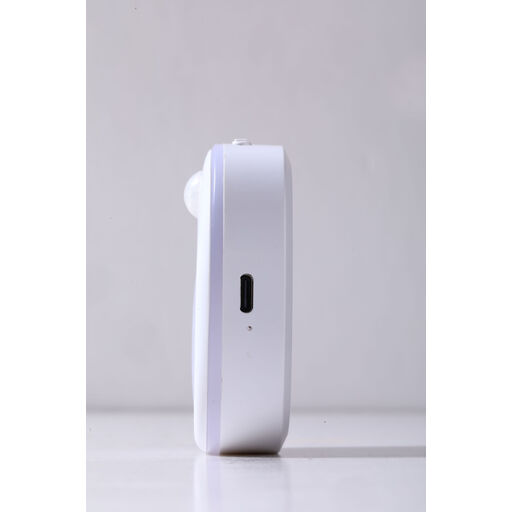
Why It Stands Out: This compact light offers exceptional versatility. The ability to switch between three colour temperatures (warm, cool and mixed white) and adjust through five brightness levels makes it adaptable for any room. The built-in 500mAh battery is easily recharged via USB, and the motion sensor is calibrated to activate only in low-light conditions (≤20 LUX), saving power.
Pros:
Who is it for? Anyone needing a flexible lighting solution that can be tailored for a nursery, hallway or bathroom with specific brightness and colour preferences.
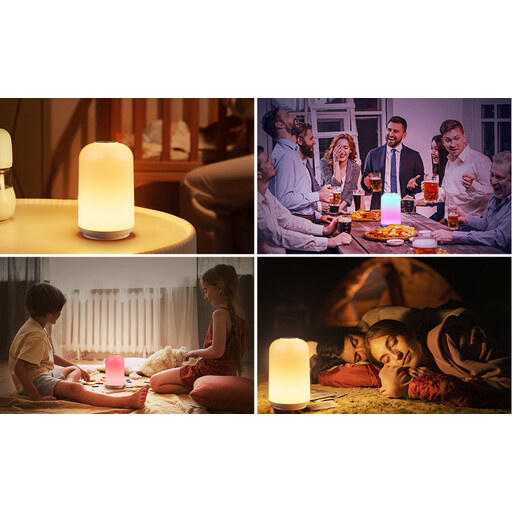
Why It Stands Out: This model goes beyond simple illumination by incorporating seven RGB colours alongside a standard warm white light. It can cycle through colours automatically or hold on a single one, making it a fun and functional children's night light. The warm white mode features stepless dimming, allowing you to set the brightness precisely. Its ambient light sensor ensures it only activates when the room is sufficiently dark (≤40 LUX).
Pros:
Who is it for? Parents looking for a versatile night light for a child's bedroom, or anyone who enjoys adding a touch of colourful ambient light to their space.
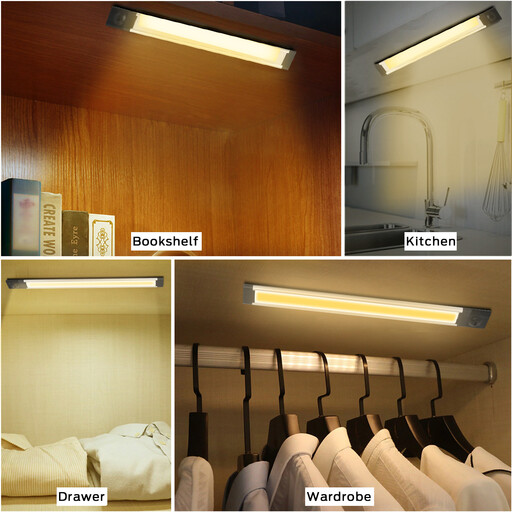
Why It Stands Out: This sleek, bar-style light is designed for seamless integration into spaces like wardrobes, under cabinets or along stairways. Its standout feature is gesture control, allowing you to turn it on/off and adjust brightness with a simple wave of your hand. With a powerful 400 lumens output and a wide colour temperature range (2800K to 6500K), it provides bright, clear task lighting. Installation is tool-free, using either magnetic attachments or hanging hooks.
Pros:
Who is it for? Homeowners and renters needing a bright, easy-to-install light for wardrobes, kitchens, garages or stairwells where hands-free operation is a plus.
If these specific models don't quite match what you're looking for, or if you're interested in exploring decorative lamps and other lighting solutions, you can browse our wider collection of bedroom accessories.
1. How do motion sensor night lights work? They use a Passive Infrared (PIR) sensor to detect the heat (infrared energy) emitted by a person or animal moving within its detection range. Most also have a photocell sensor that prevents the light from turning on during the day, which helps to conserve battery life or electricity.
2. Are LED night lights expensive to run? No, they are very energy-efficient. A typical led night light uk model consumes very little power, often just 1W or less. Rechargeable models can be powered up for pennies, and even those using disposable batteries last for a long time, making them a highly economical lighting solution.
3. Where is the best place to put a motion sensor light? The ideal placement depends on your goal. For safety, place them at the top and bottom of stairs, along dark hallways and in bathrooms. For convenience, they are excellent inside wardrobes, pantries or under kitchen cabinets. In a child's room, place it low to the ground and away from the bed to provide a gentle glow for navigation without shining directly in their eyes.