
24/7 Customer Support

Free returns

Same-day & Next-day Delivery

Quality Guaranteed

Unlock Your Welcome Offers: FREE Delivery | Up to 80% OFF | Free 30-day JoyPlus trial
Download the APP
Tripping over a stray toy on the way to the bathroom or fumbling for a light switch on a dark landing are common nighttime frustrations. An effective night light can make all the difference, providing safety and convenience without disturbing the whole household. A motion sensor night light offers an automated solution, illuminating your path only when needed and saving energy in the process.
Finding the right model, however, involves more than just picking one off the shelf. This guide will walk you through the key features to consider when choosing a night light for your home, from power sources to smart capabilities. We will also share some of our top recommendations to help you find a practical lighting solution for your hallways, stairs and bedrooms.
Before deciding, it helps to analyse your needs. Consider where the light will be placed and what its primary function will be. Here are a few key factors to keep in mind.
Your choice of power source affects both convenience and placement flexibility.
The type of light emitted is crucial for creating the right atmosphere and avoiding sleep disruption. Many studies suggest that warm, amber-toned light is less disruptive to our natural sleep cycles than harsh, blue-toned white light. Look for lights that offer a warm glow light, often specified with a colour temperature around 2700K to 3000K. Dimmable brightness is another valuable feature, allowing you to set a soft, ambient glow for general navigation or a slightly brighter light for specific tasks.
For those who enjoy home automation, a smart night light can offer an enhanced level of control. These devices often connect to a smartphone app via Bluetooth or Wi-Fi, allowing you to customise brightness levels, set on/off timers and even integrate the light with other smart home devices. For instance, you could set a rule where the hallway light activates when your smart bedroom door sensor is opened.
While motion-activated lights are a popular choice for hallways and landings, the right solution depends on your specific needs. Here are our recommendations, covering a range of functions from smart motion sensing to gentle, manually controlled glows.
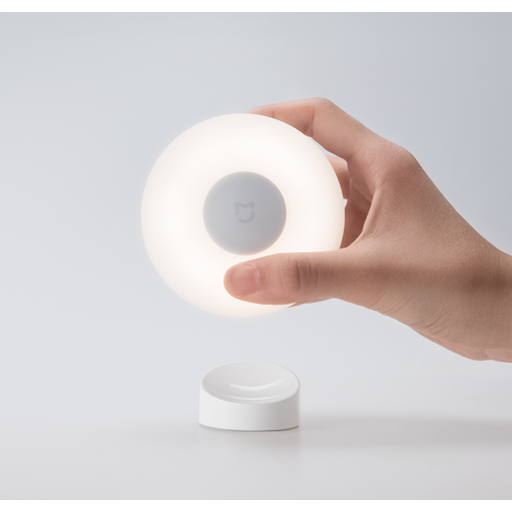
Why It Stands Out: This device is a true motion sensor night light designed for the modern smart home. It combines a motion detector, an ambient light sensor and Bluetooth connectivity into a compact and minimalist unit. The light only activates in the dark when it detects movement, conserving battery life.
Pros:
Who is it for? Tech-savvy individuals and families looking for an intelligent, customisable lighting solution for high-traffic areas like hallways, landings and staircases.
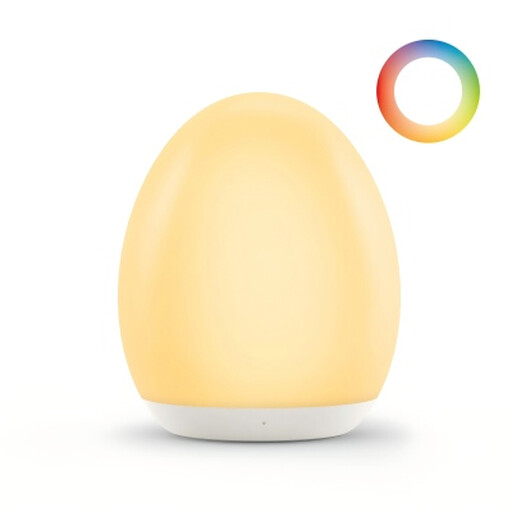
Why It Stands Out: While not motion-activated, this kids night light is designed with the specific needs of parents and children in mind. Its intuitive touch controls, soft material and engaging features make it a comforting companion for little ones.
Pros:
Who is it for? Parents seeking a safe, fun and functional rechargeable night light for nurseries and children's bedrooms, perfect for nighttime feeds or comforting a toddler.
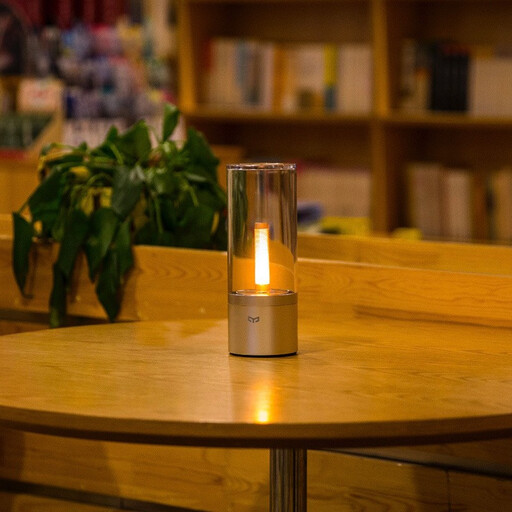
Why It Stands Out: The Yeelight Candela brings a touch of elegance to nighttime lighting. It simulates the gentle flicker of a candle, providing a beautiful warm glow light that enhances the decor of any room. This portable night light is designed for atmosphere as much as function.
Pros:
Who is it for? Anyone who prioritises style and ambience. It's an excellent choice for creating a calming mood in a bedroom or for use as a portable, decorative light around the home.
If you are specifically interested in cordless convenience, there are many different styles and functions to explore. For a wider selection of portable and USB-powered lighting, browse our full collection of rechargeable battery lamp models.
1. Where is the best place to put a motion sensor night light? For safety, the best locations are at the top and bottom of stairs, along hallways and in bathrooms. Placing them low to the ground (e.g., in a low wall socket or on a skirting board) helps illuminate the floor path without shining directly into your eyes.
2. Do motion sensor lights use a lot of electricity? No, they are very energy-efficient. Modern LED night light models consume very little power. Because they only turn on when motion is detected, a motion sensor night light uses significantly less electricity over time compared to a light that is left on all night.
3. How sensitive are motion sensor night lights? Sensitivity varies by model. Most have a detection range of 3 to 6 metres and a wide-angle sensor (around 120 degrees). High-quality models are designed to avoid being triggered by small pets, but this can depend on the placement and sensitivity of the specific device.