
24/7 Customer Support

Free returns

Same-day & Next-day Delivery

Quality Guaranteed

Unlock Your Welcome Offers: FREE Delivery | Up to 80% OFF | Free 30-day JoyPlus trial
Download the APP
Navigating your home in the dark shouldn't be a challenge. Whether it's for a late-night trip to the kitchen, checking on a child without waking them or ensuring elderly relatives can move around safely, a motion sensor night light is a simple and effective solution. However, the market is filled with options that look good on paper but fail in practice. Many UK households end up with lights that are too bright, drain batteries in weeks or have unreliable sensors.
As a Joybuy Product Recommendation Officer, my role is to help you see past the marketing claims and focus on what truly matters. Before you buy, be aware of these common pitfalls that lead to disappointment and wasted money:
To ensure you get a reliable and practical lighting solution, focus on these core parameters. They are the key differentiators between a useful household tool and a frustrating gadget.
The way your light is powered dictates its flexibility and long-term running cost. There is no single "correct" choice; it depends entirely on your needs.
The best wireless wall light solutions require no tools, drilling or electrical expertise. Most modern designs use strong double-sided adhesive tape for a secure bond that won't damage paint or wallpaper upon removal, making them ideal for renters. Some models also include built-in magnets, offering even more flexibility for mounting on metal surfaces like fridges or shelving units. This is particularly useful for a wardrobe sensor light.
This is perhaps the most overlooked, yet most critical, aspect for a night light.
Based on these practical criteria, here are some motion sensor lights suited for different UK households and their specific needs.
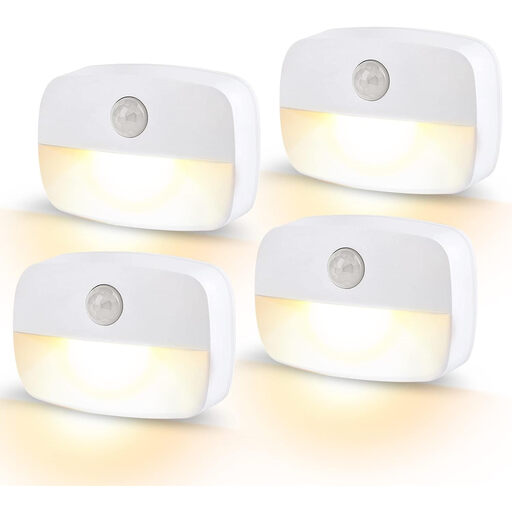
Why This Fits Their Persona: This multi-pack is a cost-effective way to illuminate multiple key areas like stairs, landings and bathrooms. Being battery-powered, they can be placed exactly where needed to create a safe path for children or elderly family members, without worrying about socket locations.
It provides a 2800K–3200K warm white glow, avoiding the harsh, sleep-disrupting light pitfall. The sensor has a clearly defined range (13–20 ft) and a 20-second auto-off timer, preventing battery waste from unreliable performance.
Tool-free installation with included adhesive tape makes it simple to set up in minutes. The low 0.5W power consumption ensures a long life from each set of batteries.
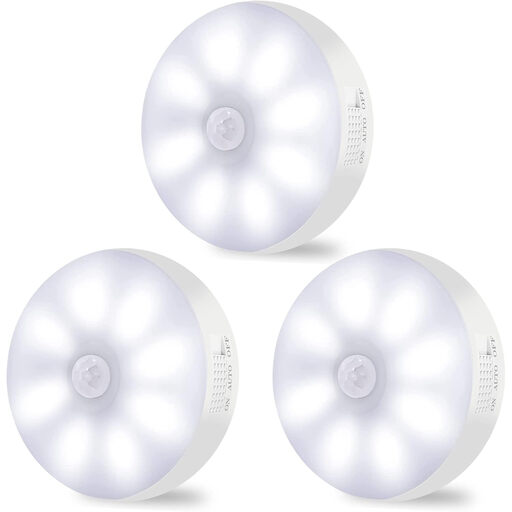
Why This Fits Their Persona: This rechargeable model is perfect for someone who wants to avoid the waste and recurring cost of disposable batteries. As a non-permanent, stick-on solution, it's ideal for rental properties where drilling holes is not an option.
It directly solves the "hidden cost of power" pitfall by using a built-in rechargeable battery. This provides a more sustainable and convenient power source over the long term compared to disposable alternatives.
Features three modes (Auto/On/Off) for greater control. The rechargeable design is both environmentally friendly and cost-effective over the life of the product.
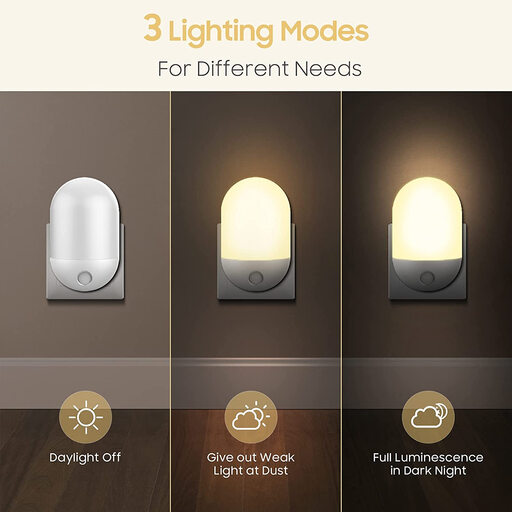
Why This Fits Their Persona: For a single, fixed location like a nursery, landing or kitchen where an outlet is free, this plug-in model is the ultimate low-maintenance solution. There are no batteries to change or charging schedules to remember—just plug it in and it works.
It completely eliminates all battery-related pitfalls. The 2800-3200K warm white light is specifically designed to provide a gentle, non-disruptive glow, making it perfect for areas where maintaining a restful environment is key.
Zero battery maintenance provides ultimate convenience. Its compact design ensures it doesn't block the adjacent socket, maintaining the utility of your wall outlets.
We have compiled a complete, real-time list of products that fully satisfy these strict selection criteria and UK safety regulations.
This depends on the light's power consumption, the quality of the batteries used and how often it is activated. For an energy-efficient LED stair light (around 0.5W), a set of three good-quality AAA batteries can last for several months of typical use. If you place a light in a very high-traffic hallway sensor light location, expect to change them more frequently.
Absolutely. A compact, battery-powered wardrobe sensor light is an excellent and popular use case. It provides instant, hands-free illumination the moment you open the door and switches off automatically after you close it, saving you from fumbling for a switch in the dark.
For bedrooms and hallways used at night, a warm white night light is highly recommended. Light in the warmer end of the spectrum (under 3300K) contains less blue light, which has been shown to interfere with the body's production of melatonin, the sleep hormone. A gentle, warm glow is less likely to disturb your sleep cycle if you wake up during the night.