
24/7 Customer Support

Free returns

Same-day & Next-day Delivery

Quality Guaranteed

Unlock Your Welcome Offers: FREE Delivery | Up to 80% OFF | Free 30-day JoyPlus trial
Download the APP
Fumbling in a dark wardrobe for a specific shirt or navigating a gloomy hallway at night is a common frustration. A motion sensor wardrobe light seems like a simple solution, but the market is flooded with options that often fail to deliver on their promises. Many end up with lights that drain batteries in weeks, have sensors that miss your movement or simply fall off the wall.
As the Joybuy Product Recommendation Officer, my role is to help you sidestep these issues. Before you make a purchase, be aware of these common pitfalls that lead to buyer's remorse:
To ensure you get a reliable and practical light, focus on these core specifications. Getting them right is the difference between a useful home upgrade and a gadget that ends up in a drawer.
The power source dictates the long-term convenience and cost of your light.
How you attach the light is crucial for both stability and maintenance. While many are marketed as simple "stick-on" lights, a superior system offers more flexibility.
The most practical design is a magnetic led strip. This typically involves a thin metal plate with an adhesive backing that you stick to the surface. The light unit itself then attaches to this plate via magnets. This allows you to easily detach the wireless wardrobe light for recharging without having to peel off the entire fixture. This is a significant advantage over units where the adhesive is fixed directly to the light, making charging a cumbersome process. This method is ideal for renters or anyone who wants to avoid drilling holes for kitchen cupboard lights or battery operated stair lights.
Not all light is created equal. The colour and intensity can significantly affect the ambience and functionality.
Based on these practical criteria, here are a few options suited to different needs and spaces.
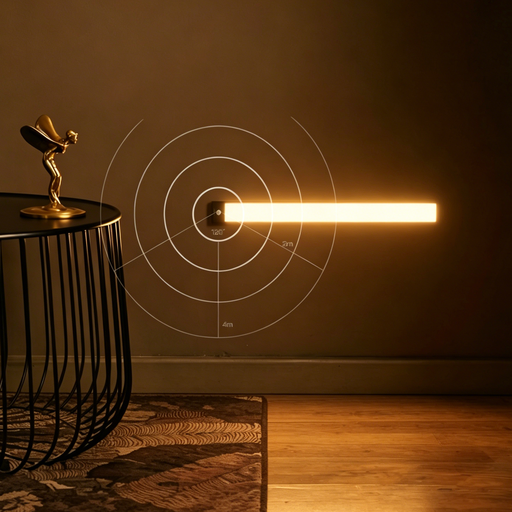
Why This Fits Their Persona: Perfect for those in rented flats or who need a quick, damage-free lighting fix. Its compact 20cm size is ideal for standard kitchen cupboards, small wardrobes or entryways without requiring any tools or wiring.
It uses a magnetic mounting system. You stick the included metal plates where needed, and the light bar clicks on and off for easy USB recharging, avoiding the issue of weak, single-use adhesives.
Ultra-thin design: At under 1cm thick, it fits discreetly in tight spaces. Warm light: The 2700K warm illumination is easy on the eyes, perfect for bedrooms.
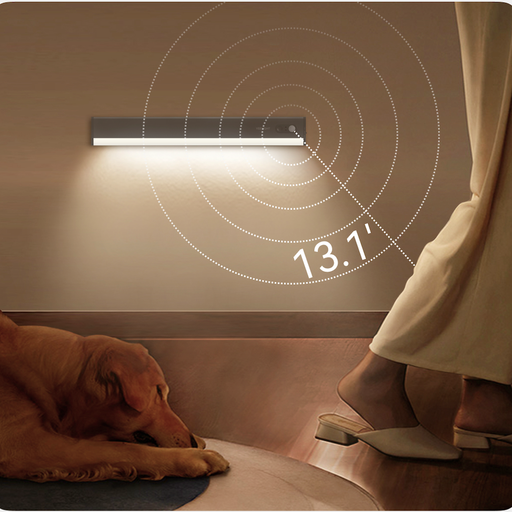
Why This Fits Their Persona: For those with large, walk-in wardrobes or long runs of kitchen cabinets, a small light just won't do. This 50cm strip provides broad, even illumination, ensuring no corner is left in the dark.
It addresses the battery drain issue with a substantial rechargeable battery, designed to last for weeks on 'Auto' mode, preventing the need for constant charging even with its larger size and brighter output.
Excellent coverage: The 50cm length is perfect for illuminating the full width of a standard UK wardrobe or kitchen unit. Reliable sensor: Features a wide detection angle and a 20-second auto-off timer to conserve power effectively.
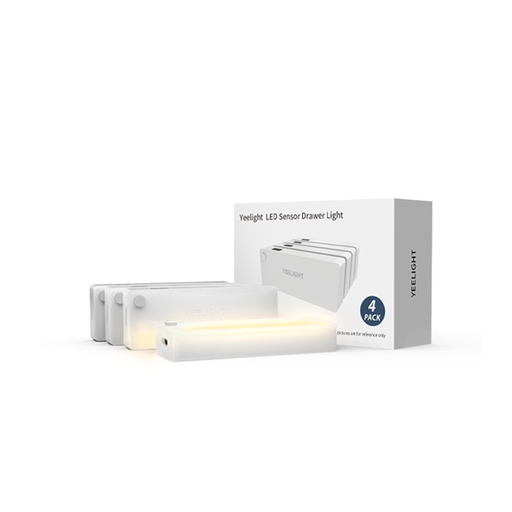
Why This Fits Their Persona: This pack is for the person who wants to add an automatic drawer light to the cutlery drawer, illuminate a deep pantry shelf and light up a shoe cabinet all at once. It offers a cost-effective way to tackle multiple dark spots around the home.
These compact lights are specifically designed for small, enclosed spaces. Their sensors are calibrated for short-range detection, preventing the "always-on" issue that drains batteries in larger, more sensitive lights.
Value pack: A set of four allows for wide deployment across the home. Purpose-built: The small form factor and targeted sensor are perfect for drawers, toolboxes and small cupboards where a long strip would be overkill.
We have compiled a complete, real-time list of products that fully satisfy these strict selection criteria and UK safety regulations.
This depends heavily on the battery capacity (measured in mAh) and how often the light is activated. For a typical rechargeable strip light used in a wardrobe opened a few times a day, a single charge can last anywhere from 4 to 8 weeks. Models with larger batteries used in low-traffic areas might last for several months.
Yes, the vast majority of modern motion sensor lights are designed for drill-free installation. The most common methods are high-strength adhesive tape or a magnetic system. The magnetic option is generally more convenient as it allows you to easily remove the light for charging without damaging your walls or furniture.
No, they are extremely energy-efficient. LED technology itself consumes very little power. Because the light only turns on when motion is detected and automatically shuts off after a short period (usually 15-30 seconds), the total energy consumption is minimal. For rechargeable models, the cost to charge them is negligible, typically amounting to just a few pence per year.