
24/7 Customer Support

Free returns

Same-day & Next-day Delivery

Quality Guaranteed

Unlock Your Welcome Offers: FREE Delivery | Up to 80% OFF | Free 30-day JoyPlus trial
Download the APP
Whether you are commuting through London, touring the Scottish Highlands or hitting a dirt track, the right motorcycle armour is a non-negotiable part of your gear. However, the market is filled with confusing labels and features that don't always deliver on their promises. Choosing incorrectly not only wastes money but can compromise your safety when you need it most.
As a Joybuy Product Recommendation Officer, my role is to help you navigate these choices. We will look past the marketing hype and focus on the practical details that define effective motorcycle protective gear. Let's start by identifying the common pitfalls that many UK riders encounter.
To make a sound decision, focus on these key technical specifications. They provide a clear, objective measure of an item's protective capability.
Certified motorcycle armour is rated at either Level 1 or Level 2. This rating is based on how much force is transmitted through the armour during a standardised impact test.
Look for the pictogram on the product label that confirms its rating. For gloves, the relevant standard is EN 13594, which includes tests for abrasion resistance and knuckle protection.
The materials used dictate the armour's performance and comfort. You will generally find two types:
How the armour is held in place is just as important as the armour itself. Look for armoured motorcycle trousers and jackets with dedicated internal pockets that keep the protectors snug against your body. Adjustable straps, elasticated panels and stretch fabrics are not just for comfort; they ensure the armour does not shift out of position.
Based on these practical criteria, here are some options from our catalogue matched to specific rider profiles.
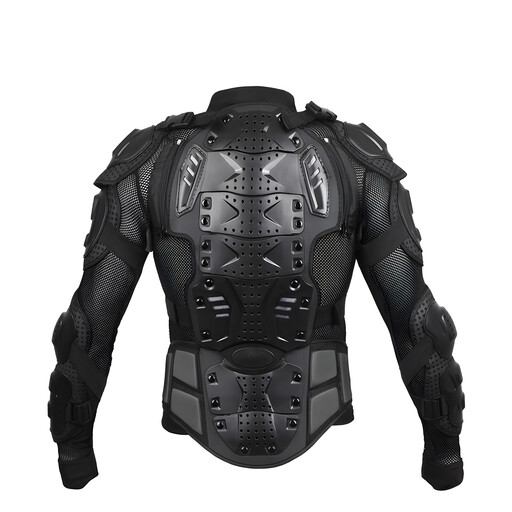
Why This Fits Their Persona: This rider needs comprehensive, all-in-one protection for daily use. This jacket integrates shoulder, elbow, chest and back protection into a single, easy-to-wear garment, saving time and ensuring no key areas are missed.
It directly counters the "poor fit" trap with fully adjustable shoulder straps, an elasticated waist belt and stretch cuffs to ensure all armour plates stay securely in place.
Features a breathable mesh chassis and chest ventilation holes to prevent overheating during long rides or in traffic. The removable back protector adds versatility.
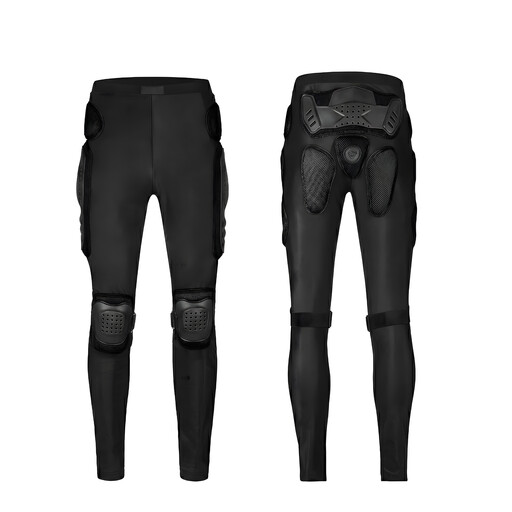
Why This Fits Their Persona: Ideal for riders who also participate in MTB, dirt biking or skateboarding. This user needs flexible, impact-focused protection for the lower body that can be worn under outer shells and doesn't restrict dynamic movement.
This design directly solves the breathability problem. The armour is fixed to a lightweight, moisture-wicking Lycra and mesh chassis, ensuring excellent air circulation during intense activity.
Hard-shell pads are strategically placed on the hips, thighs and knees for targeted impact protection. The stretch fabric base ensures the pads stay in place without being restrictive.
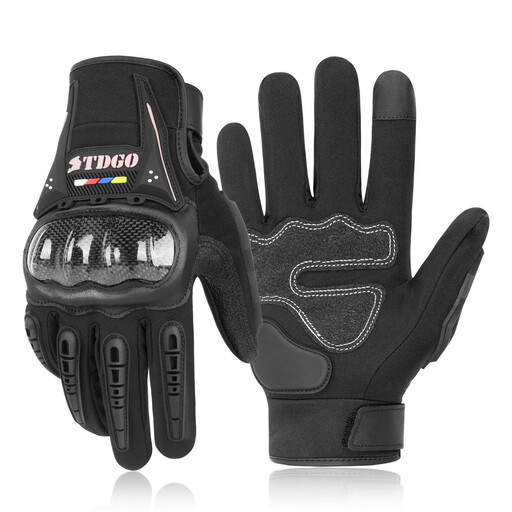
Why This Fits Their Persona: This rider is looking for a significant safety upgrade over standard gloves. Proper knuckle protection is a fundamental first step, and modern features like touchscreen compatibility add practical value for navigation and calls.
Instead of a vague "protective" claim, this glove specifies a built-in carbon fibre hard shell for knuckle protection, offering verifiable impact and abrasion resistance.
Combines safety with modern convenience. The conductive fibres on the index finger allow for smartphone use, while the adjustable wrist closure ensures a secure fit.
We have compiled a complete, real-time list of products that fully satisfy these strict selection criteria and UK safety regulations.
You should replace any piece of armour, whether hard or soft, immediately after it has sustained a significant impact. Even if there is no visible damage, the internal structure that absorbs energy may be compromised. It is also wise to inspect your gear regularly for signs of wear, material degradation or hardening, and consider replacing it every 5-7 years, even without an impact.
Yes, but you must follow the manufacturer's instructions carefully. In most cases, you will need to remove all the armour inserts before washing the garment. Typically, a gentle, cold wash with a mild detergent is recommended. Never use a tumble dryer; always allow the clothing and the armour to air dry away from direct sunlight or heat sources.
While motocross gear offers excellent impact protection, it may not be the ideal choice for high-speed road riding. Motocross armour is primarily designed for impacts against dirt and obstacles, whereas road-specific gear places a greater emphasis on abrasion resistance for sliding on tarmac. For road use, look for gear with high-denier fabric construction in addition to certified armour. However, for lower-speed urban commuting, some riders find the ventilation of MTB protective gear or motocross armour to be a comfortable option.