
24/7 Customer Support

Free returns

Same-day & Next-day Delivery

Quality Guaranteed

Unlock Your Welcome Offers: FREE Delivery | Up to 80% OFF | Free 30-day JoyPlus trial
Download the APP
Choosing motorcycle gloves with knuckle protection is not simply a matter of picking a colour or the lowest price. A pair may look suitable online yet prove uncomfortable, poorly fitted or impractical once used on a wet commute, cycling route or scooter trip.
For UK riders, the main challenge is balancing protection with ventilation and everyday usability. The following checks can help you avoid common buying traps and identify gloves that suit your riding habits.
A raised shell or decorative panel does not automatically mean a glove provides certified impact protection. Check the product description for the protector material, coverage and any stated safety standard. For motorcycle use, EN 13594 is the relevant European standard commonly associated with protective motorcycle gloves. However, not every glove listing will include certification details, so avoid treating a general “protective” description as proof of compliance.
Knuckle protection should also sit over the correct part of your hand without restricting finger movement. A shell that shifts when you grip the handlebars may provide less useful coverage.
Some breathable riding gloves use water-repellent fabric, which can help with light splashes. This is different from being waterproof for prolonged rain. If you regularly ride through heavy showers, look for clear information about waterproof membranes, seams and cuff construction.
The motorcycle gloves featured below are described as unsuitable for heavy rain or prolonged immersion. That makes them more appropriate for dry rides, light showers, cycling and outdoor training than for sustained wet-weather touring.
Gloves that are too tight can cause pressure at the fingertips and knuckles, while oversized gloves may bunch inside the palm or move during braking. Measure your hand according to the seller’s size chart and consider palm width, not just finger length.
If you have wide or large palms, or sit between two sizes, the supplied product guidance recommends choosing the larger size for the all-season motorcycle gloves. A secure hook-and-loop wrist fastening can then help fine-tune the fit.
For motorcycle gloves with knuckle protection, check whether the shell is described as hard protection, such as carbon fibre, or simply padding. Hard knuckle shells can provide a more defined impact barrier, while flexible padding may prioritise comfort and low weight.
Also look for abrasion-resistant palm fabric, reinforced stitching and a cuff that remains secure when you hold the bars. Product descriptions should make these details clear rather than relying on vague terms such as “safety design”.
Microporous polyester can promote air circulation and help moisture vapour move away from the skin. This is useful for all-season motorcycle gloves, cycling gloves and motocross gloves used during warmer rides. Breathability does not necessarily provide warmth in cold weather, so winter commuters may need insulated gloves instead.
For spring and summer riding, lightweight fabric, elastic wrist sections and ventilation can be more comfortable than thick leather construction. For year-round use, check whether the gloves leave enough room for natural finger movement without becoming loose.
Touchscreen motorcycle gloves normally use conductive material on the index finger or thumb. This may allow basic operation of a phone or navigation device without removing the gloves. Before buying, check which fingers are touchscreen-compatible and whether the feature is intended for light taps rather than precise typing.
Touchscreen fabric is convenient, but riders should always stop safely before handling a phone or navigation device.
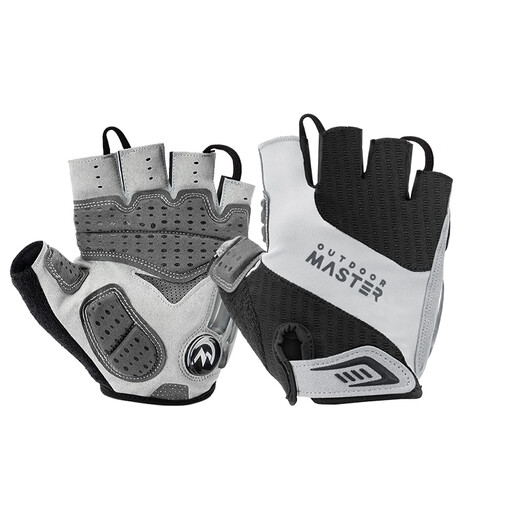
Why This Fits Their Persona: A black full-finger option for riders who want a versatile pair for cycling, commuting and general outdoor use without choosing a highly specialised glove.
The full-finger format gives more coverage than short cycling gloves, while the listed size helps reduce guesswork when ordering.
Black colour; L size; suitable for cycling and outdoor activities.
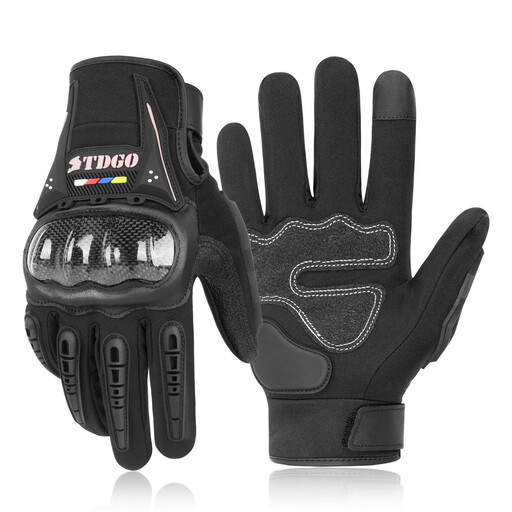
Why This Fits Their Persona: Suitable for riders prioritising defined knuckle coverage, ventilation and navigation access during motorcycle, bicycle or scooter journeys.
The listing specifies carbon-fibre hard-shell knuckle protectors, touchscreen fibres and water-repellent, breathable fabric rather than relying only on general safety wording.
0.15 kg listed weight; adjustable hook-and-loop fastening; conductive index finger.
Why This Fits Their Persona: The XL fit is aimed at users with larger hands who need protective motorcycle gloves for frequent riding, mountain biking or motocross activities.
The product guidance specifically addresses wide palms and recommends sizing up when between sizes, helping reduce an overly tight fit.
XL size; carbon-fibre knuckle shell; elastic wrist design and touchscreen index finger.
Why This Fits Their Persona: A bright orange cycling glove for riders who prefer a more noticeable colour on leisure rides, training sessions and everyday cycling.
The colour is easy to identify when matching cycling clothing, while the full-finger design avoids the limited coverage of fingerless cycling gloves.
Orange colour; M size; full-finger format for outdoor sports use.
We have compiled a complete, real-time list of products that fully satisfy these strict selection criteria and UK safety regulations.
Before your first ride, confirm that:
Inspect the protectors, stitching and fastening before each use. Clean gloves with mild detergent and allow them to air dry naturally. Avoid direct sunlight, radiators and other strong heat sources, which may affect fabrics, adhesives or protective components. Replace gloves if the shell cracks, seams separate or the fit changes noticeably.
Some are suitable for cycling, scooter use and outdoor training, particularly lightweight models with breathable fabric and flexible fingers. However, motorcycle and cycling gloves can have different construction and certification claims. Check the intended use, fit and stated protective features before selecting a pair for road cycling or motorcycling.
Touchscreen compatibility may become less reliable when the conductive fabric, screen or your fingers are wet. Water-repellent gloves can help with light splashes, but they should not automatically be treated as waterproof. For frequent wet-weather riding, look for a glove with clearly stated waterproof construction.
There is no fixed lifespan. It depends on riding frequency, exposure to rain and sunlight, cleaning, storage and whether the gloves experience an impact. Check them before every use and replace them when protection, stitching, grip or fastening shows visible deterioration.