
24/7 Customer Support

Free returns

Same-day & Next-day Delivery

Quality Guaranteed

Unlock Your Welcome Offers: FREE Delivery | Up to 80% OFF | Free 30-day JoyPlus trial
Download the APP
Riding a motorcycle offers a sense of freedom that few other experiences can match. Whether you are commuting through city traffic, touring the British countryside, or tackling an off-road trail, your safety is paramount. Choosing the right motorcycle protective gear is not just about meeting legal requirements; it is about giving yourself the confidence to ride, knowing you are well-protected.
This guide is designed to help you navigate the options. We will break down the essential features to look for in modern riding equipment and provide some practical recommendations to help you assemble a full motorcycle gear set that suits your needs and budget.
Selecting the right equipment can feel overwhelming with so many materials, certifications and styles available. Here are a few key considerations to simplify your decision-making process.
Safety standards are not just marketing terms; they are your assurance that a piece of gear has been subjected to independent, rigorous testing. For helmets, the ECE 22.06 helmet standard is the latest and most comprehensive in Europe. It supersedes the older 22.05 regulation, introducing more stringent tests that account for rotational forces, varied impact speeds and the integration of official accessories like sun visors. When choosing a helmet, looking for the ECE 22.06 label is a reliable indicator of up-to-date protection.
Modern armoured motorcycle clothing is designed to absorb and distribute the force of an impact. This motorcycle body armour is typically rated to a CE (Conformité Européenne) level. Level 1 armour provides a good standard of protection suitable for urban riding, while Level 2 armour absorbs roughly twice the impact energy, making it a preferred choice for higher speeds or touring. Look for jackets and protective riding trousers with pockets for armour at the shoulders, elbows, back, hips and knees. This allows you to upgrade or replace the pads as needed.
Protective gear is only effective if you wear it on every ride. An ill-fitting jacket or a pair of uncomfortable trousers will likely be left at home. Your gear should fit snugly without restricting movement. Look for adjustable straps, cuffs and waistbands to achieve a personalised fit. For year-round riding in the UK, consider gear with removable thermal and waterproof liners. Many modern items are designed as unisex motorbike gear, offering a functional fit for a wide range of body types.
Based on features, user feedback and adherence to current safety standards, here are our recommendations for riders looking to upgrade or build their gear set this year.
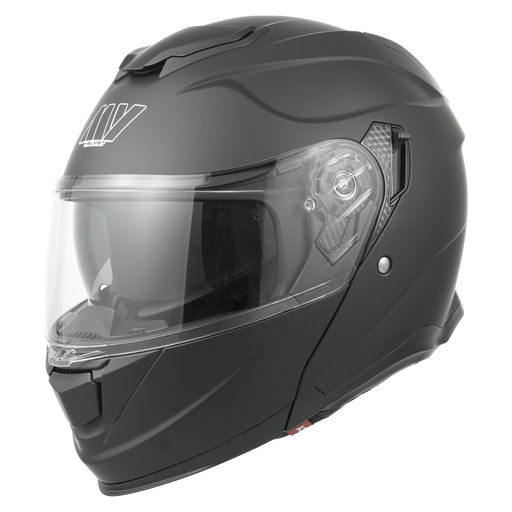
Why It Stands Out: This helmet combines the convenience of a flip-up (modular) design with the reassurance of the latest ECE 22.06 certification. The shell is constructed from high-strength Acrylonitrile Butadiene Styrene (ABS) with a high-density EPS buffer for shock absorption. Its double-visor system, featuring a clear main visor and an internal sun shield, provides adaptability for changing light conditions. A thoughtful inclusion is the reserved slot for a Bluetooth intercom system.
Pros:
Who is it for?: Commuters and touring riders who value versatility, modern safety features and the convenience of a modular helmet.
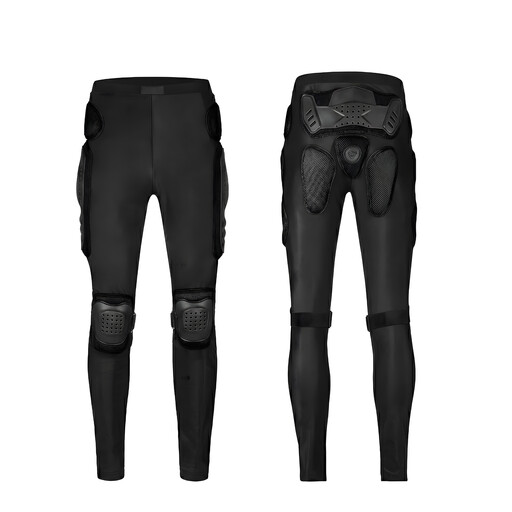
Why It Stands Out: These protective riding trousers are built for riders who venture off the beaten path. They are constructed with a base of stretchy Lycra and breathable mesh, with hard-shell pads and shock-absorbing EVA foam strategically placed to protect the hips, thighs and knees. This design offers substantial impact resistance without the bulk of traditional textile trousers, making them suitable for wearing under shell trousers or on their own in warm weather.
Pros:
Who is it for?: Motocross, enduro and mountain bike riders, or anyone seeking a flexible and highly breathable armoured base layer for active riding.
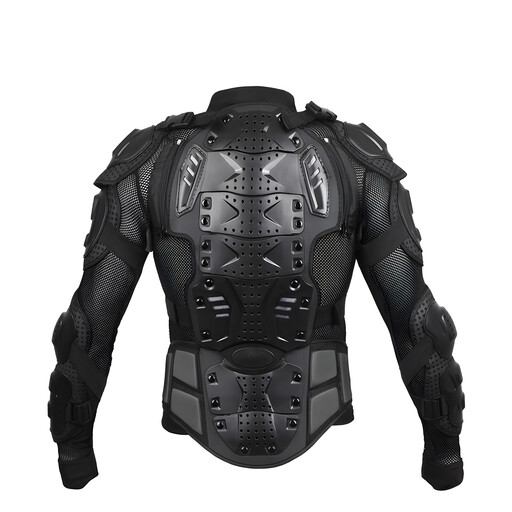
Why It Stands Out: This jacket is a comprehensive piece of motorcycle body armour designed for full upper-body coverage. It features a tough PE outer shell over shock-absorbing EVA cushions on the chest, shoulders and elbows. The standout feature is the articulated, removable back protector that covers the entire spine. The entire system is built onto a breathable mesh chassis with multiple adjustment points, including a wide hook-and-loop waistband, to ensure a secure and non-slip fit.
Pros:
Who is it for?: Off-road enthusiasts and riders in high-impact disciplines who require a dedicated armoured jacket that prioritises maximum coverage and ventilation.
The recommendations above offer a solid foundation for many riders, but every motorcyclist has unique needs. If you are searching for different styles or more specialised off-road safety equipment, we invite you to explore our broader collection.
? Explore our full range of motocross gear here.
In the United Kingdom, the only piece of protective equipment required by law is a helmet that meets British safety standards (or an equivalent European standard like ECE 22.06). However, for adequate protection against injury, a full set of gear—including an armoured jacket, gloves, protective trousers and sturdy boots—is strongly recommended by all road safety organisations.
ECE 22.06 is the latest UN safety standard for motorcycle helmets. It introduces a more demanding testing protocol compared to the previous ECE 22.05 standard. Key changes include testing impacts at both higher and lower speeds, assessing rotational forces (a common factor in brain injuries) and testing the helmet with its official accessories (like sun visors) attached to ensure they do not compromise safety.
Yes, most textile and mesh motorcycle gear can be washed, but it is crucial to do it correctly. Always remove all the armour from the shoulders, elbows, back and knees before washing. Check the garment's care label for specific instructions. Generally, it is best to hand wash with a mild detergent or use a gentle machine cycle. Always air dry the gear away from direct sunlight or heat sources, as high temperatures can degrade the materials.