
24/7 Customer Support

Free returns

Same-day & Next-day Delivery

Quality Guaranteed

Unlock Your Welcome Offers: FREE Delivery | Up to 80% OFF | Free 30-day JoyPlus trial
Download the APP
By Joybuy Product Recommendation Officer
Motorcycle protective trousers can add useful coverage around the hips, thighs and knees, but choosing a suitable pair involves more than looking for the word “armour”. Some products use impressive-sounding descriptions while offering limited coverage, awkward sizing or padding that shifts during movement. The right choice depends on where you ride, how often you wear the gear and whether the armour stays correctly positioned.
A pair of motorcycle armour trousers may have hard shells over the knees but little or no protection around the hips or thighs. Check the actual protected zones rather than relying on phrases such as “full body” or “all-round safety”. For motorcycle use, look for clear information about impact protectors and whether they are tested to relevant standards, such as EN 1621-1 for limb impact protectors. A product description alone is not proof of certification, so check the listing, label and supplied documentation.
Loose-fitting dirt bike armour trousers can move away from the knee, hip or thigh during a fall. Overly tight trousers create a different problem: restricted movement, uncomfortable pressure and reduced willingness to wear them regularly. Waist fastening, stretch panels and adjustable leg closures are practical features to look for. The protector should remain aligned when you sit, stand and bend your knees.
Mesh fabric can improve airflow, but hard plastic panels may still feel warm during summer trail riding. Conversely, lightweight motocross protective trousers may not provide the wind or rain coverage expected from outer riding trousers. Check whether the item is intended as an under-layer or an outer layer, and plan additional waterproof clothing for changeable UK weather where necessary.
For motorcycle knee and hip protection, examine the number and position of pads. The featured trousers use PP hard-shell panels, high-impact-resistant PE material and shock-absorbing EVA foam over the hips, thighs and knees. This layout is relevant for riders who want more coverage than separate knee guards provide.
Hard shells can help distribute contact across a wider area, while foam padding may improve comfort between the shell and the body. However, no protective garment eliminates injury risk. Replace the trousers if the shells crack, the foam becomes badly compressed or the stitching around a protector is damaged.
Protective riding trousers should stay close to the body without cutting into the waist or legs. Stretch Lycra and breathable mesh can support movement on a dirt bike, enduro motorcycle or mountain bike. Before riding, adjust every zip, Velcro fastening, waist strap and leg strap. Knees should bend naturally, and the armour should cover the intended area when seated on the bike.
If you plan to wear the trousers under riding trousers, allow enough room for both layers. If they are intended for use over base layers, compare the garment measurements with your waist, hip and thigh measurements instead of choosing solely by your usual clothing size.
The listed sizes weigh approximately 0.54–0.62 kg, depending on the size selected. That is relevant for long trail sessions, where unnecessary bulk can become distracting. Breathable mesh and moisture-wicking fabric may be useful during warmer rides, while the listed design also includes windproof and waterproof features.
Follow the care instructions carefully: remove the protective pads before washing, hand wash in cold water with mild detergent and air-dry away from direct heat and sunlight. Regularly inspect the seams, closures and armour. Washing or drying the garment incorrectly can affect its condition over time.
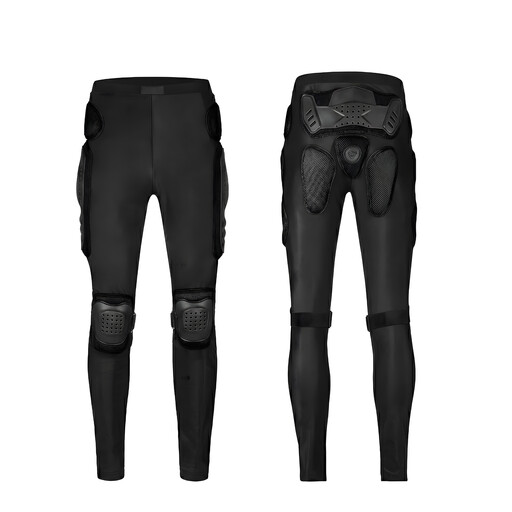
Why This Fits Their Persona: The M-size option suits adult riders starting with off-road motorcycle protection and looking for one garment covering several impact zones.
Integrated PP shells cover the hips, thighs and knees rather than focusing on the knees alone. Stretch mesh and adjustable closures help reduce unwanted movement.
M size; PP hard shell, EVA foam and breathable mesh; unisex adult design.
Why This Fits Their Persona: The L-size version is suitable for riders who prioritise a structured armour layout and flexible fabric for regular road, trail or mixed outdoor use.
The product information identifies the materials and coverage areas clearly, making it easier to compare practical construction instead of vague safety language.
L size; stretch Lycra, moisture-wicking mesh and EVA foam; listed as waterproof and windproof.
Why This Fits Their Persona: The XXXL option gives larger-build adults a size choice for extended dirt-bike, motocross or outdoor sessions where stable coverage is important.
A wider size range helps reduce the temptation to size up excessively or ride with restrictive gear. Adjustable waist and leg fastenings support positioning.
XXXL size; integrated protection for hips, thighs and knees; lightweight construction listed at approximately 0.62 kg.
Use this quick checklist when the trousers arrive:
For riders comparing separate hip protection, you can also browse the wider hip pads range.
We have compiled a complete, real-time list of products that fully satisfy these strict selection criteria and UK safety regulations.
They can be suitable for recreational MTB, downhill practice and other outdoor activities when the fit allows free pedalling and the armour does not shift. However, check the product’s intended use and protection documentation. MTB protective trousers are not automatically equivalent to motorcycle-specific equipment.
Lifespan depends on frequency of use, washing, storage and impact history. Inspect the fabric, stitching, fasteners, foam and hard shells regularly. Replace the garment after a significant impact or when any protector is cracked, deformed or no longer held securely.
Many stretch-mesh designs are intended to be worn beneath looser outer trousers, but the combination must not restrict movement or compress the armour out of position. Try the complete outfit before riding and make sure the outer layer does not catch on the closures.