
24/7 Customer Support

Free returns

Same-day & Next-day Delivery

Quality Guaranteed

Unlock Your Welcome Offers: FREE Delivery | Up to 80% OFF | Free 30-day JoyPlus trial
Download the APP
Choosing mountain bike helmets is not simply a matter of picking a colour or selecting the lowest price. UK riders need a helmet that fits securely, suits the type of cycling they do and remains comfortable throughout a ride. A helmet that shifts on rough ground, restricts airflow or lacks the right coverage can quickly become an expensive purchase that stays in a cupboard.
This guide explains the practical specifications to check before buying, common marketing traps and a selection of helmets matched to different riding profiles.
A lightweight bike helmet may feel comfortable in the shop, but low weight does not automatically mean the helmet is suitable for your head shape or riding conditions. If the retention system is poor, the helmet may move when you look over your shoulder, ride over uneven ground or adjust your position.
Look for an adjustable cycling helmet with a rear dial or equivalent retention system. It should sit level, with the front edge a short distance above the eyebrows. The chin strap should be secure without pressing uncomfortably against the throat.
A ventilated bike helmet can help air move over the head, but the number of vents alone does not tell you how well it will perform. Vent placement, internal channels, padding and the helmet’s coverage all affect comfort.
For longer rides, check whether the inner pads can be removed and washed. This is particularly useful in wet British weather, where moisture and mud can accumulate during regular off-road use.
A bike helmet with visor can help reduce glare and keep rain, mud and low branches away from the eyes. However, some visors are fixed, while others are removable or adjustable. A large visor may be useful on woodland trails but less convenient for road cycling, commuting or storing the helmet in a small bag.
Also check whether the visor interferes with glasses or goggles. The right choice depends on whether you mainly ride on roads, cycle paths, trails or downhill routes.
For ordinary cycling in the UK, check the product information and packaging for a recognised cycling helmet standard such as BS EN 1078, or another standard accepted for the intended activity. A US or European certification statement should not be assumed to cover every use, so read the manufacturer’s compliance information carefully.
Many cycling helmets use a polycarbonate (PC) outer shell combined with expanded polystyrene (EPS) foam. The shell helps form the external structure, while the foam is designed to absorb energy in certain impacts. Full-face models may use different materials, such as ABS and EPP, and are intended for more demanding riding conditions.
No helmet can prevent every injury. Replace it after a significant impact, even if visible damage is not obvious.
Measure around the widest part of the head, generally just above the eyebrows and ears. Compare the measurement with the product’s size chart rather than relying only on small, medium or large labels.
For example, the DKONI HS-062 is listed in:
A mountain bike helmet for adults should feel evenly snug without pressure points. When fastened, the helmet should not tilt backwards or slide from side to side. Children’s helmets require the same attention to fit; buying a larger size for a child to “grow into” can leave the helmet unstable.
A standard adult cycling helmet is generally suitable for road riding, commuting, leisure cycling and moderate trail use. More coverage around the sides and back may be preferable for mountain biking.
A full-face mountain bike helmet adds a chin bar and is designed for activities such as downhill riding, BMX and aggressive trail use. It is usually heavier and warmer than an open-face helmet, so it may be unnecessary for everyday commuting.
For mixed use, a road and mountain bike helmet with a removable visor can provide more flexibility. A rear light, reflective detail or a high-visibility colour may also be useful for commuting, but lighting is an aid to visibility rather than a replacement for legal cycle lighting.
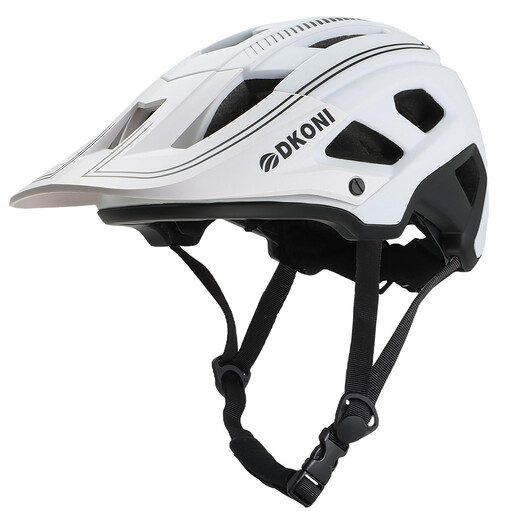
Why This Fits Their Persona: A practical adult mountain helmet for riders starting trail cycling, leisure rides or mixed-use cycling without adding a full-face design.
The listed size range is clear, and the one-hand adjustment wheel helps reduce movement caused by an imprecise fit. The removable visor also avoids committing to a fixed trail-only configuration.
PC and EPS construction, 17 ventilation openings, a removable ABS visor and a listed weight of 380g.
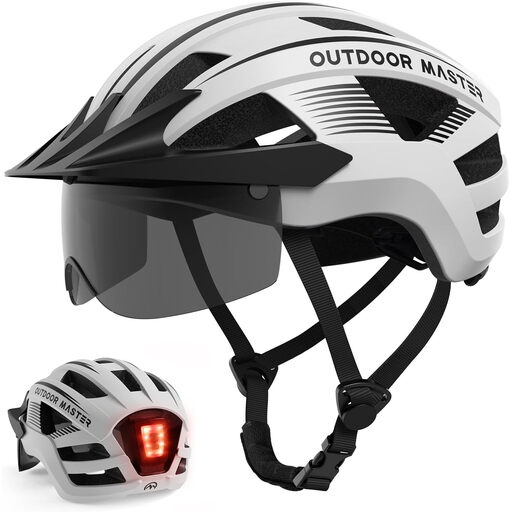
Why This Fits Their Persona: Suitable for riders who alternate between roads, trails and urban commuting and want integrated accessories for changing conditions.
The removable visor and detachable magnetic goggles offer configuration choices, while the adjustable dial helps address fit rather than relying on the appearance of the shell.
17 vents, a Type-C rechargeable rear LED light, detachable goggles and a PC shell with EPS liner. Check the listed certification details before purchase.
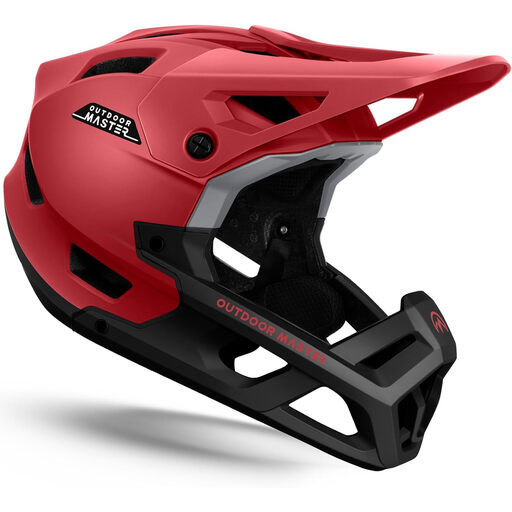
Why This Fits Their Persona: Intended for downhill, BMX and more demanding mountain biking where a chin bar and extended coverage are part of the riding requirement.
It is not presented as an everyday lightweight commuter helmet. The full-face format, D-ring adjustment and goggle-strap channel are matched to a specific off-road use case.
ABS outer shell, EPP liner, chin-bar pads, 27 ventilation channels, pivoting visor and removable washable liner.
We have compiled a complete, real-time list of products that fully satisfy these strict selection criteria and UK safety regulations.
Parents comparing a kids cycling helmet or children’s bike helmet with LED light should prioritise head measurement, adjustability and secure fastening. The RoyalBaby Moon models are listed for children aged 5–13, with an adjustable range of 52.05–55.88cm, a washable liner, visor and three-mode rear light.
The RoyalBaby Everest is also listed for ages 5–13 and weighs approximately 213g, with 10 ventilation holes and compatibility with bicycles, scooters, skateboards and balance bikes. These features make them examples of a multi-sport helmet, but parents should still confirm that the fit is appropriate for the child’s current head size and intended activity.
The helmet should sit level and remain stable when you gently shake your head. The rear adjustment system should be snug without causing pressure, and the chin strap should form a secure but comfortable V-shape beneath each ear. Do not wear a helmet tilted far backwards.
Replace a helmet after any significant impact, even when there are no visible cracks. For routine use, inspect the shell, foam, straps, buckle, retention dial and padding regularly. Replace it if components become damaged, loose or unusable, or if the manufacturer provides a specific replacement recommendation.
They can be used if they fit correctly, but they are usually heavier and warmer than open-face helmets. For regular commuting, an adjustable open-face model with ventilation and visibility features may be more practical. A full-face mountain bike helmet is more appropriate when the extra chin and face coverage matches the rider’s activity.