Quiet shared-desk workers
If someone works beside you, consider which mouse actions could disturb them. Dell describes silent clicking, scrolling and gliding on its MS355; other quiet claims may cover clicks alone.


For a shared desk, start with the noise a mouse makes and whether its scrolling suits repeated checks through transaction lists. A conventional quiet mouse suits straightforward use; a model with precise and faster scrolling is worth considering for long statements, while a vertical shape calls for a closer check of hand fit and the wider workstation.
If someone works beside you, consider which mouse actions could disturb them. Dell describes silent clicking, scrolling and gliding on its MS355; other quiet claims may cover clicks alone.
If you alternate between individual transactions and lengthy statement pages, look at how the scroll wheel handles both movements. Logitech specifies precise and faster scrolling for its Signature M650 and two scroll modes for the MX Anywhere 3S.
A vertical or neutral-grip shape may be worth considering if its stated hand-size and handedness options suit you. The Health and Safety Executive considers the mouse alongside the rest of the display screen equipment workstation, not in isolation.
Decide which issue would most affect your choice at the shared desk, then check the mouse against that need without overlooking connection and fit.
| Concern | What to check | Who this matters to |
|---|---|---|
| Nearby noise | Check whether the quiet claim covers clicks alone or also scrolling and movement. | If a colleague sits beside me, I want routine mouse use to cause less disturbance. Around 33% of consumers would put that need first. |
| Statement navigation | Look for a scroll wheel with both precise and faster modes if you need both. | Moving between individual transactions and long pages makes scrolling control my priority; roughly 27% of consumers would likewise choose primarily for document navigation. |
| Desk connections | Confirm Bluetooth or USB compatibility and whether the required receiver is included. | If I change computers at the shared desk, I need a connection that works with each setup. About 20% of consumers would make connection flexibility their main concern. |
| Hand fit | Check stated hand size and handedness; consider the mouse as part of the whole workstation. | For sustained desk work, I would choose a shape that fits my hand before adding other features; around 20% of consumers would put fit and hand position first. |
Dell describes silent clicking, scrolling and gliding for the MS355, whereas Logitech highlights quiet clicks for the MX Anywhere 3S. Those descriptions are not a common noise measurement.
If a nearby colleague is your main concern, check exactly which actions the manufacturer describes as quiet.
The Health and Safety Executive includes input devices, screens, software, furniture and the work environment in its workstation guidance.
Check the mouse together with desk layout, chair, screen position and work routine. If your employer provides the workstation, use its display screen equipment assessment process.
Logitech offers the Signature M650 in different size and handedness variants; its Lift has stated hand-size guidance and a left-handed option. The model name alone does not identify the fit you need.
Check the exact variant before ordering, and review the seller’s terms if you cannot assess fit beforehand.
Wireless connection options differ, and Bluetooth use depends on the computer you will use.
Confirm the connection method, available USB ports and box contents before choosing a mouse.
Logitech states that the MX Anywhere 3S does not include a Logi Bolt receiver, so using that connection would require obtaining a compatible receiver separately.
Its Signature M650, MX Anywhere 3S and Lift lines offer different approaches to scrolling, device switching and mouse shape.
The Pro Compact Silent Mouse MS355 is a conventional option to examine when noise at a shared desk is the deciding concern.
The Pro Fit Ergo Wireless Mouse offers another shape to consider for regular desk use.
These mice cover quiet conventional and wired setups, connection options and vertical shapes for shared-desk work. Compare each listing with your own priorities for noise, scrolling, computer compatibility and fit.
 No image available
Consider this for a shared desk where quiet clicks and connection options matter. Its title specifies adjustable DPI and one AA battery; check scrolling behaviour and hand fit if either will decide your choice.
 No image available
A conventional option if quiet clicks and a receiver-based connection suit the desk computer. The title specifies 2.4GHz wireless, a USB receiver and 1600 DPI; check scroll noise and hand fit separately.
 No image available
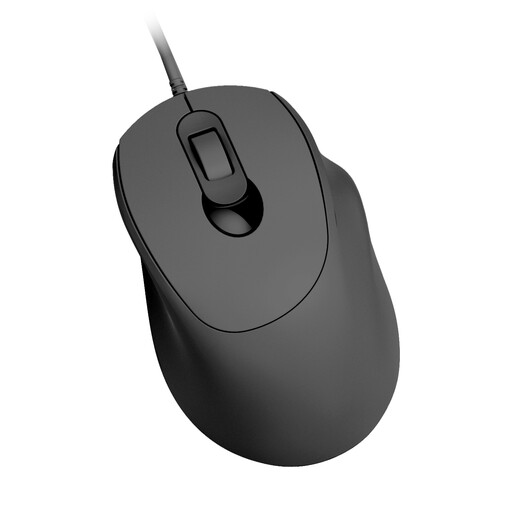
Consider this if a wired USB connection suits the shared desk and quiet left and right clicks matter. Its title specifies four buttons and adjustable 1000/1200/1600 DPI; check cable placement, scroll noise and hand fit.
 No image available
This vertical shape is worth considering if you want a different hand position for regular desk work. Check whether it fits your hand and how much noise it makes; the mouse is only one part of the workstation.
 No image available
Consider this vertical design if a different grip and dual wireless connection suit your desk. Its title specifies 2.4GHz, six buttons and adjustable 1600 DPI; check hand fit, click noise and scrolling behaviour before choosing it for statement work.
No: the Health and Safety Executive does not prescribe a vertical mouse. Choose one if its shape and fit suit you, while considering the rest of the workstation; employers must assess workstation risks for workers who use display screen equipment daily for continuous periods of an hour or more.
Check the computer’s Bluetooth capability, available USB ports and whether the receiver you intend to use is included. Logitech specifies Bluetooth or a Logi Bolt receiver for the Signature M650; the MX Anywhere 3S can connect to up to three Bluetooth devices, but its Logi Bolt receiver is not included.
Not necessarily: check which actions the claim covers. Dell describes clicking, scrolling and gliding as silent on the MS355, while Logitech describes quiet clicks on the MX Anywhere 3S; those descriptions do not establish how the two mice compare in measured noise.
A change-of-mind cancellation and a remedy for a faulty item are separate matters. GOV.UK says that, for applicable UK distance sales, customers can cancel within 14 days of receiving an item and then have another 14 days to return it, subject to the stated conditions. Check the retailer’s return process for a fit-related return; if the mouse is faulty or misdescribed, ask about the separate statutory remedies rather than relying only on that policy.