Household budgeters with limited sockets
If you regularly reconcile bills and transactions, the power routine deserves attention. A rechargeable mouse needs a usable charging connection, while an AA-powered mouse needs eventual battery replacement.


If a computer USB port is scarce, start with a Bluetooth-capable mouse that can connect without a receiver. Then choose between USB-C recharging and an AA battery according to the power arrangement you already have; for household-budget charts, scroll controls and hand fit also matter, but neither replaces a workable desk setup.
If you regularly reconcile bills and transactions, the power routine deserves attention. A rechargeable mouse needs a usable charging connection, while an AA-powered mouse needs eventual battery replacement.
If you move repeatedly between transaction lists and charts, compare scroll behaviour and configurable controls on the exact model. Check operating-system support if the shortcuts you want depend on companion software.
Hand fit, mouse reach and available movement space all affect the choice. A thumb-operated trackball can reduce the desk space needed to move the pointer, but its control method will not suit everyone.
For household-spending charts, settle the power and connection arrangements your desk can accommodate, then compare navigation controls and fit.
| Concern | What to check | Who this matters to |
|---|---|---|
| Power maintenance | Check whether the exact mouse charges by USB-C or uses a replaceable battery, and whether your existing setup can accommodate its power routine. | I have few spare sockets and want mouse power to interrupt bill-checking as little as possible. Roughly 36% of consumers put this power-maintenance need first. |
| Spreadsheet control | Compare scroll-wheel modes and check whether button shortcuts work with your operating system and any required software. | Long transaction lists make controlled scrolling and repeatable commands more useful to me than a sensitivity figure alone. Around 29% of consumers prioritise these spreadsheet controls. |
| Ports and devices | Confirm Bluetooth compatibility and, if you use several devices, how the exact mouse switches between them. | I want to keep a computer port free, or move between the devices used for household accounts. Approximately 21% of consumers make connection flexibility their primary concern. |
| Desk fit and comfort | Consider hand size, handedness and whether the mouse can sit within easy reach; try thumb control before choosing a trackball. | My desk has little room for mouse movement, or longer admin sessions make fit especially important. Roughly 14% of consumers put desk fit and comfort first. |
Wireless describes the connection, not the power supply. Logitech lists an included AA battery for the Signature M650 for Business, while the HP 710, MX Anywhere 3S and Dell MS746 are rechargeable models.
Check the exact model’s power specification and choose between periodic charging and eventual battery replacement.
A 2.4 GHz receiver occupies a computer port. A Bluetooth-capable mouse can avoid that receiver for its Bluetooth connection when the computer supports it.
Confirm the connection mode you intend to use rather than assuming every wireless mode needs—or avoids—a receiver.
Pointer sensitivity does not tell you how a wheel handles long transaction lists or whether buttons can perform the shortcuts you use.
Check scrolling behaviour and button configuration on the exact model, including software compatibility where customisation matters.
A mouse shape cannot make up for a device placed too far away. The Health and Safety Executive advises keeping a mouse within easy reach so it can be used with a straight wrist.
Assess hand fit alongside the space available beside your keyboard; consider a trackball if moving a conventional mouse is awkward.
These brands offer different mouse designs relevant to limited sockets and household charting; compare the particular model rather than assuming features apply across a whole range.
Logitech’s MX Anywhere 3S, Signature M650 and ERGO M575S address different needs: rechargeable productivity controls, AA-powered use and thumb-operated control for a small desk.
The HP 710 Rechargeable Silent Mouse is a rechargeable option for people who want Bluetooth and configurable controls.
Dell’s Pro 7 Rechargeable Compact Mouse MS746 is a compact rechargeable option with Bluetooth or radio-frequency connectivity.
These mice offer rechargeable and AA-powered approaches to working with limited sockets. Compare their connection and control options against the computer and desk you actually use; the HP 700 here is not the HP 710 discussed in the brand examples.
 No image available
Consider this rechargeable mouse if scrolling through transactions and switching between devices are regular parts of your budgeting. Bluetooth can keep a receiver port free on a compatible computer; check that your charging arrangement and the mouse’s shape suit your desk.
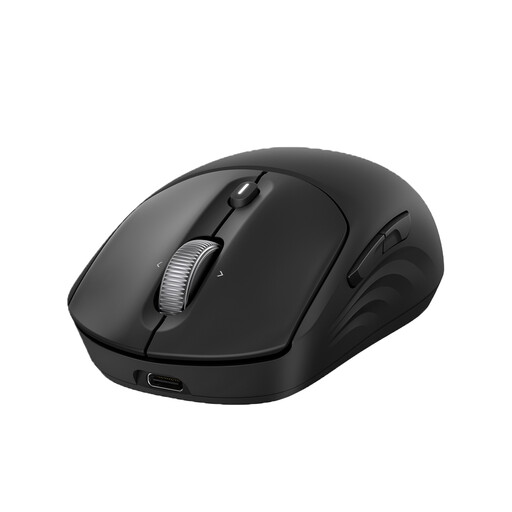 No image available
This rechargeable option is worth considering if you want Bluetooth connectivity and controls for moving around spreadsheets. Before relying on a quick top-up, check the charging instructions: the product title and detailed charging information give different full-charge times.
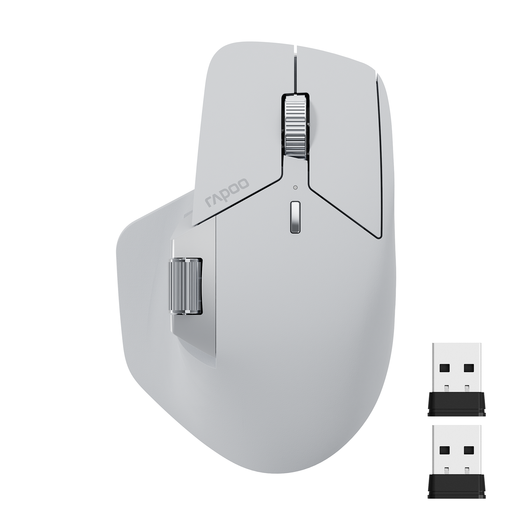 No image available
Consider this model if side-scrolling through wide household spreadsheets is important and you have a suitable USB-C charging route. Wireless charging calls for a separate P3 module; if mouse shape affects your choice, confirm the design before buying because the descriptions differ on whether it is vertical.
 No image available
If you prefer an AA-powered mouse to routine cable charging, this vertical model offers a Bluetooth connection for a compatible computer. Its name also specifies 2.4GHz dual-mode connectivity, six buttons and adjustable sensitivity up to 1600 DPI. Check hand fit and plan for eventual battery replacement; the receiver-based mode uses a USB port.
 No image available
This AA-powered mouse suits a setup where avoiding routine charging matters more than avoiding battery replacement. The product name specifies 2.4G and Bluetooth connection options; choose Bluetooth if preserving a receiver port matters and your computer supports it. Check the expected replacement routine if battery longevity is a deciding factor.
Choose rechargeable if you already have a convenient charging connection and would rather not replace batteries; choose AA power if avoiding routine charging matters more. For specific models, HP claims up to 90 days for the rechargeable HP 710, while Logitech claims up to 24 months from the included AA battery for the Signature M650 for Business. Actual run time depends on use.
Yes, when the mouse connects to a compatible computer over Bluetooth rather than through a USB receiver. Check the Bluetooth requirements of both devices; selecting a receiver-based connection instead will occupy a port.
Look at scroll-wheel behaviour and shortcuts you can actually configure before choosing by pointer sensitivity alone. Logitech lists ratchet and fast-scroll modes for the MX Anywhere 3S, while HP lists programmable buttons and adjustable scroll speed for the HP 710; confirm software support for any custom controls you intend to use.
No. Mouse shape and hand fit matter, but the Health and Safety Executive also advises placing the mouse within easy reach so it can be used with a straight wrist. Consider the available space and your working position alongside the mouse itself.