For long sessions editing programme drafts and PDF proofs at one desk, start with a mouse that fits your hand and puts the wheel and buttons within comfortable reach. A compact mouse makes more sense when you regularly work at rehearsal venues; if a conventional grip feels uncomfortable, consider a vertical shape, but check its fit and allow time to adjust.
Who needs which kind of mouse?
Long-session programme editors
If you spend extended periods preparing copy, schedules and layouts at a desk, hand fit and easy button reach matter. The Health and Safety Executive advises keeping the mouse within easy reach so you can use it with a straight wrist.
Multi-document production organisers
If you move between programme drafts, PDFs, spreadsheets and publishing tools, look closely at wheel control and whether extra buttons are easy to reach. Check software requirements before counting on configurable shortcuts.
Mobile rehearsal and venue workers
If you revise programme details on a laptop away from your usual desk, a compact wireless mouse may be easier to carry. Check that its smaller shape still suits the way you hold and control it.
What matters when choosing?
Start with where you do most of your programme work, then assess hand fit, document navigation and the needs of any shared workspace.
| Concern |
What to check |
Who this matters to |
| Comfort during long sessions |
Check hand fit, palm support and whether you can reach the wheel and buttons without stretching. A vertical shape still needs to fit your hand. |
If I edit and proof programmes for hours at a desk, I want a grip and layout I can use without awkward reaching. Around 31% of consumers put long-session fit first. |
| Document navigation |
Check whether the wheel suits both long PDFs and precise stopping; consider adjustable cursor sensitivity and shortcuts you will actually use. |
When I move repeatedly between drafts, schedules and proofs, controlled scrolling is more useful to me than a high DPI figure alone. Roughly 31% of consumers prioritise navigation. |
| Working at different locations |
Check carrying size and whether Bluetooth, a receiver or both work with your laptop and available ports. |
If I update details at rehearsals or venues, I need a mouse I can carry and connect without complicating my laptop setup. Around 23% of consumers make portability their main concern. |
| Click noise |
Look for a quiet-click specification on the exact model, while still checking its fit and controls. |
When I revise copy near other people, I want clicking to be less distracting. Approximately 15% of consumers put quiet operation first. |
Common buying mistakes
-
Choosing by DPI alone
A high advertised sensitivity does not tell you whether the cursor or mouse shape will suit detailed layout work.
Check whether you can adjust sensitivity for your screen and task, then assess wheel control and hand fit alongside it.
-
Assuming a travel mouse suits an entire desk session
A compact shape is convenient to carry, but may give your palm less support than a fuller mouse.
If most editing happens at a desk, check the grip, palm support and reach to the controls before prioritising bag space.
-
Expecting a vertical mouse to fix the whole setup
A different grip does not remove the need for a suitable mouse position. The Health and Safety Executive advises placing the mouse within easy reach and using it with a straight wrist.
Check the vertical mouse's fit and reassess your workstation if discomfort continues.
-
Assuming every multi-device feature works the same way
Switching a connection between computers is not necessarily the same as using software-dependent controls across them.
Check the exact mouse model, operating systems and software requirements for the workflow you intend to use. Logitech says its Flow feature requires Logi Options+ on both computers.
Brands to consider
Logitech
Its MX productivity, compact MX Anywhere and Lift vertical ranges offer different shapes to consider for programme work.
- Logitech specifies quiet clicks for the MX Master 3S and describes Lift as fitting small-to-medium hands, with a left-handed version available.
- Check the exact model and hand fit: those features do not apply to every Logitech mouse.
HP
The HP 920 is a vertical option for buyers considering a different grip and connections to several devices.
- HP specifies a detachable wrist rest, customisable buttons and connections to three devices for the 920.
- Those are features of the 920, not a guide to the shape or capabilities of every HP mouse.
Razer
The Pro Click V2 Vertical is a vertical mouse with configurable controls to assess for desk-based programme work.
- Razer describes the Pro Click V2 Vertical as a six-button design with base support.
- Its right-handed shape will not suit someone seeking a left-handed mouse; check fit before choosing it.
Joybuy mouse options
These mice cover desk-based document work, alternative vertical grips and a compact option for working with a laptop. Choose by your main working location and grip needs rather than assuming every model suits every programme task.
 No image available
Logitech MX Master 3S Black Mouse
Consider this full-size model for programme drafts and PDF proofs at a fixed desk. Logitech specifies quiet clicks for the MX Master 3S; check that its shape and button reach suit your hand, and confirm the box contents if you plan to use a receiver.
View on Joybuy
 No image available
HP 920 Black Ergonomic Wireless Mouse with Detachable Wrist Rest
Consider its vertical grip if a conventional mouse shape feels uncomfortable during desk work. HP specifies a detachable wrist rest and connections to three devices for the 920; check hand fit and whether the changed grip suits you.
View on Joybuy
 No image available
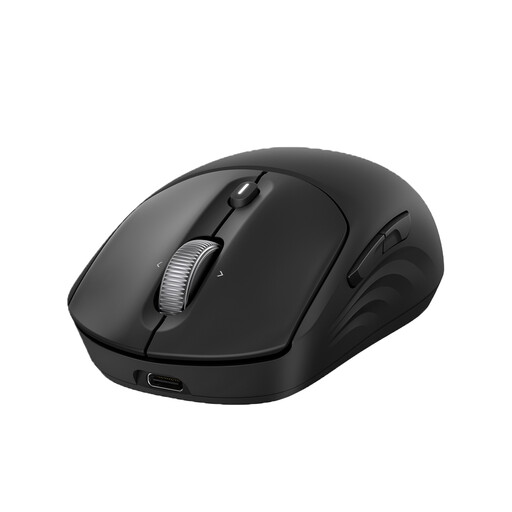
HP 700 Rechargeable Wireless Mouse
Consider this rechargeable model if you want a wireless mouse for moving through programme materials. Check its shape and button reach for extended sessions, and confirm software support before relying on customised controls.
View on Joybuy
 No image available
HOFOTEK M311 White-Grey Silent Wireless Mouse
Consider its compact shape for laptop-based programme revisions where carrying size and quiet clicks matter. The named variant specifies 2.4G and Bluetooth connections, adjustable DPI levels and one AA battery; check hand fit and wheel behaviour if you also edit long documents at a desk.
View on Joybuy
 No image available
V7 MW500BT Bluetooth Vertical Ergonomic Mouse
Consider this vertical model if you want to try a different grip for desk-based programme work. Its named configuration includes Bluetooth and 2.4 GHz connectivity, six buttons and an adjustable sensor up to 1600 DPI; check hand fit and button reach before choosing it.
View on Joybuy
Frequently asked questions
Do I need an ergonomic mouse to prepare a concert programme?
No particular mouse shape is necessary for everyone; start with fit and workstation position. The Health and Safety Executive advises keeping the mouse within easy reach and using it with a straight wrist. If a conventional shape remains uncomfortable, consider a different grip only after checking that it fits your hand.
Should I choose a vertical mouse if my wrist feels uncomfortable?
A vertical mouse is worth considering if its changed grip feels comfortable, but its shape alone does not settle the choice. Check hand-size guidance and button reach; Logitech describes Lift as suited to small-to-medium hands, while HP specifies a detachable wrist rest for the 920.
Will extra buttons help with programme work?
Extra buttons can be useful if you have repeated actions to assign and can reach the controls comfortably. Check the exact model's software and operating-system requirements before relying on customisation; Logitech says Flow requires Logi Options+ on both computers.
When does a UK employer need a display screen workstation assessment?
The Health and Safety Executive says employers must assess workstations where workers use display screen equipment daily as part of normal work for continuous periods of an hour or more. That assessment concerns the workstation and work, not a requirement for an individual consumer to buy a particular mouse.


