For frequent scrolling through concert programme drafts and reference documents, consider a productivity mouse with controls you will use; for long desk sessions where grip is the priority, consider a vertical mouse that fits your hand. A quieter conventional wireless mouse can suit lighter editing in a shared room. Whichever shape you choose, the Health and Safety Executive advises keeping the mouse in line with your elbow as part of a well-arranged workstation.
Who is this for?
Long-session programme editors
If you spend long periods arranging pages and checking copy, grip fit and desk position deserve attention. The Health and Safety Executive advises placing the mouse in line with your elbow; Logitech and HP describe vertical models for those considering a different grip.
Document-navigation power users
If you move repeatedly through long drafts, PDFs and other applications, scroll behaviour and accessible shortcut buttons may matter more to you. Logitech, HP and Razer describe different scrolling or configurable-control options on the models discussed below.
Quiet shared-home-office users
If you edit in a room shared with others, click noise may influence your choice. Logitech describes quiet clicks on the MX Master 3S, while the HP 400 is listed as a quiet wireless mouse.
What matters when choosing?
Productivity mouse
Consider it when: you regularly navigate long drafts or switch between editing tasks and want reachable scrolling or shortcut controls.
Check the fit: a sculpted shape and extra controls are only useful if they suit your hand and workspace.
Vertical mouse
Consider it when: an upright grip is your main preference during extended desk work.
Check the fit: hand size and handedness matter, and a different grip can take time to get used to.
Quiet conventional mouse
Consider it when: you make lighter edits in a shared room and prefer a familiar mouse shape.
Check the connection: confirm whether your computer can use the model's Bluetooth or receiver option.
| Concern | What to check | Who this matters to |
|---|
| Comfort during long sessions |
Check hand-size and handedness guidance, then whether the mouse can sit near your keyboard. |
If I spend hours selecting text and adjusting pages, I want a grip that fits without reaching across the desk; around 38% of consumers put long-session comfort first. |
| Document navigation |
Try the scroll-wheel style and check whether shortcut buttons are reachable and configurable for your computer. |
When I keep moving between programme pages, PDFs and reference material, I want navigation controls I will actually use; around 31% of consumers prioritise this workflow. |
| Noise in a shared room |
Look for a model-specific quiet-click description; check scroll-wheel noise separately if it matters to you. |
If others share my working space, repeated clicks can distract us; quieter operation is the primary concern for around 16% of consumers. |
| Simple wireless use |
Match Bluetooth or receiver connectivity to your devices and available ports. |
For occasional programme changes, I would rather have a straightforward connection than extra controls; around 15% of consumers put simple wireless use first. |
Mistakes to avoid
-
Choosing a vertical mouse by shape alone
Vertical does not mean one-size-fits-all: Logitech specifies Lift for small to medium hands and offers a separate left-handed version.
Check the exact model's sizing and handedness guidance before choosing a version, particularly if you cannot try its grip.
-
Expecting a different mouse to fix desk position
The Health and Safety Executive treats mouse placement as part of the wider workstation and advises keeping the mouse in line with your elbow and the keyboard central.
Arrange the desk so you can use the mouse without reaching or twisting. For prolonged laptop work, consider a separate keyboard and mouse so the screen can be raised.
-
Assuming all wireless connections work alike
Bluetooth and receiver connections place different demands on your computer; a mouse that offers both still needs to match the devices you use.
Check the exact model's connection and operating-system requirements against your computers and available ports.
Using a receiver occupies a compatible USB port while it is connected.
-
Assuming glass tracking applies to every mouse
Logitech qualifies the MX Master 3S glass-tracking claim with a minimum glass thickness of 4 mm. That condition says nothing about another model's surface support.
Check the surface guidance for the mouse you choose; if tracking on your desk is inconsistent, consider a mouse mat.
Brands to consider for these mouse types
Logitech
Its MX Master 3S represents the document-navigation route, while Lift offers a vertical shape specified for small to medium hands.
- Logitech specifies quiet clicks and 8,000 DPI tracking for MX Master 3S, and a 57° angle for Lift.
- Choose the correct Lift handedness option; Logitech's MX Master 3S glass-tracking claim requires glass at least 4 mm thick.
HP
The HP 920 offers a vertical option, while the HP 400 is a conventional quiet wireless option.
- HP specifies five programmable buttons and connection to up to three devices for the 920; The HP 400 supports Bluetooth and 2.4 GHz wireless.
- The vertical HP 920 is a right-handed design, so confirm that its grip suits you.
Razer
The Pro Click V2 is a configurable option for people who want shortcuts and different ways to scroll.
- Razer specifies customisable shortcuts, free-spin scrolling and five-way multi-device connectivity for the Pro Click V2.
- Decide whether you would use those controls for programme work rather than choosing them solely for their number.
Joybuy mouse choices
These Joybuy choices cover document navigation, vertical grips and quieter wireless use for home-office programme work. Compare the exact model's fit and connection with your desk and computer before choosing.
 No image available
Logitech MX Master 3S Ergonomic Black mouse
Consider this model if scrolling through long programme drafts is a frequent part of your work.
Logitech specifies an 8,000 DPI sensor and quiet clicks. Its glass-tracking claim applies to glass at least 4 mm thick; check whether the sculpted shape fits your hand.
View on Joybuy
 No image available
HP 920 Ergonomic Wireless Mouse, Black, with detachable wrist rest
Consider the vertical HP 920 if you prefer an upright grip for longer sessions and need to check more than one device.
HP specifies five programmable buttons and connection to up to three devices. Check that its right-handed shape and wrist rest fit the way you hold a mouse.
View on Joybuy
 No image available
HOFOTEK M311 2.4G+BT Silent Office Mouse, White-Grey, 1xAA
Consider this quiet-click model if shared-room editing and a choice of wireless connection matter more to you than specialised document controls.
Its name specifies adjustable DPI levels and one AA battery. If you scroll through long drafts often, check the wheel behaviour and grip before choosing it.
View on Joybuy
 No image available
V7 MW500BT Bluetooth Vertical Mouse, 2.4 GHz, six buttons
Consider this model if you want to assess a vertical grip alongside basic button navigation for programme edits.
The product name specifies dual-mode wireless connectivity and an adjustable sensor up to 1600 DPI. Check hand fit, handedness and compatibility with your computer.
View on Joybuy
 No image available
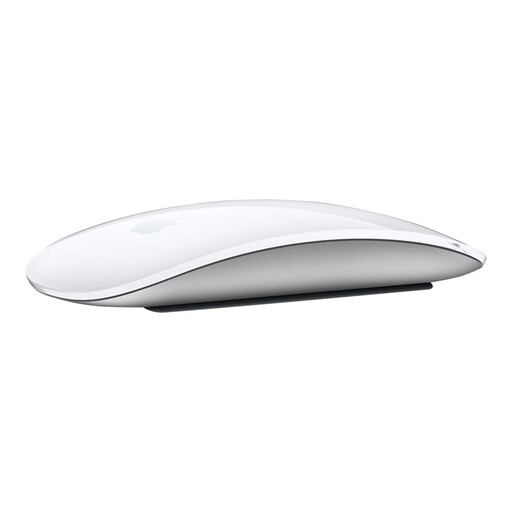
Apple Magic Mouse, White, Multi-Touch surface
Consider this mouse if you prefer a Multi-Touch surface for navigating programme pages and it works with the device you use.
Check compatibility with your exact computer or tablet and whether you prefer its touch surface to conventional physical buttons.
View on Joybuy
Frequently asked questions
Do I need a vertical mouse to prepare a concert programme?
No: a vertical mouse is worth considering if you prefer its grip during extended sessions, but it is not required for programme work. If frequent scrolling and familiar controls matter more, a conventional productivity mouse may suit your workflow. The Health and Safety Executive advises keeping any mouse in line with your elbow.
What if I work on the programme using a laptop for long periods?
Consider a separate mouse and keyboard so you can raise the laptop screen without keeping its built-in controls in an awkward position. This follows Health and Safety Executive workstation guidance; choose a mouse whose connection and shape work with that arrangement.
Will one wireless mouse work with both my laptop and desktop?
It can if the exact mouse supports connection methods compatible with both devices. HP specifies Bluetooth or its dongle for the 920 and connection to up to three devices; The HP 400 supports Bluetooth and 2.4 GHz wireless. Check operating-system support and available ports before buying.
Does home-working display-screen-equipment guidance apply to personal programme editing?
Employer duties described by the Health and Safety Executive concern employees who regularly use display screen equipment as a significant part of normal work, including relevant home working; they do not automatically make a personal or occasional programme project an employer responsibility. The workstation-positioning advice can still help you arrange your desk.


