What matters when choosing?
Start with the task that most affects your choice: navigating the report, finding a comfortable fit for sustained work, or making the mouse work in a restricted or multi-device setup.
Conventional productivity mouse
Consider it when: you frequently scroll through long sections and use document or application shortcuts.
Trade-off: a sculpted shape needs a hand-fit check, and customised shortcuts may depend on compatible software.
Vertical mouse
Consider it when: you want to assess an upright grip for extended desk use.
Trade-off: hand size, handedness and button reach matter, and the grip may feel unfamiliar at first.
Trackball
Consider it when: you have limited room to move a mouse across the desk.
Trade-off: controlling the pointer with a ball takes adjustment; thumb and finger-operated designs also feel different.
| Concern |
What to check |
Who this matters to |
| Document navigation |
Check whether the wheel supports both quick movement and precise stops, and whether useful buttons are within reach. |
If I move repeatedly between sections and comments, I want to get there quickly without overshooting the text I need. Around 38% of consumers would put navigation first. |
| Comfort during long sessions |
Assess hand fit, handedness and button reach alongside your desk and screen arrangement. |
During extended reviews, I need a shape and control position I can use comfortably at my workstation. For around 37% of consumers, comfort is the primary concern. |
| Desk space and device switching |
Check room for mouse movement, the pointing method and the connections required by your devices. |
With little desk space or several devices to work across, I need controls that suit how my workstation is arranged. That flexibility comes first for around 25% of consumers. |
Joybuy mouse choices
These choices include conventional mice for document navigation, a vertical mouse for shoppers assessing an upright grip, and wireless options for shared or multi-device setups. Compare each model’s stated controls with the way you review reports.
 No image available
Logitech MX Master 3S Bluetooth Edition, Black
Consider this conventional mouse if moving through long sections is your main task: Logitech specifies MagSpeed scrolling and quiet clicks for the MX Master 3S. Check that its shape fits your hand and that any shortcut software supports your setup.
View on Joybuy
 No image available
V7 MW500BT Bluetooth Vertical Mouse
Consider this model if you want to assess a vertical grip while reviewing documents. Its product name specifies 2.4 GHz and Bluetooth modes, six buttons and an adjustable 1600 DPI sensor; check hand fit, button reach and compatibility with your system.
View on Joybuy
 No image available
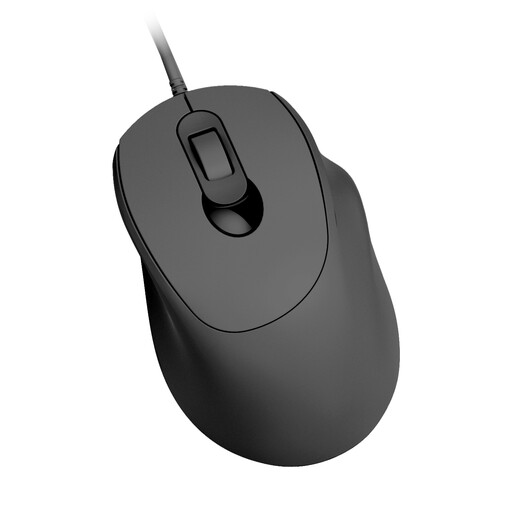
Rexsun V2 Wired Mouse, Black
Consider this conventional mouse if a wired USB connection and quiet clicks suit your review setup. Its product name specifies four buttons and 1000, 1200 and 1600 DPI settings; check that its scrolling suits the length of documents you handle.
View on Joybuy
 No image available
HOFOTEK M311 2.4G+BT Mouse, White-Grey
Consider this wireless office mouse if a quiet shared workspace and flexible connection options matter to you. Its product name specifies 2.4G+BT connectivity, adjustable DPI and one AA battery; check the wheel’s behaviour if long-document scrolling is a priority.
View on Joybuy
 No image available
Philips 3000 Series SPK7378B/00 Wireless Mouse, Black
Consider this mouse if you want a quiet-click wireless option for reviewing in a shared space. Its product name specifies a 2.4 GHz USB receiver, 1600 DPI and an EU version; confirm the receiver suits your device and check the wheel’s behaviour for report navigation.
View on Joybuy
Frequently asked questions
Should I choose a vertical mouse for long review sessions?
Consider one if its hand size, handedness and button placement suit you, but duration alone is not a reason to choose a vertical shape. The Health and Safety Executive treats mouse use as part of the wider display-screen equipment workstation setup.
Does a fast scroll wheel help with a long draft report?
It can help you move between distant sections, provided you can also stop accurately at the paragraph or line you need. For close proofreading, control matters as much as scrolling speed.
Can a trackball work on a small desk?
Yes, a trackball lets you control the pointer without moving the whole device across the desk. Logitech describes the ERGO M575S as thumb-operated, while Kensington’s Orbit Trackball with Scroll Ring is ambidextrous; check which control style and connection suit you.
When do UK workplace display-screen equipment rules apply?
The Health and Safety Executive says the Display Screen Equipment Regulations apply to workers who use display-screen equipment daily for continuous periods of an hour or more. Where they apply, an individual workstation assessment is relevant, including for home working; discuss work-related setup concerns with your employer.


