Choose a mouse by the control you use most while editing: a familiar shape and dependable scrolling for long documents, a vertical shape if a more upright grip is your priority, or a trackball when there is little room to move a mouse. Check hand fit and computer connectivity before deciding; if discomfort is a concern, consider the whole workstation rather than expecting a different mouse to resolve it.
Who this is for
Long-session minute editors concerned about comfort
If you regularly edit and format notes and prefer a different hand position, compare mouse shapes alongside your wider desk setup. The Health and Safety Executive considers the mouse and trackball as parts of the display screen equipment workstation, not the whole setup.
People working through long documents
When agendas, transcripts and action lists mean frequent scrolling and text selection, consider wheel control and pointer speed. Logitech describes these as features of its MX Master 3S, but check whether that style of control suits your work.
People using a small or shared desk
A stationary, thumb-operated trackball may suit limited mousing space, while a model with quieter clicks may be worth considering when someone else works nearby. Logitech describes stationary control on the ERGO M575S and quiet clicks on the MX Master 3S.
What matters when choosing
Vertical mouse
Consider it when: A more upright hand position is your main preference during long editing sessions.
Allow for: An unfamiliar grip at first, and a shape that must suit your hand size and handedness.
Conventional productivity mouse
Consider it when: Familiar pointer control and moving quickly through long documents matter most.
Allow for: A conventional grip if your reason for changing mice is a preference for a more upright hand position.
Thumb-operated trackball
Consider it when: Your desk has little clear space for moving a mouse.
Allow for: Time to get used to moving the pointer with your thumb.
| Concern | What to check | Who this matters to |
|---|
| Hand and arm comfort |
Compare the stated hand-size fit, handed version and button reach. For regular display screen work, consider the wider workstation too. |
If long editing sessions make my current grip uncomfortable, I want a shape I can use without awkward reach. Around 36% of consumers put hand and arm comfort first. |
| Document navigation |
Consider wheel control at slow and fast speeds, adjustable pointer speed and any shortcuts you intend to use. |
Moving between sections of a long transcript means I need scrolling and text selection to feel manageable. Document navigation comes first for around 29% of consumers. |
| Quiet clicks and connection |
Check model-specific click claims and whether your computer supports its Bluetooth or USB receiver connection. |
When someone shares my workroom, repeated clicks could be distracting, and the mouse still needs to connect to my laptop. Around 21% of consumers prioritise quiet use and a workable connection. |
| Limited desk space |
Consider how much clear surface the device needs and whether thumb-operated pointer control appeals to you. |
With paperwork beside my keyboard, I have little room to slide a mouse. Stationary control is the primary need for around 14% of consumers. |
Buying pitfalls
-
Assuming every vertical mouse fits the same hand
Logitech positions Lift for small to medium hands and offers a left-handed version; Kensington positions Pro Fit Ergo Vertical for average to larger hands.
Check the maker's fit guidance and the exact handed version. If you cannot try the shape first, check the seller's returns terms before ordering.
-
Expecting a mouse to fix the whole workstation
The Health and Safety Executive identifies the mouse or trackball as one part of a display screen equipment setup. Desk arrangement and work environment also matter when assessing discomfort.
Review mouse placement, chair, desk, screen and work routine together. Where an employee workstation assessment applies, include the pointing device in it.
-
Choosing wireless without checking the connection
Kensington and CHERRY describe USB nano receivers for the vertical models discussed here. A receiver needs a compatible available port; do not assume a wireless model also supports Bluetooth.
Check the exact model's connection method against your laptop's ports before choosing it.
A laptop without a suitable USB-A port may need an adapter for a USB-A receiver.
-
Choosing a sensor figure instead of usable control
A high sensitivity setting does not, by itself, tell you how comfortable a mouse will be for scrolling and selecting text in meeting minutes.
Prioritise grip, wheel behaviour and connection fit; consider advanced tracking features only if your surface or other work calls for them.
Brands to consider
Logitech
Its mouse range offers distinct approaches to document navigation, upright grip and stationary pointer control.
- Logitech describes quiet clicks on the MX Master 3S, a small-to-medium-hand fit and left-handed option for Lift, and thumb control on the stationary ERGO M575S.
- Those features do not establish which shape will fit your hand or whether its control style will suit your computer and desk.
Kensington
The Pro Fit Ergo Vertical is a receiver-based option Kensington positions for average to larger hands.
- Kensington specifies a 46.7° angled shape, adjustable 800, 1000, 1200 and 1600 DPI settings, and a USB nano receiver.
- Check hand fit and port availability; the manufacturer's comfort description is not a guarantee of an individual outcome.
CHERRY
The MW 4500 line offers a vertical wireless option, including a separately named left-handed variant.
- CHERRY specifies three adjustable resolution levels up to 1200 dpi, six buttons and a nano receiver.
- Confirm the handed version and allow time to adapt if vertical control is new to you.
Joybuy product choices
These mice offer vertical-grip, quiet-click and other wireless-control choices for editing meeting minutes at home. Match each model's shape and connection to your desk and computer; the selection does not cover every control style discussed above.
 No image available
V7 MW500BT Bluetooth Vertical Mouse, 2.4GHz
Consider its vertical shape if a more upright grip is your priority. The title specifies Bluetooth and 2.4GHz wireless options, six buttons and adjustable tracking up to 1600 DPI. Check hand fit and the connection your computer supports.
View on Joybuy
 No image available
HP 920 Ergonomic Wireless Mouse, Black, with Detachable Wrist Rest
Consider this model if a detachable wrist rest appeals to you while editing. Check the mouse's hand-size fit and exact connection options against your setup; a wrist rest alone does not determine whether the whole workstation suits you.
View on Joybuy
 No image available
HOFOTEK M311 2.4G+BT Silent Office Mouse, White-Grey
Consider it for a shared workroom if the advertised silent-click feature matters to you; the wording is a product claim rather than an independent noise measurement. The title specifies 2.4G+BT connectivity, adjustable DPI and one AA battery. Check wheel behaviour if you regularly navigate long documents.
View on Joybuy
 No image available
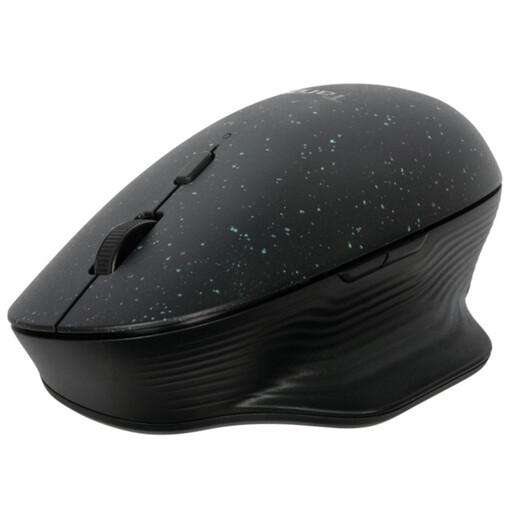
Targus Ergoflip EcoSmart® Ergonomic Wireless Mouse
Consider the convertible left- or right-handed design if the mouse will be shared or handedness is a key requirement. Check the connection method, wheel behaviour and battery requirements before ordering.
View on Joybuy
 No image available
Philips 3000 Series SPK7378B/00 Wireless Mouse, EU Version, Black
Consider this receiver-based model if its advertised silent clicks suit a shared workspace; click noise has not been independently measured here. The title specifies 2.4GHz wireless, a USB receiver and 1600 DPI. Confirm an available compatible port and check wheel behaviour if scrolling is a priority.
View on Joybuy
Common questions
Do I need a vertical mouse to edit meeting minutes?
No. Consider a vertical mouse if you prefer a more upright hand position, but a familiar conventional shape may suit you better when scrolling and quick text selection are the priority. Check hand size, handedness and whether you are willing to adapt to the different grip.
Will changing my mouse resolve wrist or arm discomfort?
A mouse change alone cannot promise that outcome. The Health and Safety Executive includes the mouse or trackball among several workstation factors to consider, so review your desk arrangement and work routine as well; seek an appropriate individual assessment for regular employee display screen work where applicable.
When should a home worker consider a display screen equipment assessment?
If editing minutes is regular employee screen work, ask your employer whether an individual workstation assessment applies. The Health and Safety Executive describes display screen equipment users as people working on it daily for continuous periods of an hour or more; the assessment should consider the wider workstation rather than the mouse in isolation.
Should I choose Bluetooth or a USB receiver?
Choose a connection that your computer supports and that leaves the ports you need available. A receiver requires a compatible free port, while Bluetooth requires computer support; check the exact mouse model rather than assuming every wireless option offers both.


