Choose a mouse around where you write and how you use it: check hand fit and desk placement for long sessions, quieter clicks for shared spaces, or compactness and device switching if you work away from one computer. A vertical shape does not suit every hand, and extra controls offer little value unless they fit your writing workflow.
Who is this for?
Long-session desk writers
If you draft and revise for extended periods at one workstation, consider both mouse fit and placement. The Health and Safety Executive advises keeping the mouse within easy reach, using it with a straight wrist and supporting the forearm; a vertical mouse still needs to fit your hand.
Quiet-space writers
If clicks disturb people nearby or break your concentration, a conventional mouse with quieter buttons may suit you without requiring a new grip. Check the exact model’s click-noise claim rather than assuming its other sounds will be quiet.
Mobile multi-device writers
If you carry a mouse with a laptop or regularly move between compatible devices, a compact shape or device-switching control may matter more than a larger hand-supporting body. Check the connection available on each device before choosing.
What matters when choosing?
Start with the place where you do most of your writing, then check fit, noise and connection against the devices you actually use. Treat a quieter click, a vertical grip and multi-device switching as separate features: one mouse may offer more than one.
| Concern |
What to check |
Who this matters to |
| Comfort at a desk |
Check hand-size guidance, handedness and whether the mouse can sit close to the keyboard. The Health and Safety Executive advises easy reach, a straight wrist and forearm support. |
If I spend long stretches drafting and revising, I want a shape that fits my hand and a position that does not make me reach. Around 40% of consumers put desk comfort first. |
| Click noise |
Check the exact model’s quiet-click claim and its size; that claim need not cover scrolling or contact with the desk. |
In a shared space, I want button clicks to be less distracting without changing to an unfamiliar grip. For around 30% of consumers, quieter clicking is the primary concern. |
| Carrying and switching |
Check dimensions, connection modes, device compatibility and whether a USB receiver needs a free port. |
When I take my writing between devices, I would rather carry one suitable mouse than repeatedly change my setup. Around 20% of consumers place portable or multi-device use first. |
| Familiar operation |
Decide whether you will use configurable buttons; check the connection and scroll-wheel layout if you prefer straightforward controls. |
If I write on one computer, I want a familiar mouse without controls I must configure or learn. Simple operation comes first for around 10% of consumers. |
Buying pitfalls
-
Choosing a vertical mouse by shape alone
A vertical body does not establish that it will fit your hand. Logitech specifies its Lift mouse for small to medium hands and offers a left-handed version, so those details can differ even within one model line.
Compare the manufacturer’s size and handedness guidance with your current mouse, and check the applicable return terms before changing to a specialist grip.
-
Expecting a new mouse to fix the whole workstation
The Health and Safety Executive advises keeping the mouse within easy reach, the wrist straight and the forearm supported. A different shape does not replace suitable desk and keyboard positioning.
Check where your mouse sits and whether you have to stretch to use it before deciding which shape fits that setup.
-
Choosing controls your writing routine does not use
Device switching and programmable buttons may add setup steps without helping someone who drafts on one computer.
Choose those features if you regularly move between compatible devices or have shortcuts you genuinely want to assign.
-
Reading “silent” as no workspace noise
A quiet-click description concerns button clicks, not necessarily the scroll wheel, desk contact or keyboard.
Check the precise claim for the mouse and consider the other sounds in your writing space.
Brands to consider
These product lines illustrate different shapes and connections; their manufacturer specifications do not establish which mouse will feel comfortable in your hand.
Logitech
Logitech’s range includes compact quiet, conventional silent and vertical mice for different writing setups.
- According to Logitech UK, Lift has a 57° vertical design, is intended for small to medium hands and has a left-handed option. Pebble Mouse 2 is described as portable, quiet-clicking and able to switch between devices.
- Its stated click-noise reduction for the M330 and fit guidance for Lift are model-specific; neither establishes how another Logitech mouse will sound or fit.
Razer
Razer’s Pro Click V2 line offers conventional ergonomic and vertical designs with configurable controls.
- Razer specifies multi-device connectivity and assignable shortcuts for the Pro Click V2, which may be relevant when writing and researching across compatible devices.
- Additional controls may be unnecessary for one-device drafting; Razer’s descriptions of hand positioning are manufacturer claims, not a guarantee of comfort.
HP
The HP 280 Silent Wireless Mouse is a conventional receiver-connected option for writers considering quieter buttons.
- HP specifies silent clicks and a 2.4 GHz dongle for the HP 280, as well as stated battery life of up to 18 months.
- Those HP 280 specifications do not establish hand fit or extended-use comfort, and should not be assumed to apply to the different HP 920 model shown below.
Lenovo
Lenovo’s Yoga Bluetooth Silent Mouse combines quiet buttons with switching between compatible devices.
- Lenovo specifies triple Bluetooth 5.3 switching and six buttons for the Yoga Bluetooth Silent Mouse.
- Those controls offer less practical value if all your writing happens on one computer; confirm compatibility with each device you plan to use.
Joybuy mouse choices
These mice cover several ways of writing: quieter conventional controls, a portable shape, a wired desk setup, device switching and a vertical design. Choose by the features of the particular model, not by assuming that every mouse in a route works alike.
 Image unavailable
HOFOTEK M311 2.4G+BT Silent Mouse, White-Grey
Consider this mouse if quieter clicks and moving between devices are both important to your writing routine.
The product title specifies 2.4G+BT connectivity, adjustable DPI and one AA battery. Check its shape and hand fit before buying; a silent-click description does not cover every sound it makes.
View on Joybuy
 Image unavailable
Rexsun V2 Wired Silent Mouse, Black
This is a conventional choice if you write at one computer and prefer a wired USB connection with quieter buttons.
The title specifies four buttons, 1000/1200/1600 DPI settings and Windows and Mac compatibility. Check hand fit and allow for the cable when positioning it on your desk.
View on Joybuy
 Image unavailable
Philips 3000 Series SPK7378B/00 Wireless Mouse, Black
Consider this model for quieter clicks at a desk if your computer can accommodate its USB receiver.
The title specifies a 2.4 GHz receiver connection, 1600 DPI, silent clicks and the EU version. Check the mouse’s dimensions for your hand; the click description does not establish quiet scrolling.
View on Joybuy
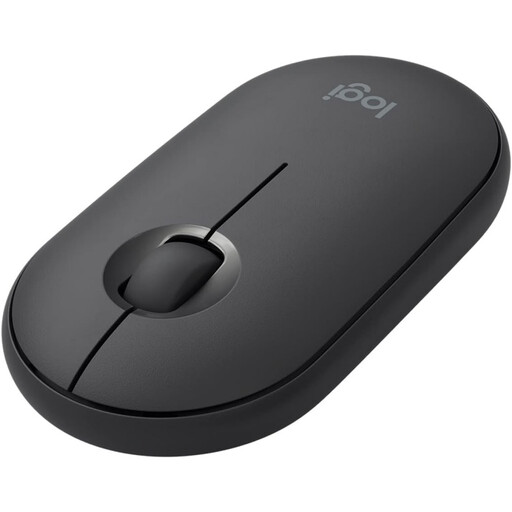 Image unavailable
Logitech Pebble Mouse, Black
Its described slim shape and quiet clicking may suit writing away from a fixed desk or near other people.
Confirm the connection mode for this particular Pebble Mouse before buying; do not assume it has the device-switching features of the separately named Pebble Mouse 2. Check whether its low-profile shape suits longer desk sessions.
View on Joybuy
 Image unavailable
HP 920 Ergonomic Wireless Mouse, Black, with Detachable Wrist Rest
Consider this desk-oriented model if you want to assess a vertical shape during longer writing sessions.
The product title specifies a detachable wrist rest. Check hand fit and handedness before choosing it; neither the shape nor the wrist rest guarantees relief from discomfort.
View on Joybuy
Common questions
Do I need a vertical mouse to write a short story?
No: a vertical mouse is one option to consider for long desk sessions if its shape fits your hand. A conventional mouse may suit shorter sessions, familiar handling or carrying with a laptop; the Health and Safety Executive’s workstation guidance also makes mouse placement and forearm support important.
Where should I put my mouse while writing?
Keep it within easy reach so you can use it with a straight wrist rather than stretching towards it. The Health and Safety Executive also advises supporting your forearm, avoiding a tight grip and keeping the mouse in line with your elbow.
Does “silent click” mean the whole mouse is silent?
No: a silent-click claim concerns the buttons and does not establish how much noise scrolling or contact with the desk makes. Check what the manufacturer says about the exact model and consider your keyboard and desk surface if sound matters in your writing space.


