Shared-room slide editors
If you arrange slide elements while others study or sleep nearby, click noise, desk space and straightforward navigation may matter more to you than extra controls.


Start with the connection: a USB-receiver mouse suits a laptop with a spare compatible port, while Bluetooth keeps that port free if the laptop and mouse are compatible. For slide editing in a shared room, weigh click noise and desk space against how the shape feels during longer sessions; check the exact connection, operating-system support and power arrangement before buying.
If you arrange slide elements while others study or sleep nearby, click noise, desk space and straightforward navigation may matter more to you than extra controls.
If storage or a display adapter needs your available USB port, check whether your laptop and chosen mouse can connect over Bluetooth instead.
If you spend extended periods clicking, dragging and scrolling through slides, consider the mouse’s shape and how you will keep it powered, not just how easily it fits in a bag.
Decide how the mouse will connect to your laptop, then weigh quiet use and portability against comfort and power maintenance during longer editing sessions.
| Concern | What to check | Who this matters to |
|---|---|---|
| Click noise and space | Look for a model-specific quiet-click claim and check its size and shape. | If I edit slides beside someone who is studying, I want clicks that are less distracting without crowding my desk. Around 45% of consumers put quiet use and limited space first. |
| Connection and compatibility | Check Bluetooth or USB-receiver requirements against your laptop’s ports, Bluetooth support and operating system. | When my laptop port is needed for a display adapter or storage, the mouse still has to connect reliably. For around 33% of consumers, preserving ports and matching the laptop is the primary concern. |
| Comfort and power | Assess the grip shape and confirm the battery type or charging arrangement. | If I spend a long session moving objects between slides, I need a shape I can hold comfortably and a practical way to keep the mouse powered. Long-session comfort and power come first for around 22% of consumers. |
A 2.4 GHz mouse may need its own USB receiver, which takes up a laptop port. HP’s guide distinguishes receiver-based wireless mice from those that connect through Bluetooth.
Check the exact model’s connection method and match it to your available ports and Bluetooth support.
A compact shape saves desk space but does not, by itself, tell you how noticeable its clicks will be in a shared room.
If noise matters, look for a quiet-click feature stated for the exact model; assess a manufacturer’s noise claim as model-specific.
Battery-life figures are stated under particular use conditions. A flat battery or an uncharged mouse can interrupt work when slides need finishing.
Check whether the model uses replaceable cells or charging, and have the appropriate replacement or cable available.
GOV.UK advises that unwanted electrical products and batteries should not go in household rubbish.
Use an appropriate electrical or battery collection point when the mouse or its removable battery reaches the end of its life.
Its M185 and Pebble Mouse 2 M350s illustrate different connection choices for a student laptop.
Its Bluetooth Mouse is a reference point for buyers using a compatible Windows laptop.
The Z3700 range is relevant if you are considering a slim mouse for a laptop.
These mice offer connection and design options relevant to editing slides at a student desk. Check the exact model against your laptop and your priorities for noise, space and longer sessions.
 No image available
Consider this model if shared-room click noise matters and you want a choice of connection modes.
The product name specifies 2.4G+BT connectivity, adjustable multi-level DPI and one AA battery. Check that your laptop supports the mode you intend to use.
 No image available
Consider this USB wireless model if you have a compatible port and want adjustable cursor settings while editing slides.
Its product name specifies five adjustable DPI settings and an ergonomic design. Confirm the connection accessories, size and power arrangement before buying.
 No image available
This is a receiver-based option to consider if quiet clicks matter and your laptop has a compatible USB port.
The product name specifies 2.4 GHz connectivity, a USB receiver, silent clicks and a 1600 DPI optical sensor. Check the EU Version’s compatibility with your computer.
 No image available
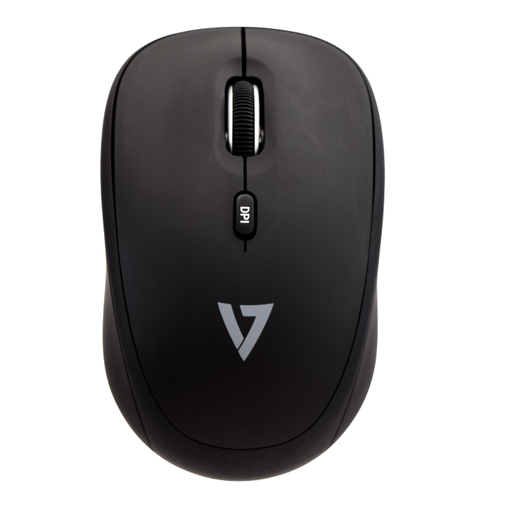
Consider this receiver-based mouse if a compatible USB port is available and an ambidextrous design appeals to you.
Its product name specifies a 2.4 GHz nano receiver, four buttons and a 1600 DPI optical sensor. If you share a quiet room, check its click characteristics before buying.
 No image available
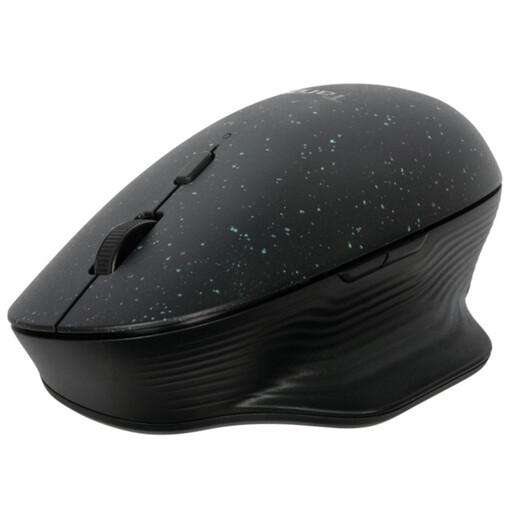
Consider this model if keeping a USB port free and choosing a mouse shape for longer editing sessions matter to you.
Confirm that its connection works with your laptop, and check its dimensions and click characteristics against your desk and shared-room needs.
Choose a USB-receiver mouse if you have a spare compatible port and want to avoid Bluetooth pairing; choose Bluetooth if keeping that port free matters more. Check the exact mouse and laptop requirements: Microsoft Support, for example, specifies Windows 10 or Windows 11 with Bluetooth 4.0 or later for its Bluetooth Mouse.
Yes, if you edit slides while others study or sleep nearby. Look for a quiet-click claim for the exact model rather than assuming a compact mouse will also click quietly.
Yes, when you are controlling the computer nearby: Microsoft Support says that in Slide Show view, holding Ctrl while clicking and dragging the left mouse button turns the pointer into a laser pointer. An ordinary mouse is not a substitute for a presenter device if you need to control slides away from the computer.
A faulty or misdescribed mouse is different from one you simply change your mind about: GOV.UK says sellers must offer a refund when goods are faulty, not as described or do not do what they are supposed to do. For a change-of-mind return, check the cancellation rules applicable to your purchase and any separate retailer policy.
Use an appropriate electrical or battery collection point rather than household rubbish. GOV.UK advises that unwanted electrical products and batteries should not be put in household rubbish; keep removable batteries separate where the collection instructions require it.