Choose the pointing-device layout before comparing sensor specifications: a vertical mouse offers a more upright grip, a sculpted conventional mouse retains familiar handheld control, and a centred rollerbar puts cursor control in front of the keyboard at a fixed desk. None is a universal answer to discomfort. For prolonged laptop work, the Health and Safety Executive advises using a separate keyboard and mouse so the screen can be raised; hand fit, handedness, connection and desk space then determine which device is practical.
Who this choice affects
Laptop workers reconsidering their mouse position
If long sessions leave you questioning a flat mouse or side-of-keyboard reach, compare layouts alongside your whole workstation. The Health and Safety Executive identifies wrist and hand pain among the possible risks of poorly arranged display-screen work and advises a separate mouse and keyboard for prolonged laptop use.
People choosing around hand fit or handedness
Start with the exact model, not an ergonomic label. Logitech specifies Lift for small to medium hands and offers a left-handed version; Kensington specifies its Pro Fit Ergo Vertical Wireless Mouse for average to larger hands.
Workers moving between desks and devices
A mouse used with a laptop and other devices needs the right connection and operating-system support as well as a suitable shape. Logitech says Easy-Switch can pair with up to three devices, but only on compatible models.
What matters when choosing
Choose the layout that suits where you work, then check the exact model's hand fit and connections. A centred device makes most sense at a settled desk; a handheld mouse is easier to consider when your laptop setup moves.
Vertical mouse
Consider it when: you want a more upright grip than a conventional flat mouse during long desk sessions.
Trade-off: the unfamiliar grip still has to fit your hand and preferred side; vertical models are not interchangeable on those points.
Sculpted conventional mouse
Consider it when: you want to retain familiar handheld control while selecting features for document work or switching tasks.
Trade-off: a sculpted body is a different approach from an upright grip, and its size still needs to suit your hand.
Centred rollerbar
Consider it when: you work at a fixed desk and want cursor control directly in front of the keyboard.
Trade-off: the wider, desk-based layout is less convenient to carry than a conventional laptop mouse.
| Concern | What to check | Who this matters to |
|---|
| Hand and wrist position |
Compare an upright grip with centred control, and consider the mouse alongside your keyboard and screen position. |
If reaching sideways or using a flat grip is my main concern during long sessions, I want to assess a different layout without assuming it will resolve discomfort. Around 37% of consumers put this need first. |
| Hand fit and handedness |
Check the exact model's stated hand-size range and whether its shape and buttons suit your preferred hand. |
A shape I cannot hold comfortably, or one made for the other hand, would settle my choice before extra features matter; around 27% of consumers prioritise fit and handedness. |
| Portable laptop setup |
Decide whether the device will travel, and check its cable or receiver against your laptop's ports. |
When I move my laptop between workspaces, carrying and connecting the mouse easily is my main concern. For around 18% of consumers, that practical setup comes first. |
| Workday features |
Confirm model-specific device switching, click behaviour and any surface-tracking conditions you need. |
If I switch devices or work in a quiet shared room, those daily tasks may drive my choice more than a change of grip; around 18% of consumers make workflow features their priority. |
Buying pitfalls
-
Expecting a mouse to correct the whole laptop setup
A new mouse does not, by itself, change a low screen or the position of the laptop keyboard. The Health and Safety Executive advises considering the whole workstation and using a separate mouse and keyboard for prolonged laptop work.
Plan where the screen, keyboard and mouse will sit together; raise the laptop display where practical.
-
Choosing a vertical mouse by its label alone
Fit differs between models. Logitech positions Lift for small to medium hands and offers a left-handed version, whereas Kensington positions its Pro Fit Ergo Vertical Wireless Mouse for average to larger hands and right-handed use.
Check the stated fit and handedness of the exact version you intend to buy.
-
Overlooking ports and operating-system support
Kensington specifies a 2.4 GHz USB receiver for its K75501EU vertical mouse and says that model does not support Windows on ARM-based computers. Bluetooth and multi-device pairing vary by model.
Match the connection, receiver port and operating-system requirements to your laptop before ordering.
-
Treating ergonomic claims as a promise of pain relief
A vertical angle or centred control describes a design, not an assured health outcome. The Health and Safety Executive considers workstation arrangements and working conditions when addressing display-screen risks.
If discomfort persists, raise it through the appropriate workplace workstation-assessment process and seek professional health advice where needed.
Brands to consider
These product lines illustrate different shapes and working arrangements; brand names alone do not establish fit or availability.
Logitech
Lift is a vertical option for shoppers assessing hand fit and handedness; MX Master 3S is a conventional productivity mouse for those who want its model-specific controls and tracking features.
- Logitech specifies a 57° angle and a left-handed version for Lift. It lists an 8,000 DPI sensor and Quiet Clicks for MX Master 3S.
- Lift is specified for small to medium hands. The MX Master 3S sensor specification does not establish whether its shape will suit yours.
Kensington
The Pro Fit Ergo line includes a vertical mouse for average-to-larger right-handed users and other models with different connection arrangements.
- Kensington specifies a 46.7° slope and a 2.4 GHz USB receiver for the K75501EU vertical model; its MY630 EQ is specified for connection to up to three active devices.
- Kensington says the K75501EU does not support Windows on ARM-based computers. Check compatibility for the particular model.
Contour Design
RollerMouse Red offers centred rollerbar control for a workstation with room in front of the keyboard.
- Contour specifies a USB-C connection with a USB-A adapter and adjustable sensitivity from 600 to 2,800 DPI.
- Its wider, wired arrangement is less convenient to transport than a standard handheld laptop mouse; the brand's comfort claims should not be read as an assured outcome.
Joybuy mouse options
These handheld mice cover a vertical-grip option and other wireless or multi-connection choices for laptop work. Choose among them by fit and connection needs; they are not substitutes for the fixed-desk centred rollerbar layout discussed above.
 No image available
V7 MW500BT Bluetooth Vertical Ergonomic Mouse
Consider this model if you want to try a more upright handheld grip for laptop work. Its title specifies Bluetooth and 2.4 GHz wireless modes, six buttons and adjustable sensitivity up to 1600 DPI. Check its hand fit, handedness and support for your operating system before buying.
View on Joybuy
 No image available
HOFOTEK M311 2.4G+BT Silent Office Mouse, White-Grey
This is an option if quieter clicks and a choice of wireless connection matter in your workspace. The title specifies 2.4 GHz and Bluetooth modes, adjustable DPI and one AA battery. Check the shape against your grip and confirm compatibility with each device you plan to use.
View on Joybuy
 No image available
Philips 3000 Series SPK7378B/00 Wireless Mouse, EU Version, Black
Consider this mouse if you want a quiet-click wireless option and can accommodate its USB receiver. The title specifies a 2.4 GHz connection, a 1600 DPI optical sensor and Windows and Mac compatibility. Check the receiver port and whether the shape suits your hand.
View on Joybuy
 No image available
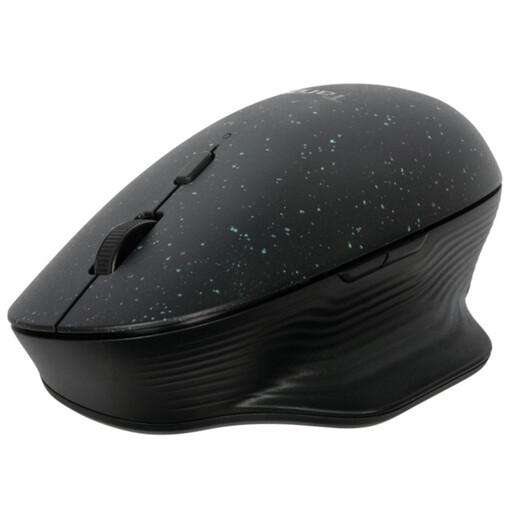
Targus Ergoflip EcoSmart® Ergonomic Wireless Mouse
Consider its convertible handedness if the mouse needs to suit left- or right-handed use. Check how the grip fits your hand and confirm its connection and device-switching arrangements for your laptop setup. If you work on glass or mirrored surfaces, check the surface requirements before choosing it.
View on Joybuy
 No image available
AJAZZ AJ200 AI MC Wireless Gaming Mouse with Charging Dock
This gaming-style mouse may be worth considering for work if its grip suits you and you want several connection methods. Its title specifies Bluetooth, 2.4 GHz and USB-C modes, a PAW3311 sensor and adjustable sensitivity up to 24000 DPI. Check hand fit, operating-system support and device-switching behaviour; sensor sensitivity alone does not establish suitability for long sessions.
View on Joybuy
Common questions
Will an ergonomic mouse fix an uncomfortable laptop workstation?
A mouse alone cannot be relied on to do that. The Health and Safety Executive advises considering the whole display-screen workstation; for prolonged laptop use, a separate keyboard and mouse allow the screen to be raised. Consider screen position, keyboard placement and working conditions as well as mouse shape.
When should I use a separate mouse with a laptop?
For prolonged laptop use, the Health and Safety Executive advises using a separate mouse and keyboard so the laptop screen can be raised on a riser or similar support. That arrangement lets you position the display and input devices separately.
Does CE or UKCA marking tell me whether a mouse will fit comfortably?
No: product-safety marking is not a hand-fit test. The Office for Product Safety and Standards' Great Britain guidance addresses electrical equipment placed on the market; assess the particular mouse's size, handedness and grip separately.
How do I check whether a wireless mouse will work with my laptop?
Check the exact model's operating-system support, connection method and any receiver-port requirement. Kensington says its K75501EU vertical mouse uses a 2.4 GHz USB receiver and does not support Windows on ARM-based computers; Logitech says Easy-Switch pairing is limited to compatible models.


