Quiet-workspace proposal writers
If you draft and revise documents beside colleagues, click noise may matter more than extra mouse controls. HP and Kensington both describe quiet-click options in their office-mouse ranges.


Choose a quiet-click conventional wireless mouse if disturbing nearby colleagues is your main concern. Consider a vertical mouse if hand fit and wrist position matter more during long editing sessions, but check its size and handedness before buying. Whichever shape you choose, confirm how it connects to your work computer and leave room to position it within easy reach.
If you draft and revise documents beside colleagues, click noise may matter more than extra mouse controls. HP and Kensington both describe quiet-click options in their office-mouse ranges.
If editing involves prolonged pointer use, consider hand fit and where the mouse sits on the desk as well as its shape. The Health and Safety Executive advises keeping the mouse within easy reach so it can be used with a straight wrist.
If you move between desks or computers, check whether your mouse needs a USB receiver or can use a connection available on each device. The connection method should suit the ports and space you actually have.
A quiet conventional mouse addresses clicking near colleagues most directly; a vertical shape makes hand fit a more prominent part of the decision. Connection method remains a separate check for either shape.
Choose it when: Low-noise clicking is the priority while you navigate and edit documents beside others.
Keep in mind: Quiet buttons alone do not establish a comfortable hand fit or wrist position.
Choose it when: You want to assess a different grip for longer pointer sessions and can find a model that fits your hand.
Keep in mind: Logitech positions Lift for small to medium hands, while Kensington positions Pro Fit Ergo Vertical for average to larger hands; neither fit range covers everyone.
| Concern | What to check | Who this matters to |
|---|---|---|
| Quiet clicking | Look for a quiet-click statement for the exact model, particularly its main buttons; wireless does not necessarily mean quiet. | When I edit beside colleagues, I want frequent clicks to cause less disturbance. For around 42% of consumers, quiet clicking would be the primary concern. |
| Long-session comfort | Check hand-size and handedness guidance, then whether the mouse can sit within easy reach. The Health and Safety Executive advises using a mouse with a straight wrist. | If I spend long stretches selecting text and navigating a proposal, I need a shape and desk position that suit my hand. Comfort would come first for roughly 33% of consumers. |
| Desk and device fit | Confirm Bluetooth or USB-receiver operation, computer compatibility and whether the receiver is included. | Moving my laptop between shared desks makes an available connection and manageable setup especially important. Around 25% of consumers would put that practical fit first. |
Less clicking noise may help at a shared desk, but it does not determine hand fit or how far you reach for the mouse.
If discomfort drives the purchase, assess the shape and desk placement too. The Health and Safety Executive advises keeping the mouse within easy reach and using it with a straight wrist.
Vertical mice have different stated hand-size ranges: Logitech positions Lift for small to medium hands and offers a left-handed option, while Kensington positions Pro Fit Ergo Vertical for average to larger hands.
Check the size and handedness guidance for the exact variant rather than assuming that any vertical mouse will suit you.
HP specifies a 2.4 GHz dongle for the HP 280, and Kensington describes receiver-based wireless operation for Wireless ValuMouse. Those connections are not Bluetooth.
Check the exact connection method against your laptop's available ports before ordering.
A receiver-based mouse occupies a compatible USB port and may call for an adapter if your laptop lacks one.
A stated angle or comfort-focused shape describes the product, not how your own hand will respond to it or whether your workstation is well arranged.
Use the specifications to assess fit. If discomfort persists during work, raise the workstation setup through the appropriate workplace or healthcare route.
Its Lift range is relevant if you are considering a quiet vertical mouse.
Its HP 280 Silent Wireless Mouse is a conventional wireless option for buyers focused on clicking noise.
Its range includes both the quiet-click Wireless ValuMouse and the Pro Fit Ergo Vertical Wireless Mouse.
These mice cover quiet-click options with different wireless setups, plus a wrist-rest model to assess if desk comfort is your priority. Check click noise separately for the HP 920 if you work close to colleagues.
 No image available
Consider its stated silent-click design if you write beside colleagues and want a choice of wireless connections.
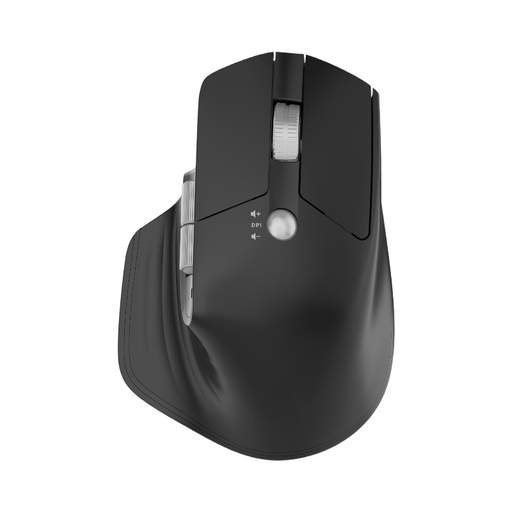
The title specifies 2.4G and Bluetooth, adjustable DPI and one AA battery. Check that its shape suits your hand and that its connections work with your devices.
 No image available
Its stated silent clicks make it worth considering when nearby colleagues are the main concern.
The title lists Bluetooth, 2.4G wireless and one-touch DPI adjustment. Confirm computer compatibility and whether the shape fits your hand.
 No image available
This is a receiver-based option to consider if you want the title's stated quiet clicks and have a suitable USB port.
The title specifies 2.4 GHz wireless operation, a USB receiver and 1600 DPI, and lists Windows and Mac. Check the supported operating-system version and hand fit before buying.
 No image available
Consider it for shared-desk work only after checking that its clicking suits the people nearby.
The title specifies USB cordless operation, LED backlighting and five adjustable DPI settings. Check hand fit and compatibility with your work computer.
 No image available
If hand support is your priority, assess whether its stated detachable wrist rest and mouse shape suit your desk setup.
It is a wireless model. Check the connection method, hand fit and click noise before choosing it for a shared desk; an ergonomic label alone does not establish a health benefit.
No. A conventional quiet-click mouse addresses clicking beside colleagues more directly; consider a vertical mouse if a different grip matters for longer sessions and the exact model fits your hand.
Start by checking its position as well as its shape. The Health and Safety Executive advises keeping the mouse within easy reach so you can use it with a straight wrist; a different mouse alone may not address the workstation setup.
No particular mouse type is prescribed in the Health and Safety Executive guidance cited here. For workers who use display screen equipment daily as part of normal work for continuous periods of an hour or more, the Health and Safety Executive says employers must assess the workstation; that assessment considers the work setup rather than treating a product label as the answer.
Choose a connection that your work computer supports and that fits its available ports. Bluetooth can leave a USB port free when the computer and exact mouse support it; a receiver-based model needs a compatible port, so do not assume that every wireless mouse offers Bluetooth.
Check the exact model's connection method, supported operating system, power requirements and any included receiver. If you move between desks, also consider whether carrying a receiver or using an adapter will suit your routine.