Quiet-workspace filter testers
If you repeatedly apply filters and open results beside colleagues, start with the sound of the main buttons. A quiet-click specification is useful, but check how the wheel sounds and feels during the same tasks.


Choose a mouse with quiet primary clicks if repeated filter testing could disturb nearby colleagues, but check the wheel as well: a quiet-click claim does not describe every sound the mouse makes. Match scrolling and connection options to the computers you test on, then choose a shape that fits your hand and working setup rather than treating an ergonomic label as a solution on its own.
If you repeatedly apply filters and open results beside colleagues, start with the sound of the main buttons. A quiet-click specification is useful, but check how the wheel sounds and feels during the same tasks.
If testing takes you between a laptop, desktop or other compatible computer, check the connection method and how device switching works. Logitech and Microsoft document multi-device options on particular models, not across every mouse they sell.
If you spend extended sessions repeating filter checks, hand size, handedness and grip may matter more than a compact shape. The Health and Safety Executive also treats display-screen-equipment work as a workstation and work-routine issue, not just a choice of mouse.
For search-filter testing near colleagues, decide which need takes priority before comparing features: quieter clicks, movement through results, switching computers or hand fit.
| Concern | What to check | Who this matters to |
|---|---|---|
| Click noise | Look for a quiet-click claim covering the main buttons; assess wheel sound separately if possible. | When colleagues sit close by, I want repeated filter clicks to be less distracting. Around 33% of consumers choosing for this task might put click noise first. |
| Result navigation | Check whether the wheel supports both precise movement and faster scrolling; consider extra controls only if you can use them. | Moving between individual results and long lists calls for scrolling I can control without interrupting a check. Navigation might be the leading need for around 27% of these consumers. |
| Device connection | Confirm each computer’s Bluetooth or receiver compatibility, supported operating systems and any receiver inclusion. | When I change desks or test on several computers, reconnecting the mouse should not hold up the work. Around 20% of consumers in this situation might prioritise connection flexibility. |
| Hand fit | Check size and handedness guidance, grip shape and how the mouse fits the assessed workstation. | For a long testing session, I need a shape that suits my hand rather than choosing by an ergonomic label alone. Comfort might come first for around 20% of these consumers. |
A wireless connection says nothing about button noise. HP’s own specification for the 280 Silent claims up to 90% noise reduction on its left and right buttons; that claim does not describe other mice or the scroll wheel.
Check which buttons a quiet-click claim covers and, where possible, try the wheel during the kind of scrolling your tests require.
Connection options vary by model. Logitech says the MX Anywhere 3S can connect to up to three devices over Bluetooth, while its compatible Logi Bolt USB receiver is not included.
List the computers and operating systems you use, then check Bluetooth support and what comes in the box.
If your setup needs a receiver, obtaining one separately or occupying a USB port may affect how you use the mouse.
Hand size, handedness and grip affect whether a shape suits you. Logitech recommends different Signature M650 variants for different hand sizes and left-handed users. The Health and Safety Executive says employers must assess display-screen-equipment workstations and reduce risks, including through breaks or changes of activity.
Use the maker’s fit guidance and address persistent discomfort through your workplace workstation-assessment process, rather than changing only the mouse.
Extra buttons may depend on software permitted by your organisation. Microsoft says full customisation and Smart Switch for its Bluetooth Ergonomic Mouse require Microsoft Mouse and Keyboard Center.
Check operating-system support, software availability and IT policy before making configurable controls a deciding feature.
Logitech has relevant compact, conventional and vertical mouse models for different shared-office priorities.
HP has quiet wireless models with different approaches to connection and controls.
Microsoft’s Bluetooth Ergonomic Mouse is relevant when a shaped grip and switching between compatible PCs matter.
These mice cover wired quiet-click use, wireless connection options and a vertical grip. Compare each one with your main testing need; a vertical shape or wireless connection does not, by itself, establish that a mouse will be quiet beside colleagues.
 No image available
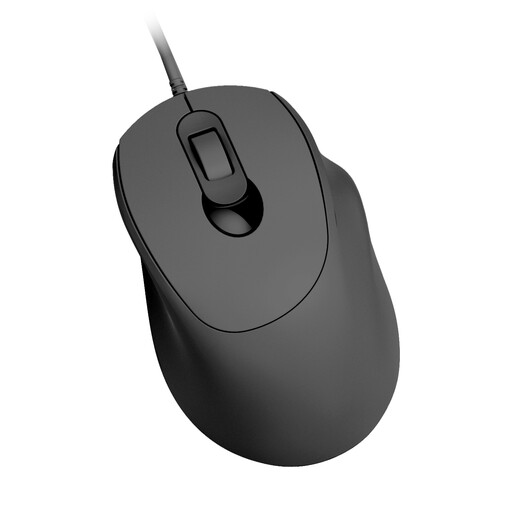
Consider this for repeated clicks at one computer when a wired USB connection suits your desk.
The listed variant has four buttons and adjustable 1000/1200/1600 DPI. Check the wheel’s sound and feel if quiet scrolling is important.
 No image available
This is a connection option to consider when your shared-office testing moves between compatible computers.
The listed mouse offers 2.4G+BT connection, adjustable DPI and uses one AA battery. Confirm compatibility with each computer and check its scrolling behaviour for long result lists.
 No image available
Consider this quiet-click model when a USB-receiver connection suits the computer used for filter checks.
The listed variant uses a 2.4GHz receiver and specifies 1600 DPI. Assess wheel noise and scrolling behaviour if you regularly work through long lists.
 No image available
Its silent left and right buttons make it worth considering for frequent clicks near colleagues, provided its other controls suit your work.
The listed mouse has five adjustable DPI levels and a USB receiver. Its side buttons are unavailable on Mac; check wheel sound and behaviour if scrolling is central to your tests.
 No image available
Consider the vertical grip if hand fit is your main concern during long testing sessions, and check that the shape suits you.
The listed variant has 2.4GHz and Bluetooth connection, six buttons and an adjustable 1600 DPI sensor. Check primary-button and wheel noise before relying on it for quiet shared-office use.
A quiet-click mouse is a practical priority if your repeated filter checks could distract nearby colleagues. Look for a claim covering the main buttons rather than assuming a wireless mouse will be quiet, and consider the wheel’s sound separately.
A shaped mouse alone is not a complete response to discomfort during display-screen-equipment work. The Health and Safety Executive says employers must assess workstations and reduce risks, including by ensuring breaks or changes of activity; hand fit and the rest of the workstation still matter.
Check that each computer supports the mouse’s connection method and operating system, then confirm its switching limit and whether you need a separate receiver. For example, Logitech says the MX Anywhere 3S connects to up to three devices via Bluetooth, but its compatible Logi Bolt receiver is not included.
Look for scrolling that lets you inspect individual results precisely and move through longer pages when needed. Logitech documents these modes on particular mice; programmable buttons or four-way scrolling are worth considering only if they suit your commands and any required configuration software is available at work.