Window-side editors with changing desk surfaces
If you prepare slides on a glossy or glass tabletop, check the mouse’s stated tracking conditions for that surface. Reflections on the screen need a separate adjustment to the workstation.


Choose a mouse with a stated glass-tracking capability if you edit slides on a glass or difficult tabletop; for long desk sessions, a fuller shape and accessible controls may matter more than compactness. A presenter remote serves a different purpose: controlling slides away from the laptop. None of these devices removes glare from the display, so address reflections separately and check the chosen device’s connection and surface requirements.
If you prepare slides on a glossy or glass tabletop, check the mouse’s stated tracking conditions for that surface. Reflections on the screen need a separate adjustment to the workstation.
Repeatedly arranging objects, reviewing notes and scrolling through slides makes hand fit and accessible controls worth considering alongside sensor specifications.
A portable mouse can serve editing at the laptop. If you also need to advance slides while standing away from it, check whether a dedicated presenter remote suits your software and connection setup.
Deal with screen reflections before attributing a visibility problem to the mouse. Then choose for the surface beneath the mouse, the length of your editing sessions and how you present.
Choose when: You edit on a laptop in different rooms or have limited desk space, and the exact model states that it tracks on your tabletop. Logitech states that its MX Anywhere 3S tracks even on glass.
Trade-off: Check how the smaller shape feels during long sessions. The standard MX Anywhere 3S listing does not include its compatible Logi Bolt receiver, so confirm that Bluetooth will work on your computer.
Choose when: You spend longer sessions editing at a desk and value a fuller shape, scrolling controls or extra buttons. Logitech states that the MX Master 3S tracks on glass; Dell specifies a track-on-glass sensor for the MS900.
Trade-off: A larger mouse takes more room in a laptop bag. Logitech’s MX Master 3S glass claim requires glass at least 4 mm thick, so it should not be assumed to cover every glass surface.
Choose when: You need to control a presentation while standing away from the laptop. Logitech lists Spotlight connections and support for common presentation applications.
Trade-off: A remote does not replace a mouse for selecting objects or arranging slide layouts at the desk.
| Concern | What to check | Who this matters to |
|---|---|---|
| Tracking on the desk surface | Check the exact model’s stated surface capability and any glass-thickness or mirrored-surface restrictions. | If I select small slide objects on a glass or changing tabletop, I need the pointer to track on that actual surface. Around 36% of consumers would put surface reliability first. |
| Screen glare | Check whether repositioning or tilting the screen and adjusting brightness and contrast reduce reflections. | When window reflections obscure slide text or colours, I need to see the display clearly before changing my mouse. For around 29% of consumers, glare management would be the primary concern. |
| Long-session editing | Consider hand fit and the controls you will use for scrolling and repeated selections; check software requirements for customised buttons. | Building a long deck means I will be clicking and navigating for an extended period, so the mouse needs to feel manageable throughout. Editing control would come first for around 21% of consumers. |
| Moving and presenting | Check Bluetooth availability, USB ports and whether you need a remote for slide control away from the laptop. | If I move between rooms or present away from my computer, I need a connection and control method that works in both places. Around 14% of consumers would prioritise this mobile workflow. |
A sensor specification cannot remove reflections that make slide content difficult to see.
Position or tilt the screen to reduce reflections, then adjust its brightness and contrast for the surrounding light. Choose the mouse separately for the desk surface and editing task.
DPI describes pointer sensitivity or sensor resolution, not whether a particular mouse will track on your glass tabletop.
Check the exact model’s surface claim and its conditions. Logitech specifies a 4 mm minimum glass thickness for MX Master 3S, while Targus warns that its ErgoFlip BlueTrace mouse may not work on some glass or mirrored surfaces.
An unusable connection can interrupt slide preparation or setup immediately before a presentation.
Check the chosen package contents, your computer’s Bluetooth capability and its available ports. Logitech says the compatible Logi Bolt receiver is not included with the standard MX Anywhere 3S listing.
A small mouse is convenient to carry, but its shape may not suit your hand during prolonged editing; a fuller mouse is less convenient to transport.
Match the size to how long you edit at a desk and how often you move between rooms, and assess the shape before relying on extra buttons or sensitivity settings.
Its range includes compact and full-size productivity mice with stated glass-tracking capabilities, as well as presenter remotes.
The MS900 is a full-size option for desk-based editing where a thumb rest and additional controls are relevant.
Its BlueTrace models are relevant to portable work on mixed surfaces, provided the chosen model’s surface conditions fit your desk.
These mice offer different shapes and controls for preparing slides at a desk or moving between workspaces. If your tabletop is glass or glossy, confirm the exact model’s surface conditions before choosing; a desk mouse does not replace a presenter remote for controlling slides away from the laptop.
 No image available
Consider this fuller mouse if you mainly prepare slides at a desk rather than carrying a compact setup between rooms.
If you plan to use it on glass, check the conditions stated for this exact variant. Confirm its connection options and box contents before relying on a receiver.
 No image available
Consider the detachable wrist rest if you want that option while editing slides at a desk; assess whether the mouse and rest fit your setup.
If you work on glass or a reflective tabletop, confirm tracking suitability for that surface before buying.
 No image available
The vertical shape is worth considering if you prefer that grip for desk-based slide editing; check how it fits your hand.
Its name specifies Bluetooth and 2.4GHz modes, six buttons and an adjustable 1600 DPI sensor. Confirm compatibility with your computer and tracking on your tabletop.
 No image available
This is an option to consider if you move your slide-editing setup between rooms and prefer a mouse described as silent.
The product name specifies 2.4G+BT connectivity, adjustable DPI and a 1xAA battery configuration. Check computer compatibility and tracking on your actual desk surface.
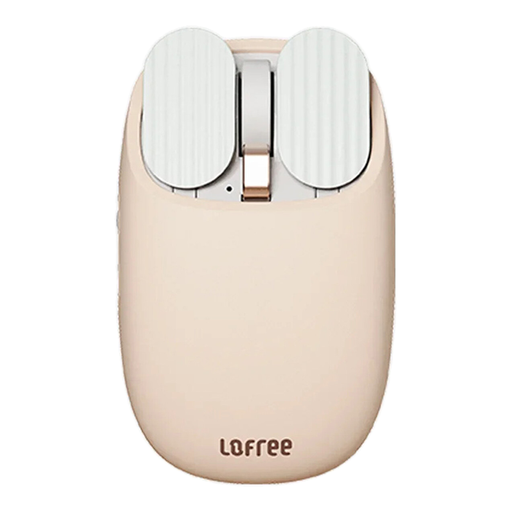 No image available
Consider this mouse if you want to check two wireless connection modes for a slide-editing setup used across devices.
The product name specifies five adjustable DPI levels and an 800mAh battery. Check surface compatibility if your desk is glass or glossy; the listed Boot Camp dual-system limitation also matters if that is how you use a Mac.
No: a mouse can address pointer control on the desk, not reflections on the display. Reposition or tilt the screen and adjust its brightness and contrast for the surrounding light before deciding whether the pointing surface also calls for a different mouse.
Confirm that the presentation computer has usable Bluetooth and supports the exact mouse model. Also check what is in the box: Logitech says MX Anywhere 3S can pair with up to three devices by Bluetooth, but its compatible Logi Bolt receiver is not included with the standard listing.
Choose a remote when you need to control slides while standing away from the laptop, and keep a mouse for detailed editing at the desk. Logitech lists USB receiver and Bluetooth Low Energy connections for Spotlight, along with support for PowerPoint, Keynote, Acrobat, Google Slides and Prezi; check the application and computer you will use.
Do not assume so. Targus warns that its ErgoFlip BlueTrace mouse may not work on some glass or mirrored surfaces, so check the surface claim for the exact model against your tabletop rather than relying on a general description of mixed-surface tracking.