Who is this choice for?

Writers with very little desk space

If a laptop, paperwork and keyboard leave little room for mouse movement, a stationary thumb-trackball is worth considering. Logitech describes its ERGO M575S as a device that stays in place while the thumb moves the cursor.

People drafting and editing for long periods

Hand fit and equipment placement matter when document work takes up much of the day. The Health and Safety Executive advises positioning the mouse in line with the elbow and considering the whole workstation, rather than relying on a mouse shape alone.

Quiet, multi-device document workers

People who switch between compatible devices or work near colleagues may value quiet clicks and connection options. Logitech and HP describe these features on particular models; check the exact model rather than assuming every mouse from either brand has them.

What matters when choosing?

Stationary thumb-trackball

Choose it when: The device needs to stay beside paperwork without travelling across the desk, as Logitech describes for the ERGO M575S.

Bear in mind: Moving the cursor with your thumb feels different from moving a conventional mouse.

Vertical mouse

Choose it when: You prefer an upright hand position for extended document work and can find a shape that fits; Logitech positions Lift for small-to-medium hands.

Bear in mind: A vertical mouse still moves across the desk and does not replace a suitable workstation arrangement.

Compact conventional mouse

Choose it when: You want familiar whole-mouse control for selecting text and moving through documents, with some surface available beside the keyboard.

Bear in mind: A compact body does not remove the need for movement space or a comfortable hand fit.

ConcernWhat to checkWho this matters to
Active desk space Whether the device stays still during pointer movement; leave room for your hand beside the keyboard. With papers and a laptop competing for space, I need to move the cursor without sliding a mouse across the desk. Around 42% of consumers would put conserving active desk space first.
Comfort during long sessions Hand-size guidance, handedness and whether the mouse can sit in line with your elbow. When I spend long periods revising instructions, I want a shape that fits my hand without reaching awkwardly. For roughly 33% of consumers, prolonged-use comfort would be the primary concern.
Document workflow Scroll controls, click noise and whether Bluetooth or a compatible USB receiver works with your computer. If I move through long documents near other people or switch devices, I need navigation and connection options that suit that routine. About 25% of consumers would prioritise this workflow need.

Common buying mistakes

  • Assuming a vertical mouse saves the most desk space

    A vertical mouse changes hand position but still needs room to move. Logitech describes its stationary ERGO M575S trackball as suited to small or busy setups because the device itself need not move.

    If movement space is the limiting factor, consider a trackball; if an upright grip matters more, check vertical-mouse fit and clearance.

  • Buying wireless without checking the connection

    Bluetooth needs a compatible computer, while a USB receiver needs an available port. Connection options vary by model.

    Confirm the selected mouse's connection requirements and whether any receiver you need is included.

  • Expecting a new mouse to fix the whole workstation

    Mouse placement is only one part of display-screen work. The Health and Safety Executive advises keeping the keyboard central and the mouse in line with the elbow.

    Arrange the desk as well as choosing the mouse, and review the workstation assessment where prolonged daily display-screen work applies.

  • Choosing a compact body on size alone

    A smaller mouse can fit a limited surface but may not suit every hand during repeated writing and editing.

    Use any stated hand-size guidance and consider whether the shape and button positions suit your hand.

Relevant brands to consider

Logitech

Logitech has relevant examples across stationary trackballs, vertical mice and conventional document-work mice.

  • Logitech describes the ERGO M575S as stationary in use and positions Lift for small-to-medium hands.
  • Those are different shapes for different priorities; the moving models do not offer the trackball's stationary operation.

Dell

Dell's Pro Compact Silent Mouse MS355 is a conventional option for buyers considering quiet operation and a symmetrical shape.

  • Dell lists silent operation and RF-dongle or Bluetooth connectivity for the MS355.
  • As a conventional moving mouse, it still needs clear surface beside the keyboard.

HP

HP's 480 Comfort Bluetooth Mouse is relevant when document navigation and connection to multiple devices are priorities.

  • HP describes a 4D tilt wheel, quiet clicks and connection to up to three devices for this model.
  • Those features do not establish that a conventional mouse uses as little active desk space as a stationary trackball.

Joybuy mouse choices

These mice offer conventional and vertical shapes for small-desk document work. Choose among them by available movement space, hand fit and the connection your computer can use; a moving mouse is not a substitute for a stationary trackball when clearance is the main constraint.

HOFOTEK M311 white-grey wireless mouse

HOFOTEK M311 2.4G+BT Silent Mouse, white-grey

Consider this conventional mouse if quiet clicks and wireless connection options matter alongside desk space; allow surface for the mouse to move.

The product name specifies adjustable DPI and one AA battery. Check the shape against your hand and confirm the connection method you intend to use.

View on Joybuy

Logitech MX Master 3S black mouse

Logitech MX Master 3S Ergonomic Mouse, black

Consider this conventional mouse if you prefer moving the whole device while editing documents. Check that its shape fits your hand and that your desk leaves enough room for movement.

View on Joybuy

V7 MW500BT vertical wireless mouse

V7 MW500BT Bluetooth Vertical Mouse, 2.4GHz

Consider the upright shape if hand position is your priority during document work, provided it fits your hand and you have room to move it.

The product name specifies six buttons and an adjustable sensor up to 1600 DPI. If you plan to use 2.4GHz connectivity, confirm whether the required receiver is included.

View on Joybuy
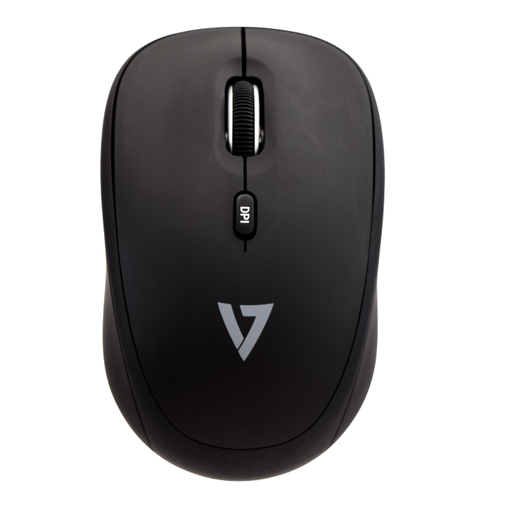
V7 MW100-1E black wireless mouse

V7 MW100-1E Wireless Mouse, black

Consider this ambidextrous conventional mouse if you want a straightforward moving-mouse shape for a limited desk surface; leave room for pointer movement.

The product name specifies four buttons, a 1600 DPI optical sensor and a 2.4GHz nano receiver. Check operating-system compatibility for your computer.

View on Joybuy
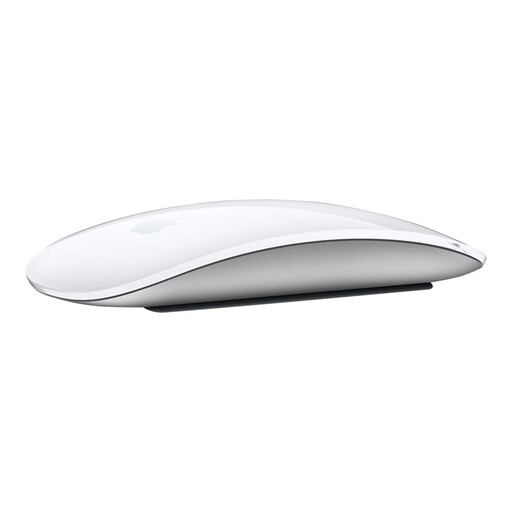
Apple Magic Mouse in white with Multi-Touch surface

Apple Magic Mouse, white, Multi-Touch

Consider this moving mouse if you prefer a Multi-Touch surface for document navigation and use a compatible device. Check compatibility with your exact device and operating system, as well as available movement space.

View on Joybuy

Questions about small-desk mice

Trackball or compact mouse: which needs less movement space?

A stationary thumb-trackball needs less space for device movement because the device stays in place while you move the cursor with your thumb. Logitech describes this use for the ERGO M575S; choose a compact conventional mouse instead if you prefer moving the whole mouse and can keep some surface clear.

Should I connect a wireless mouse by Bluetooth or USB receiver?

Use Bluetooth when the chosen mouse and computer are compatible and you want to keep a USB port free. A receiver needs the appropriate port and a compatible receiver, so check what the exact model supports and includes before ordering.

Where should the mouse sit during long writing sessions?

Place the mouse in line with your elbow and keep the keyboard central, as the Health and Safety Executive advises. Leave enough space to use the mouse without reaching awkwardly, whatever shape you choose.

When must an employer assess a display-screen workstation?

The Health and Safety Executive states that employers must carry out a workstation assessment when workers use display screen equipment daily as part of normal work for continuous periods of an hour or more. The assessment concerns the workstation, not just the mouse.