Staff sharing one workstation
When different people take turns planning rotas, a mouse should not assume that everyone uses the same hand or has a personal device pairing.


For a rota desk used by staff with different dominant hands, start with an ambidextrous mouse and a connection the shared computer permits. A hand-shaped mouse or trackball makes more sense for an identified regular user whose fit or desk space matters more than universal handover. If that person works through long schedules, check scrolling and device compatibility alongside the workstation setup; a mouse alone is not an ergonomic fix.
When different people take turns planning rotas, a mouse should not assume that everyone uses the same hand or has a personal device pairing.
Someone who routinely works through schedules and long documents may have a stronger reason to consider hand fit and scrolling controls than occasional desk users.
Papers and other equipment can leave little room beside the keyboard to move a conventional mouse. A stationary pointing device is worth considering for a regular user who is comfortable with its controls.
Decide whether the mouse must work for everyone at the desk or chiefly for one rota coordinator, then check the available connection and working space.
| Concern | What to check | Who this matters to |
|---|---|---|
| Easy handover | Look for an ambidextrous shape. For a receiver mouse, confirm an available, approved USB port and a place to keep the receiver. | If different staff take over the rota desk, I need a mouse they can use without relying on my hand preference or personal pairing. Around 36% of consumers would put straightforward handover first. |
| Individual fit | Choose the appropriate hand-size and handedness variant for a regular user; consider the mouse as part of the workstation setup. | When I spend much of my working day on rotas, I want a shape that suits my hand rather than one chosen for every occasional user. Individual fit would come first for around 29% of consumers. |
| Navigation and devices | Check the wheel controls and the number of supported devices. Confirm Bluetooth compatibility and whether any required receiver is included. | Long schedules and work across several computers make scrolling and switching more important to me than a basic single-computer setup. Around 21% of consumers would prioritise that workflow. |
| Desk space | Check the clear area beside the keyboard and whether the regular user is comfortable with thumb-operated trackball control. | If paperwork leaves little room to move a mouse, I need the pointer to work without sliding a device across the desk. That would be the primary concern for around 14% of consumers. |
A shape or handedness variant selected for one person may not suit the next person using the rota desk. Logitech offers distinct hand-size and left-handed Signature M650 variants, while its ERGO M575 is a thumb-operated trackball.
Start with an ambidextrous conventional mouse if the desk has no regular primary user. Consider a fitted shape for an identified user instead.
A Bluetooth-only mouse depends on compatible hardware and access to pairing. Microsoft specifies Windows 10 or 11 and Bluetooth 4.0 or later for its Surface Mobile Mouse.
Check the desk computer and your organisation’s peripheral rules before buying. An approved receiver mouse is another route if the computer has a suitable USB port.
The Health and Safety Executive advises positioning a mouse in line with the elbow. Its display screen equipment guidance addresses workers using such equipment daily for continuous periods of an hour or more; mouse shape alone does not address the rest of the workstation.
For regular rota work, consider mouse placement alongside the screen, chair and work routine, and use the employer’s workstation assessment process.
Liquid can enter openings. Derbyshire Healthcare NHS Foundation Trust advises against spraying cleaning products directly onto IT equipment.
Follow both the employer-approved procedure and the mouse manufacturer’s instructions, keeping liquid out of openings and allowing the device to dry before reuse.
Its relevant models cover fitted conventional mice, compact multi-device mice and stationary trackballs.
The ThinkPad Essential Wireless Mouse is a receiver-based option to consider for a shared desk.
The Surface Mobile Mouse is a compact, ambidextrous Bluetooth option where the desk computer’s compatibility is known.
The HP 420 Programmable Bluetooth Mouse is relevant when one coordinator works across several devices.
These options include receiver-based and wired mice for a shared computer, plus models to assess for a regular coordinator. Check hand fit and connection permissions before choosing one as the desk’s default.
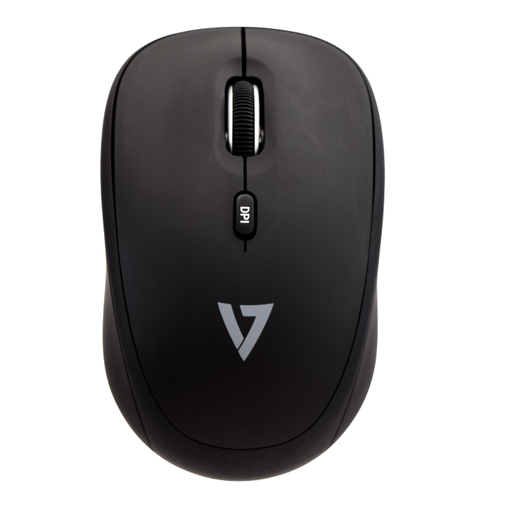 Image unavailable
Consider this ambidextrous receiver mouse when different-handed staff share a computer with an approved USB connection.
The product name specifies a 2.4 GHz nano receiver, four buttons and a 1600 DPI optical sensor. Check the fit for anyone who uses the desk regularly.
 Image unavailable
Assess this shaped mouse for a regular rota coordinator rather than assuming it will fit everyone who takes a turn at the desk.
Check the required connection, scrolling controls and hand fit for the intended workflow. If button customisation matters, confirm that the workplace permits the software it requires.
 Image unavailable
Consider the connection choices if a regular user switches devices but the shared desk also needs a straightforward setup.
The product name states 2.4G+BT connectivity, adjustable DPI and one AA battery. Check its handedness and how the intended devices are paired before making it a shared-desk default.
 Image unavailable
This receiver-based option is worth checking for a shared computer where click noise is a consideration.
The product name specifies silent clicks, 2.4 GHz wireless connectivity, a USB receiver and a 1600 DPI optical sensor. Confirm its shape and handedness before assigning it to staff who use different hands.
 Image unavailable
A wired connection may suit a desk that permits USB peripherals and where staff do not need wireless pairing.
The product name specifies four buttons, silent clicks, 1000/1200/1600 DPI settings and Windows and Mac compatibility. Check cable reach and handedness for the shared workstation.
No. The Health and Safety Executive’s display screen equipment guidance addresses workers who use such equipment daily for continuous periods of an hour or more, and its posture advice includes keeping the mouse in line with the elbow. Consider the mouse with the rest of the workstation and use the employer’s assessment process.
A receiver is a practical choice when the shared computer permits it and keeping one connection at the desk matters most; Bluetooth needs compatible hardware and pairing access. Check the exact model: Microsoft specifies Windows 10 or 11 with Bluetooth 4.0 or later for the Surface Mobile Mouse, while Lenovo specifies a USB receiver connection for the ThinkPad Essential Wireless Mouse.
Do not assume so. An ambidextrous shape avoids choosing a left- or right-hand-specific shell for rotating staff, while fitted variants and thumb-operated trackballs are better assessed for an identified regular user. The Health and Safety Executive also advises considering mouse position as part of workstation posture.
Follow the employer’s approved procedure and the manufacturer’s instructions rather than spraying cleaner directly onto the mouse. Derbyshire Healthcare NHS Foundation Trust advises against spraying IT equipment directly; keep liquid out of openings and let the mouse dry before it is reused.