Standing analysts focused on hand position
If you explore datasets for sustained periods, you may prefer an upright grip. Check the model's stated hand-size fit and handedness as well as where it will sit on your desk.


Choose the pointing style around the task that causes you the most difficulty: a suitably sized vertical mouse for an upright grip, a trackball when mouse travel is awkward, or a conventional mouse with controllable fast scrolling for long tables and documents. A centred rollerbar is another option if reaching sideways is the main issue, but it needs space in front of the keyboard. Whatever the shape, the Health and Safety Executive advises keeping the mouse close and in line with your elbow.
If you explore datasets for sustained periods, you may prefer an upright grip. Check the model's stated hand-size fit and handedness as well as where it will sit on your desk.
A trackball may appeal if your keyboard leaves little room to move a mouse: its body stays in place while you control the cursor with your thumb or fingers.
If your work involves long tables, codebooks and documentation, controllable scrolling may matter more to you than an upright mouse shape.
The Health and Safety Executive advises placing the keyboard just below elbow height and the mouse in line with your elbow. Set up the standing workstation first, then choose a pointing style for the work you do most.
Consider it when: You want an upright grip and can find a model that fits your hand and handedness.
Trade-off: Its shape will not fix a mouse positioned too far from your keyboard.
Consider it when: Space beside the keyboard is tight or you want the pointing device to stay put.
Trade-off: Thumb- or finger-operated cursor control may take getting used to.
Consider it when: Moving through long tables and pages is your main task.
Trade-off: Fast scrolling does not provide the upright grip of a vertical mouse.
Consider it when: Reaching sideways for a mouse is the main obstacle.
Trade-off: It changes how you point and click and needs room in front of the keyboard.
| Concern | What to check | Who this matters to |
|---|---|---|
| Hand position and reach | Check hand-size fit and handedness; make sure the mouse can sit close to the keyboard at standing height. | I want to work without stretching towards the mouse, so grip and placement both matter. Around 33% of consumers put hand position and reach first. |
| Mouse travel and desk space | Measure the space beside the keyboard and consider whether thumb- or finger-operated pointing suits you. | With little room beside my keyboard, I would rather keep the device in one place. For around 27% of consumers, minimising mouse travel is the primary need. |
| Navigation through long datasets | Look for controllable scrolling and suitable cursor-sensitivity settings. | Long tables and documentation make repeated wheel turns disruptive to my work. Fast, controlled navigation comes first for around 27% of consumers. |
| Moving between workstations | Check the connection methods, device compatibility and whether any receiver is included. | When I move between desks or computers, I need a mouse I can connect where I work. Around 13% of consumers make portability and connectivity their first priority. |
Even an upright mouse can leave you reaching if it sits too far away. The Health and Safety Executive treats mouse placement as part of the workstation setup.
Set the keyboard just below elbow height, then keep the mouse within easy reach and in line with your elbow.
Logitech specifies Lift for small to medium hands and describes MX Ergo S as fitting medium to large hands; their different shapes are not interchangeable fit guidance.
Check the stated hand-size range and whether the version you want suits your dominant hand.
A connection method listed for a mouse does not establish which receiver or charging accessories come with the version you buy.
Check the box contents and confirm that your computer supports the connection you plan to use.
Cursor-sensitivity and scrolling specifications describe navigation features, not whether your shoulder, elbow and wrist are well positioned.
Make sure the mouse fits beside your keyboard at standing height before prioritising tracking or scrolling features. If you need to use it on glass, check the exact model's surface requirements.
Its relevant models cover vertical, trackball and conventional mouse shapes.
The Pro Click V2 Vertical is a right-handed vertical option with programmable controls.
RollerMouse Red places a rollerbar in front of the keyboard instead of using a side-mounted mouse.
Bayo II is a wireless vertical-mouse option.
These mice offer different grips, connection methods or adjustable controls for dataset work. Compare their fit at your standing desk and check scrolling behaviour if long tables are central to your work.
 No image available
Consider its adjustable tracking and controls if you want to tailor cursor movement for dataset work; check the wheel's scrolling behaviour and the fit of the shell before choosing it for long sessions.
The product name specifies a PAW3950 sensor, 56 g weight and 2.4G wireless or wired operation. Check the maximum DPI figure for this variant before relying on it.
 No image available
This model is worth comparing if you need adjustable cursor sensitivity and a choice of connections. Check its hand fit and scroll-wheel behaviour for prolonged table work.
The product name specifies a PAW3311 sensor, 24,000 DPI, 63 g weight and Bluetooth, 2.4G or USB-C operation. Confirm the included battery and charging accessories for the variant offered.
 No image available
Consider the upright grip if that hand position is your priority, provided the mouse fits your hand and can sit close to your keyboard. Check handedness and scroll-wheel behaviour before buying.
The product name specifies Bluetooth and 2.4GHz connections, six buttons and an adjustable sensor rated up to 1600 DPI. Check compatibility with your computer.
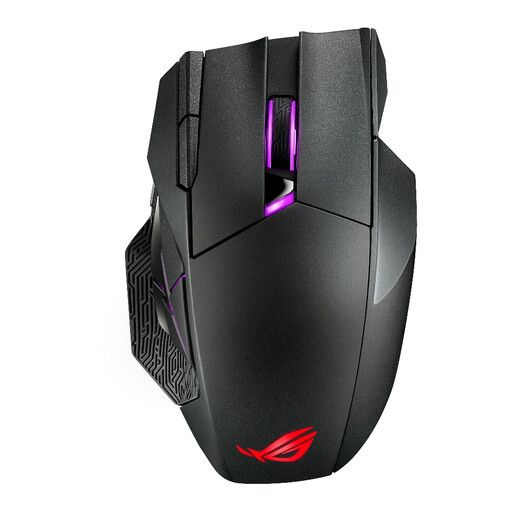 No image available
Consider its controls if you want buttons for repeated tasks, but check whether its shape and button layout suit your working hand. Confirm scroll-wheel behaviour if you frequently navigate long datasets.
The product information describes adjustable sensitivity, 12 programmable buttons and 2.4GHz wireless or USB-C wired operation.
 No image available
This is an option to examine if you move between computers and want adjustable cursor sensitivity. Check hand fit and wheel behaviour separately if you spend long periods exploring tables.
The product name specifies 2.4G and Bluetooth connections, adjustable DPI and an AA-battery configuration. Check which connection accessories are included.
No: choose a vertical mouse if its upright grip and hand-size fit suit you, rather than simply because you stand while working. A trackball may address limited mouse space, while controllable fast scrolling may matter more for long datasets. The Health and Safety Executive advises keeping whichever mouse you use in line with your elbow.
Keep it within easy reach and in line with your elbow, with the keyboard just below elbow height. These are the Health and Safety Executive's workstation-positioning recommendations; adjust the desk and keyboard along with the mouse rather than changing only the pointing device.
Consider the whole display-screen workstation, not just the mouse. The Health and Safety Executive says employers must assess display-screen-equipment workstations and reduce risks; ask how your standing setup will be assessed and adjusted for the way you work.
Check the box contents against the connection method you intend to use. Confirm whether a USB receiver or charging cable is supplied, whether your computer supports the stated wireless method, and whether your intended button customisations require software.