Wide-sheet stock reviewers
You compare stock codes, movements, adjustments and variances across wide spreadsheets or inventory screens. Horizontal navigation, scrolling and accessible shortcuts are likely to shape your choice.


For frequent checks across long, wide stock-movement records, start with scrolling controls and shortcuts that suit the spreadsheet or inventory software you actually use. A conventional productivity mouse suits navigation-led work; consider a vertical mouse when hand position matters more, or a centred device when reaching sideways is the main difficulty. For prolonged daily use, assess the whole workstation rather than expecting a different mouse to resolve discomfort on its own.
You compare stock codes, movements, adjustments and variances across wide spreadsheets or inventory screens. Horizontal navigation, scrolling and accessible shortcuts are likely to shape your choice.
You return to stock records throughout the working day and need to consider mouse reach, hand fit and the wider desk setup. The Health and Safety Executive advises positioning a mouse within easy reach so it can be used with a straight wrist.
You check records on more than one work computer. Connection switching matters only if the mouse and any configuration software work with the devices and permissions you have.
Choose the pointer layout around your main difficulty: moving through records, finding a comfortable hand position, or avoiding a sideways reach. Then check the controls and connections against your actual workstation.
Choose when: Long or wide stock records make scrolling and configurable shortcuts a priority.
Trade-off: Its familiar side-positioned shape does not provide the upright grip of a vertical mouse.
Choose when: You prefer a more upright hand position during recurring pointer work and can find a shape that fits.
Trade-off: Hand fit and button reach remain individual; the shape does not replace a workstation assessment.
Choose when: Reaching to a mouse beside the keyboard is the main issue and you are willing to change pointer layout.
Trade-off: Check that the device fits your keyboard and desk space before changing to this different way of controlling the pointer.
| Concern | What to check | Who this matters to |
|---|---|---|
| Moving through records | Check horizontal-scroll controls for wide sheets and whether useful shortcuts can be configured on your work computer. | When I compare movements and variances across columns, I want to navigate without repeatedly dragging the view. Around 46% of consumers put record navigation first. |
| Hand position and reach | Check hand-size guidance, handedness, button reach and where the device will sit on your desk. | During recurring stock checks, I want a pointer layout that fits my hand and stays within easy reach. Comfort is the primary concern for around 36% of consumers. |
| Working across devices | Confirm connection options, operating-system support and permission to use any button-configuration software. | If I switch between work computers, I need controls I can actually connect and use on each one. Device flexibility comes first for around 18% of consumers. |
Sensor sensitivity does not tell you how easily you can move across columns or assign the actions you use to check records.
If wide worksheets dominate your work, check horizontal scrolling and shortcut setup before treating a DPI figure as the deciding feature.
The Health and Safety Executive identifies workstation design and working practices as factors in display-screen-equipment problems. A different mouse cannot correct an awkward desk reach on its own.
Keep the mouse within easy reach and use it with a straight wrist. If display-screen equipment is part of prolonged daily work, use your employer's workstation assessment process.
A vertical shape is not one-size-fits-all. Logitech positions Lift for small to medium hands and offers a left-handed version.
Check the stated hand-size guidance and whether you can reach the controls without stretching before choosing a shape.
Its MX Master 3S and Lift illustrate different choices: a conventional productivity mouse for scrolling and a vertical mouse aimed at small to medium hands.
The HP 780 focuses on navigation controls, while the HP 920 offers a vertical shape with a detachable wrist rest.
RollerMouse Red is a centred rollerbar option for consumers considering a different layout from a mouse placed beside the keyboard.
These choices include conventional mice for configurable stock-record work and a vertical option for consumers considering a different hand position. Compare their controls and fit against your own inventory setup.
 No image available
Consider this conventional productivity mouse if scrolling through long movement logs is your main task. Logitech specifies MagSpeed scrolling and an 8,000 DPI sensor for MX Master 3S. If wide-sheet navigation or customised controls are essential, confirm how this variant handles horizontal scrolling and whether you can use its configuration software at work.
 No image available
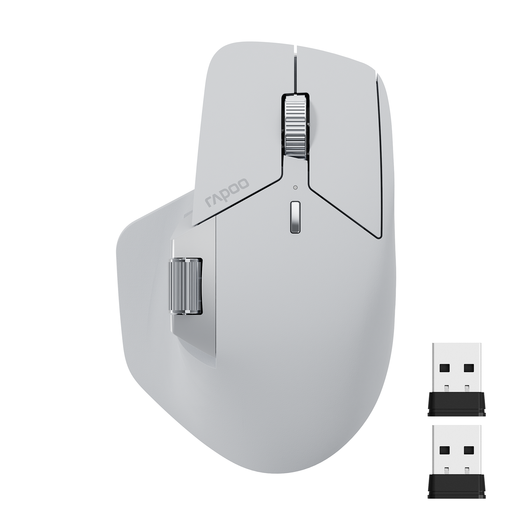
Consider this model if sideways navigation and configurable actions are important to your stock-checking routine. Check the exact model's scroll controls, shape and button-configuration support against your work computer before relying on those features.
 No image available
Consider the HP 920 if you want a vertical shape for recurring pointer work. HP specifies a detachable wrist rest, five programmable buttons and connection to up to three devices. Check hand fit and configuration-software compatibility; if you work in wide sheets, also check whether its scrolling controls meet your needs.
 No image available
Consider this model if switching connection methods matters alongside your stock-checking work. Its title specifies Bluetooth, 2.4G wireless and USB-C modes, a PAW3311 sensor and a charging dock. Check horizontal-scrolling behaviour and whether your work computer permits the driver software needed for any configured actions.
In the UK, the Health and Safety Executive says employers must assess a workstation when a worker uses display screen equipment daily as part of normal work for continuous periods of an hour or more. Consider the whole setup and raise discomfort through your employer's assessment process rather than treating mouse choice in isolation.
Keep it within easy reach so you can use it with a straight wrist. Health and Safety Executive guidance also advises sitting close enough to the desk to avoid stretching the mouse arm and supporting the forearm.
A vertical shape alone cannot establish the cause of discomfort or resolve the whole workstation setup. The Health and Safety Executive identifies overuse, improper use and workstation design as possible factors; use a workstation assessment if discomfort occurs.
Only if you can configure them on your work computer and the inventory application accepts the shortcuts you choose. Check operating-system support, required software and workplace permissions before making those buttons central to your workflow.